
Last updated October 17, 2026
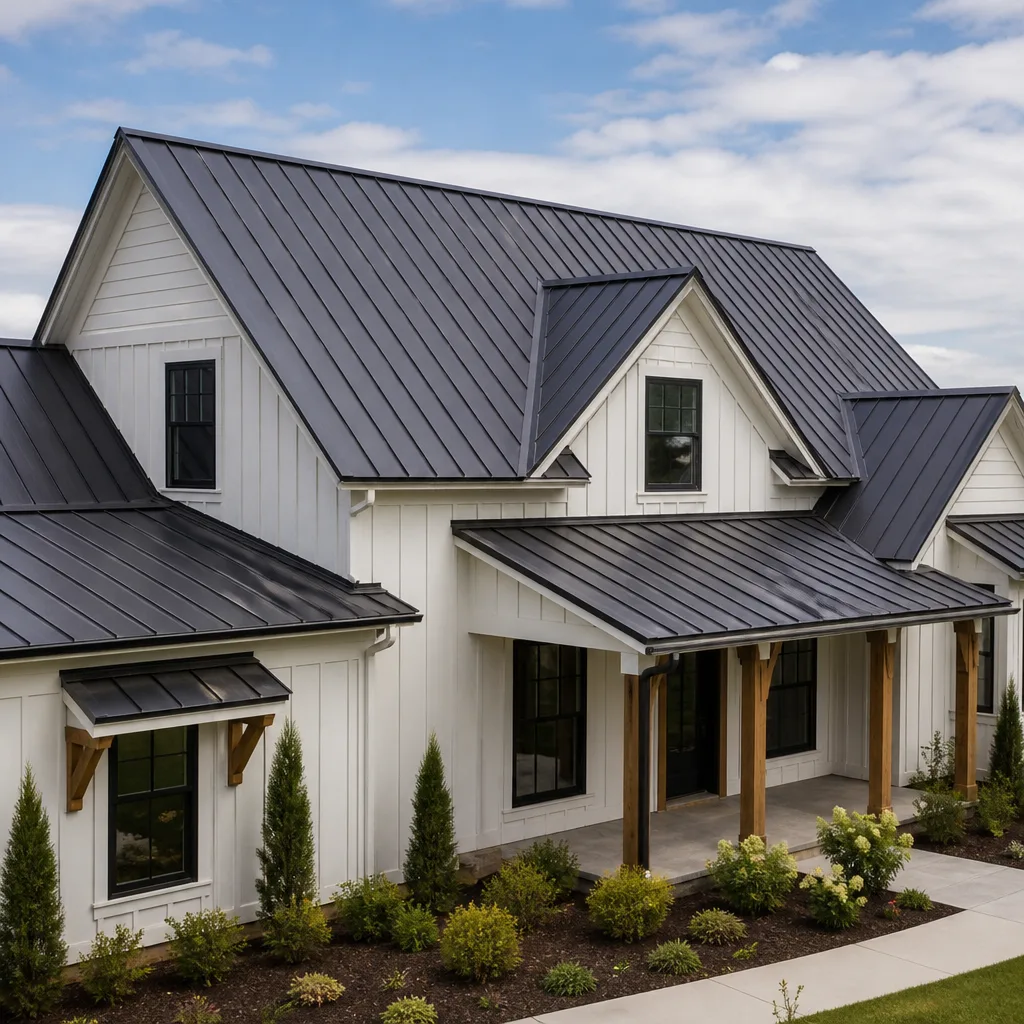 Metal roofing
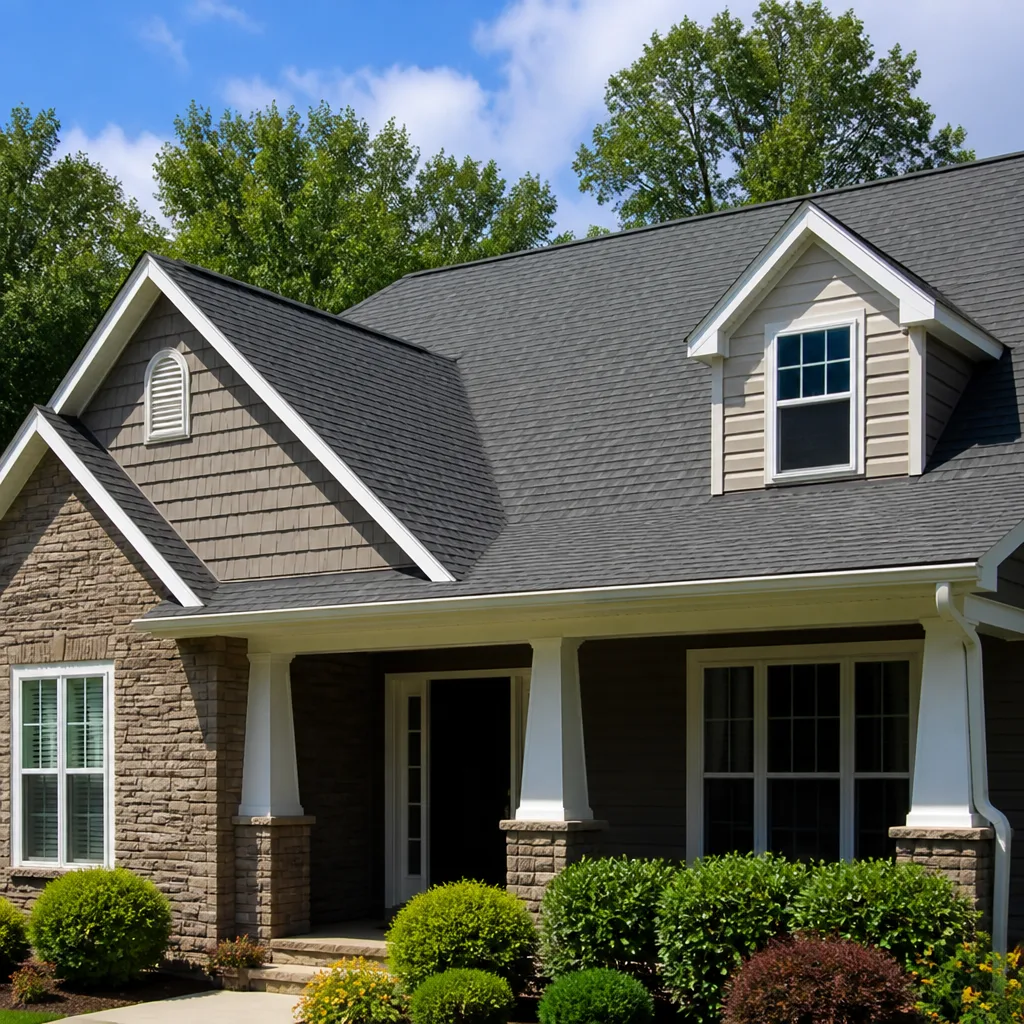 Architectural shingles
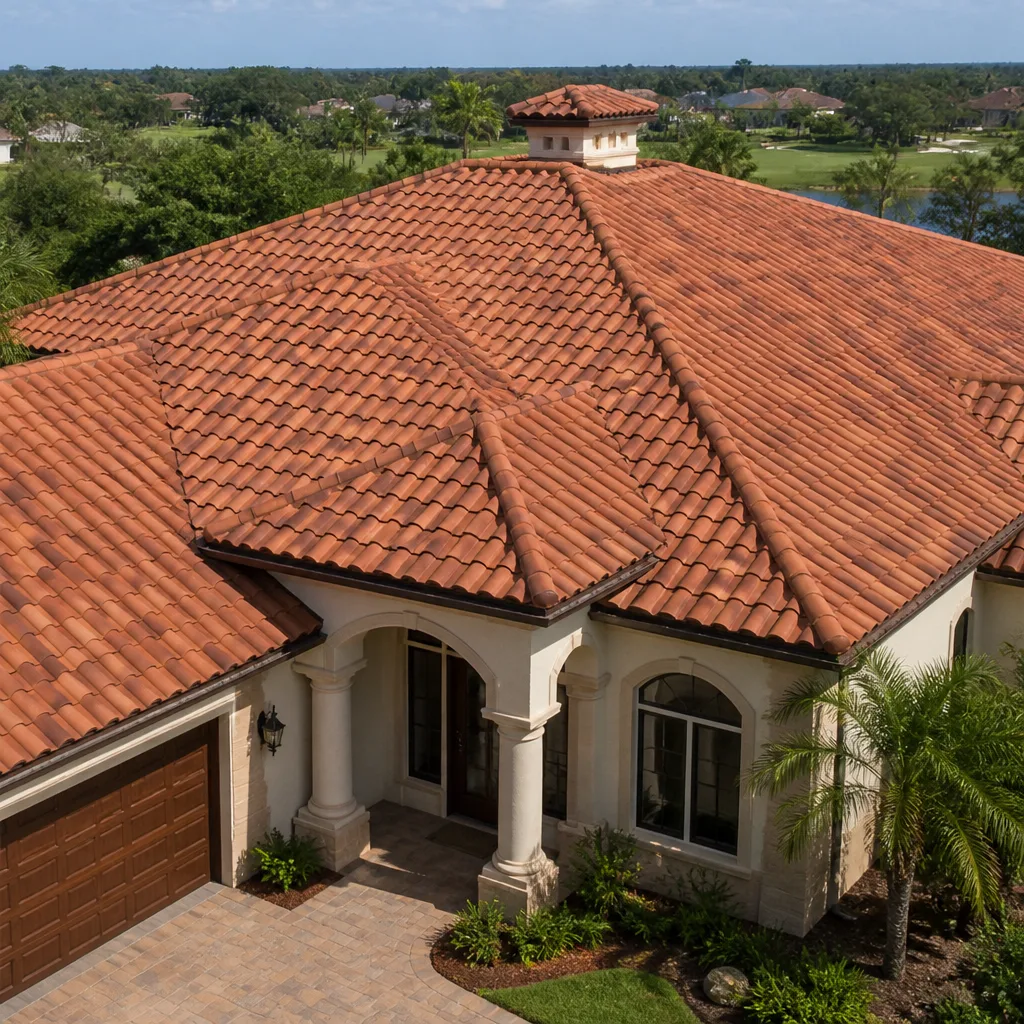 Tile roofing
 GAF
GAF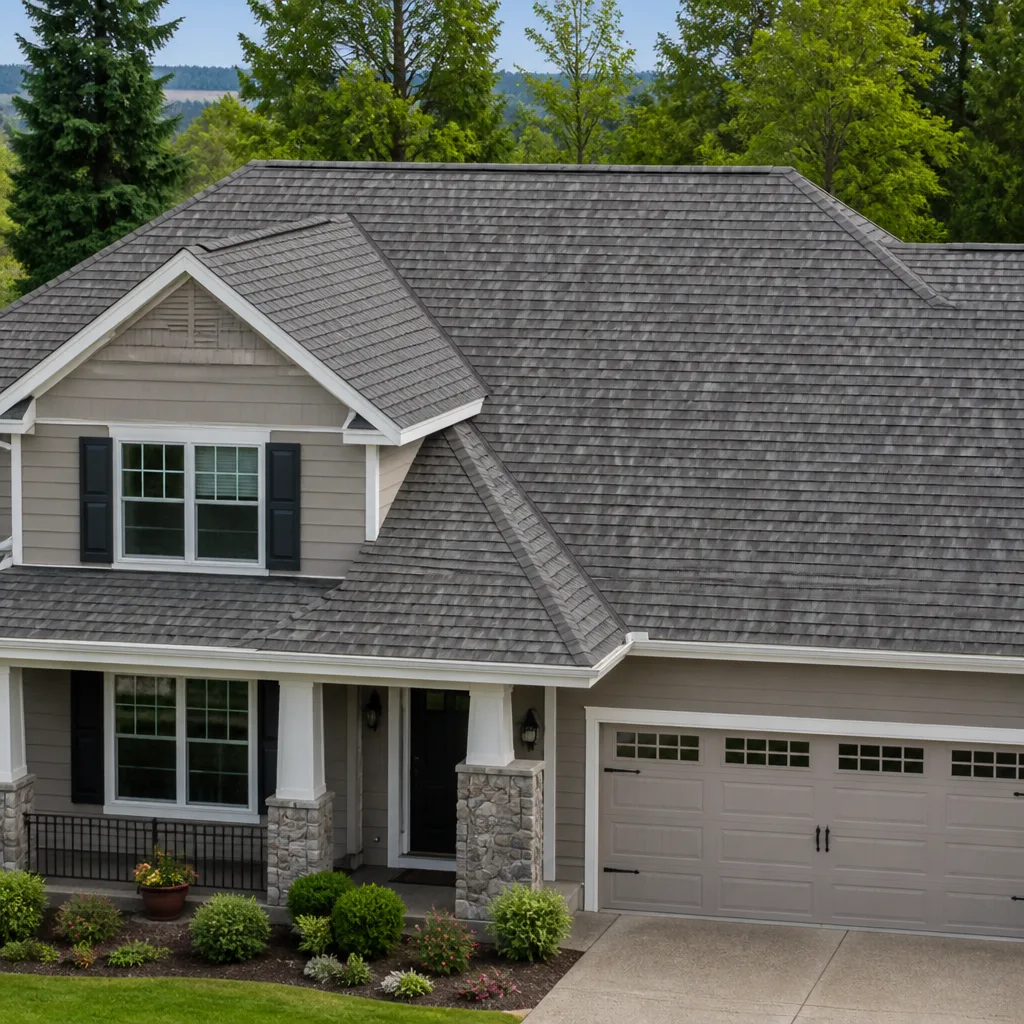 Owens Corning
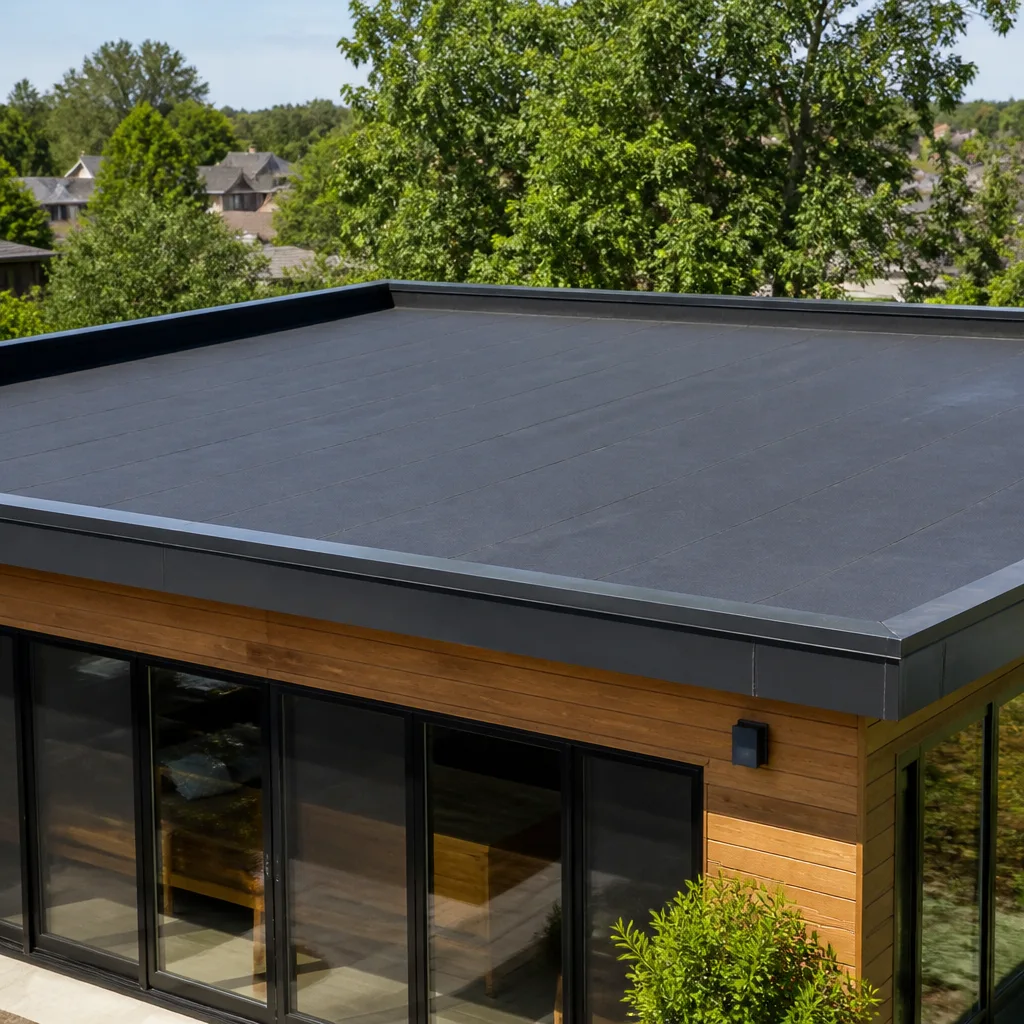 Flat & low-slope
Free roof inspection with deck photos before we talk money - GAF and Owens Corning certified installation
The Complete Guide to Roofing in Riverside
Riverside’s Inland Empire heat regularly pushes attic temperatures past 160°F in July. That single fact shortens a standard 3-tab shingle’s rated lifespan by roughly a third, yet most national roofing guides never mention it. This guide treats Riverside as its own roofing environment because it is one. You’ll learn which materials actually hold up here, what the City building department requires, how to read a bid without getting burned, and what a real guarantee should cover. For more guides & resources on protecting your home, explore our blog.
Quick Answer
Roofing in Riverside means choosing materials that survive sustained attic heat above 150°F, occasional December freeze-thaw cycles, and short but intense rain bursts. Concrete tile, cool-roof asphalt shingles, and properly insulated TPO flat systems are the three most reliable options, with full replacements typically running $11,000 to $28,000 depending on material and square footage. The single most important document you’ll get is the written guarantee, and it should cover labor, materials, and water intrusion for at least one full year. Before you decide, read our DIY vs Professional Roofing: The Riverside Homeowner’s Decision Guide to weigh your options.
Styles & brands we work with
Table of Contents
- How Riverside’s Climate Changes Your Roofing Math
- Material Options That Actually Work in Riverside
- Permits, Code, and What Contractors Skip
- How to Read a Roofing Bid Line by Line
- What a Written Guarantee Should Actually Cover
- Real Cost Ranges for Roofing in Riverside
- Signs Your Riverside Roof Needs Work
- The Replacement Process, Step by Step
How Riverside’s Climate Changes Your Roofing Math
Riverside sits in USDA Hardiness Zone 9b and California Climate Zone 10, which sounds like bureaucratic trivia until you understand what it does to a roof. We’re not a coastal city with marine layer humidity. We’re not a mountain town with snow load. We’re an inland valley with a specific set of stressors: ultraviolet intensity most roofing materials are not tested against for more than a decade, attic heat that bakes the underside of your decking and shingles, winter nights that occasionally dip below freezing after warm days, and rain that arrives in short, aggressive bursts rather than steady soaking.
The consequence is measurable. An asphalt shingle’s adhesive strip, the seal that keeps wind from peeling it back, degrades faster when attic temperatures spike daily for five months straight. We see granule loss on south-facing slopes in Riverside homes at year eight or nine that would not appear on the same shingle in, say, Huntington Beach until year fourteen. If your home has a dark roof and unventilated attic space, you are accelerating that timeline further. A properly installed roof in Riverside should include ventilation work as a standard component, not an upsell.
Freeze-thaw is the quieter problem. Water seeps into micro-cracks in concrete tile or around flashing during a cold night, freezes, expands, and widens the crack. Riverside does not get hard freezes often, but it gets enough that marginal flashing work fails sooner here than in consistently warm parts of Southern California. The practical takeaway: choose materials rated for high UV and high thermal cycling, and insist on ventilation as part of any replacement scope.
What This Means for Material Lifespan
- Standard 3-tab asphalt: rated 25 years, realistic in Riverside 15 to 18 years without ventilation upgrades.
- Architectural asphalt (cool-roof rated): rated 30 to 50 years, realistic 22 to 28 years with proper attic ventilation.
- Concrete tile: rated 50 years plus, realistic 40 to 50 years in Riverside if underlayment is replaced at install and not reused.
- TPO membrane (flat roofs): rated 20 to 25 years, realistic 15 to 20 years on Riverside flat sections given UV exposure and ponding after downpours.
- Metal standing seam: rated 40 to 60 years, realistic 35 to 50 years, with the caveat that Riverside’s temperature swings make fastener placement a make-or-break detail.
Material Options That Actually Work in Riverside
The right material for your Riverside roof is not the same as the right material for a roof in San Diego or Big Bear. Here are the three we install most often, with honest tradeoffs and real Riverside dollar ranges. We source materials from manufacturer lines including IKO, Atlas, Tamko, and Boral, and we walk homeowners through the differences instead of pushing one default.
Cool-Roof Asphalt Shingles
The majority of Riverside homes have asphalt, and the upgrade that matters here is cool-roof compliance. Cool-roof shingles use reflective granules that bounce more solar radiation back out instead of absorbing it. When California Title 24 energy code applies to a re-roof project in Riverside, this is often the difference between passing inspection on the first visit and needing to reorder materials. In our experience, a light-colored cool-roof architectural shingle keeps the attic 15 to 25°F cooler than a dark non-rated shingle, which directly extends the life of the shingle above it and reduces cooling load on the house. Brands we install from this category include IKO and Atlas lines with reflective granule technology.
Cost range in Riverside: $7 to $12 per square foot installed for architectural cool-roof asphalt, assuming decking is sound. That puts a typical 1,800-square-foot roof between $12,600 and $21,600.
Concrete Tile
You see a lot of concrete tile in the Canyon Crest, Alessandro Heights, and Orangecrest neighborhoods, and for good reason. Tile does not rot, does not burn, and shrugs off thermal cycling better than any petroleum-based product. The catch in Riverside is twofold. First, the underlayment, the water-shedding layer beneath the tile, wears out long before the tile itself. A tile roof replacement in Riverside is often really an underlayment replacement, if the tile is in good shape. Second, tile is heavy. Any tile replacement requires a structural check to confirm your framing and decking can carry the load. That is not an upsell, it’s code.
Cost range in Riverside: $16 to $26 per square foot installed for a full concrete tile system with new underlayment, putting a typical home between $28,800 and $46,800. A lightweight tile alternative from Boral runs slightly lower and may allow installation on homes where full-weight tile is marginal.
TPO for Flat and Low-Slope Sections
Many Riverside homes built in the 1970s and 1980s have flat roof sections over additions, patios, or attached garages. The material we specify most often there is TPO, a single-ply thermoplastic membrane. In Riverside’s UV intensity, TPO’s white reflective surface performs measurably better than older modified bitumen or built-up gravel roofs, which turn into heat sinks. Proper TPO installation in Riverside requires welded seams, not glued seams, and details at every penetration, vent pipe, skylight, and parapet wall. The failures we’re called to fix are almost always seam-related and almost always from original installs that skipped the detail work.
Cost range in Riverside: $9 to $14 per square foot installed for a full TPO system, with most flat sections between 300 and 800 square feet.
Permits, Code, and What Contractors Skip
The City of Riverside building department requires a permit for any roof replacement, and for repairs that exceed a defined scope, typically anything beyond a small patch or shingle count. If you’re starting your search, our How to Hire a Roofing Contractor in Riverside: A Step-by-Step Guide walks you through vetting pros who pull permits every week. West of the 91, in neighborhoods like Wood Streets and Palm Heights where homes date from the 1920s through the 1950s, many have been re-roofed multiple times without permits. Homeowners often find this out at resale, when the buyer’s inspection flags an unpermitted roof and the negotiation gets uncomfortable.
A permitted roof replacement in Riverside means the building inspector checks at least two things: the underlayment or water-resistive barrier installation before the top material goes on, and the final installation including flashing, nailing pattern, and edge details. Contractors that skip permits are not doing you a favor by lowering the price. They’re shifting liability onto you, and they’re skipping the inspection that keeps bad installs from costing you a second roof in fifteen years.
Title 24 is the other code provision that affects Riverside roofing. The state energy code requires cool-roof compliance on most re-roof projects in Riverside’s climate zone, and it applies to the thermal emissivity and solar reflectance of the finished surface. A contractor who has never pulled a Riverside permit will not know which of their material lines meet Title 24. A contractor who pulls permits every week will have the spec sheet ready before the inspector arrives. The distinction becomes apparent in the first twenty minutes of a conversation.
How to Read a Roofing Bid Line by Line
You should never have to call a roofer just to get a ballpark. Here is what a Riverside roofing bid should contain, and what each line means. Written price before work starts is the standard at Brennan Roofing Co Riverside home, and it’s the only way to compare bids without surprises.
- Scope of Work. One or two sentences that state exactly what will be done: tear-off to decking, new underlayment, new roof covering, new flashing. Vague language here is a red flag.
- Materials by Brand and Line. Not just “architectural shingle.” The bid should say IKO or Atlas or Tamko, the specific line name, the color, and the quantity in squares. If it doesn’t, the contractor can swap in whatever is cheapest at the supply house.
- Decking Replacement. This is the most commonly omitted line item. A bid that says “decking replacement at $X per sheet if needed” protects the contractor’s margin but leaves you guessing. Ask for a minimum number of sheets included, and a defined per-sheet price for any additional.
- Flashing. All the metal at transitions, chimney bases, valleys, wall intersections, skylights, and vent pipes. A quality Riverside bid replaces all of it. A cheap bid reuses old flashing and charges you later when it leaks.
- Underlayment Specification. The bid should state the underlayment brand and number of layers. In Riverside, where the underlayment under tile does the real waterproofing, this line is as important as the tile itself.
- Ventilation. Include intake and exhaust ventilation to move Riverside’s attic heat out. If the bid has no ventilation line, the install will shorten the life of whatever you paid for.
- Tear-off and Haul-away. Full removal of old roofing material and disposal. This should be a flat fee, not an hourly estimate.
- Permit and Inspection Fees. Should be listed, not buried. If it’s absent, the contractor is not pulling a permit.
- Warranty Language. Two warranties matter: the manufacturer’s material warranty and the installer’s workmanship guarantee. Get the installer’s guarantee in writing, with a duration and a scope.
- Total Price and Payment Schedule. Fixed number, written, with defined payment points. A contractor who asks for full payment before work begins is one to avoid, period.
What a Written Guarantee Should Actually Cover
The one-year written guarantee is the standard we hold at Brennan Roofing under The Garrison Standard, and here is what “guarantee” should mean in plain English: labor, materials, and water intrusion, in writing, for one full year. If the repair or installation fails within that period, the roofer comes back at no charge. No trip fee, no diagnostic fee, no negotiation.
Most guarantees in the Riverside market are verbal, not written. A verbal promise is worth the paper it isn’t printed on. When a contractor says “we stand behind our work” but will not write the terms down, the guarantee does not exist. Ask three questions: What exactly is covered? For how long? What happens if a repair fails within the period? The answer to the third question should be “we come back for free.”
Water intrusion is the key phrase. A shingle can look fine while the flashing behind it lets water into the wall assembly. A guarantee that covers only “workmanship” gives the contractor an out when the real problem is detail work. The full-year written guarantee at Brennan Roofing covers what matters: if it channels water into the house, it’s covered. Travis Oakley runs every job to that standard, because the repair that fails in month nine and leaves a homeowner with a wet ceiling is the repair that should never cost that homeowner another dollar.
Real Cost Ranges for Roofing in Riverside
Here are the numbers we quote most often for Riverside work. These are complete installed prices, including tear-off, underlayment, materials, flashing, ventilation, permit, and haul-away, for a typical single-family home. The biggest variable after material is the condition of the decking, which no roofer can know until the old roof comes off. That is why a responsible estimate includes a defined per-sheet price for any decking replacement, not a vague “extra if needed.”
| Roof Type | Typical Riverside Cost Range | Expected Lifespan in Riverside |
|---|---|---|
| Cool-roof architectural asphalt | $12,600 – $21,600 | 22 – 28 years |
| Concrete tile (full system) | $28,800 – $46,800 | 40 – 50 years |
| TPO on flat section | $2,700 – $11,200 (by section size) | 15 – 20 years |
| Metal standing seam | $24,000 – $45,000 | 35 – 50 years |
| Targeted repair | $350 – $1,800 | Varies by scope |
The single most important pricing line in any Riverside bid is the decking contingency. Homes in Riverside neighborhoods with original 1960s and 1970s construction, including sections of the Arlington and La Sierra areas, frequently have plywood decking that has been cooking under a hot roof for six decades. When the tear-off crew reaches it, replacement is not optional. The bid that includes a defined per-sheet price protects you. The bid that says “decking extra” is a blank check.
Signs Your Riverside Roof Needs Work
You do not need to climb a ladder to know when your roof is failing. Here is what to look for, from the ground and from the attic.
- Granules in the gutters. After a Riverside downpour, check your gutter line. If you see a layer of dark grit accumulating, your shingles are shedding their UV protection and nearing replacement.
- Ceiling stains that appear after rain. The most reliable sign of a failing flashing detail or underlayment seam. By the time the stain shows, water has been traveling through the assembly for a while.
- Curling at the shingle corners. On Riverside’s south and west-facing slopes, heat causes the shingle’s mat to shrink and curl. If the corners lift, wind-driven rain gets underneath.
- Sunlight in the attic. During daytime, go into the attic and turn off the lights. If daylight comes through any point other than a vent, so does water.
- Crumbling tile edges. Concrete tile holds up, but the edges get brittle after decades of thermal cycling. Broken tiles at the eaves and hips are visible from the ground.
- Mold marks on the underside of decking. Black streaking on plywood in the attic usually means condensation has been forming because ventilation is inadequate. In Riverside’s heat, that condensation cooks the underside of the roof system.
The Replacement Process, Step by Step
A properly run roof replacement in Riverside follows a defined sequence. You should know what the sequence is before you sign anything. For a full breakdown of what to schedule and when, see our Roofing Company Maintenance Checklist for Riverside Homeowners.
- Written estimate. A fixed price on paper before any work starts. No price changes at the door, no surprises. At Brennan Roofing Co, a written estimate is the first step on every job in Riverside.
- Permit application. The contractor files with the City of Riverside building department and schedules the rough and final inspections. You receive the permit number for your records.
- Tear-off. Old material is removed down to the decking. The exposed deck is inspected for rot, delamination, and deflection. Decking that fails gets replaced at the per-sheet price defined in the estimate.
- Underlayment and flashing. The water-resistive barrier goes down, and all flashing is replaced. For tile systems, this is the actual waterproofing layer. The City inspector checks this before top material goes on.
- Top material installation. Shingles, tile, or membrane installation, along with ventilation, drip edge, and ridge or cap treatments. This is the longest phase, usually one to three days for typical Riverside homes.
- Final inspection. The City inspector verifies compliance with code and Title 24. You receive a signed final inspection card.
- Cleanup and walkthrough. Magnets are run over the property to pick up stray nails, debris is hauled away, and the project manager walks the finished roof with you.
- Written guarantee. The full-year guarantee goes on paper. For a Brennan Roofing job, that means the 365-Day Done Right Promise: if it is not done right, we make it right, in writing, at no charge.
Common Mistakes to Avoid
- Choosing a roof by price alone. The low bid in Riverside is usually low because it omits ventilation, decking replacement, or flashing. You pay for those omissions in lifespan, and often in a second roof within fifteen years.
- Skipping the permit. An unpermitted roof in Riverside becomes a resale problem, a potential insurance claim denial, and a code enforcement risk. The money saved is not worth the liability transferred to you.
- Accepting a verbal guarantee. If the guarantee is not written, it does not exist. The one-year written guarantee is the minimum standard, and it should cover labor, materials, and water intrusion.
- Ignoring ventilation. Riverside’s attic heat is the fastest killer of otherwise good roofing material. A replacement without ventilation upgrades is a roof with an artificially shortened life.
- Reusing old flashing. The metal at your chimney, valleys, and wall intersections has already been through the same thermal cycling as your old roof. Reusing it saves a few hundred dollars and risks a leak that costs thousands.
- Not checking Title 24 compliance. If your Riverside re-roof uses non-compliant material, the final inspection fails and your property is out of compliance. The contractor who bid it should know this on day one.
- Assuming tile means maintenance-free. Tile is durable, but the underlayment beneath it ages. If you wait for leaking to tell you the underlayment is spent, you’re already paying for sheetrock.
See the difference
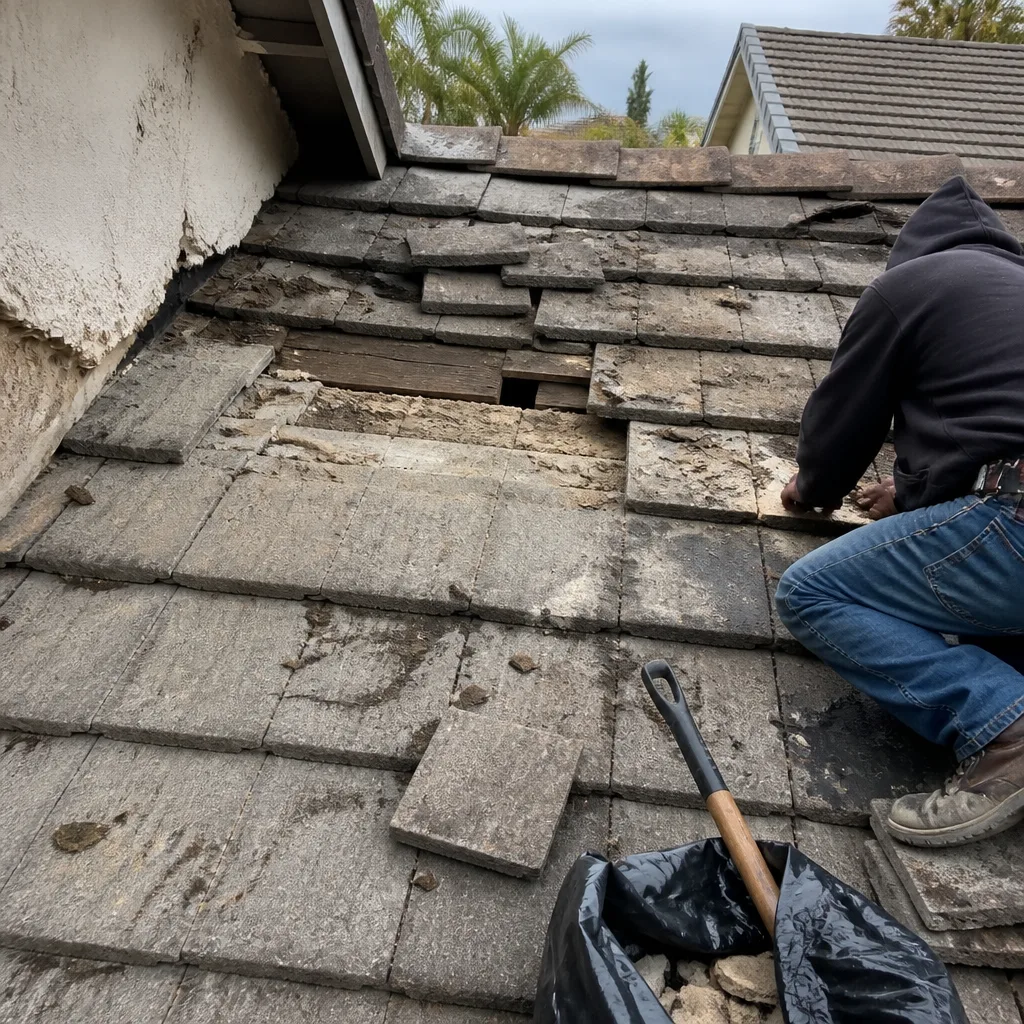 Before
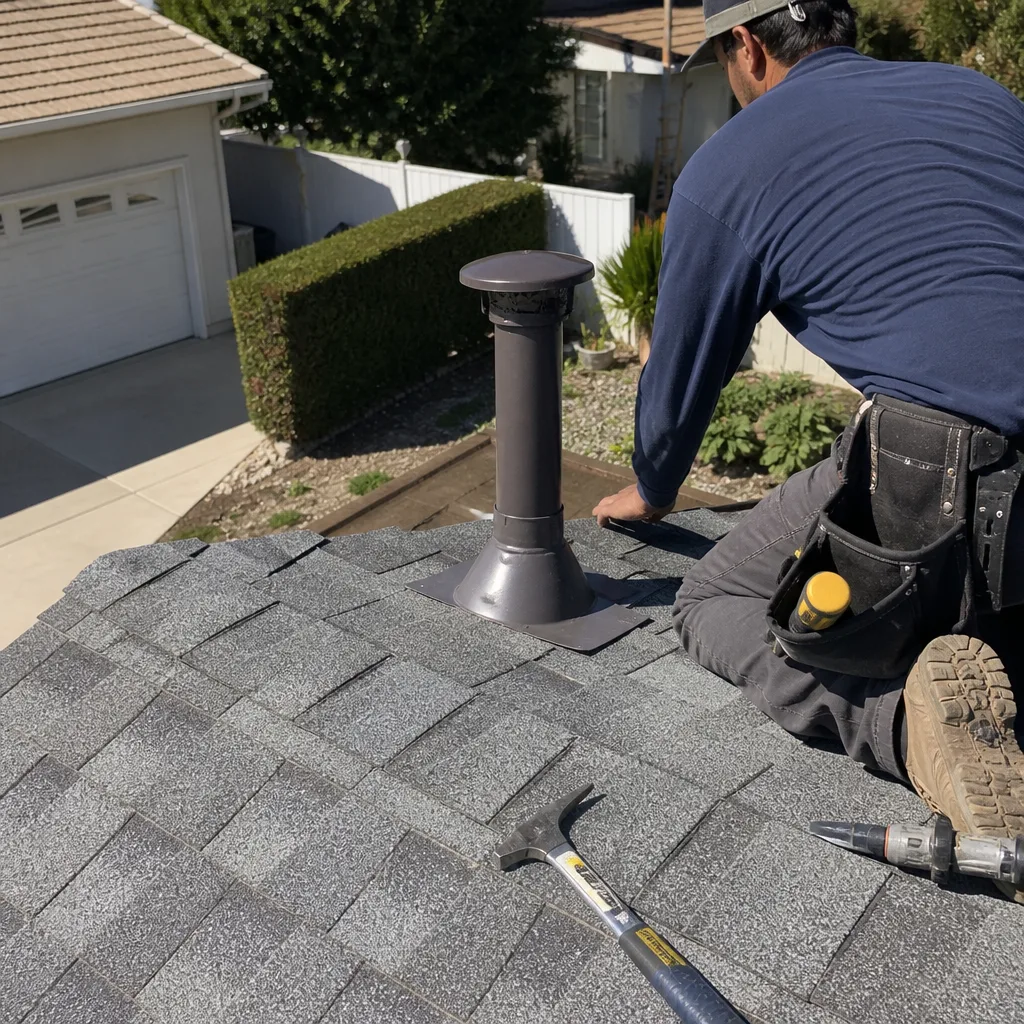 After
After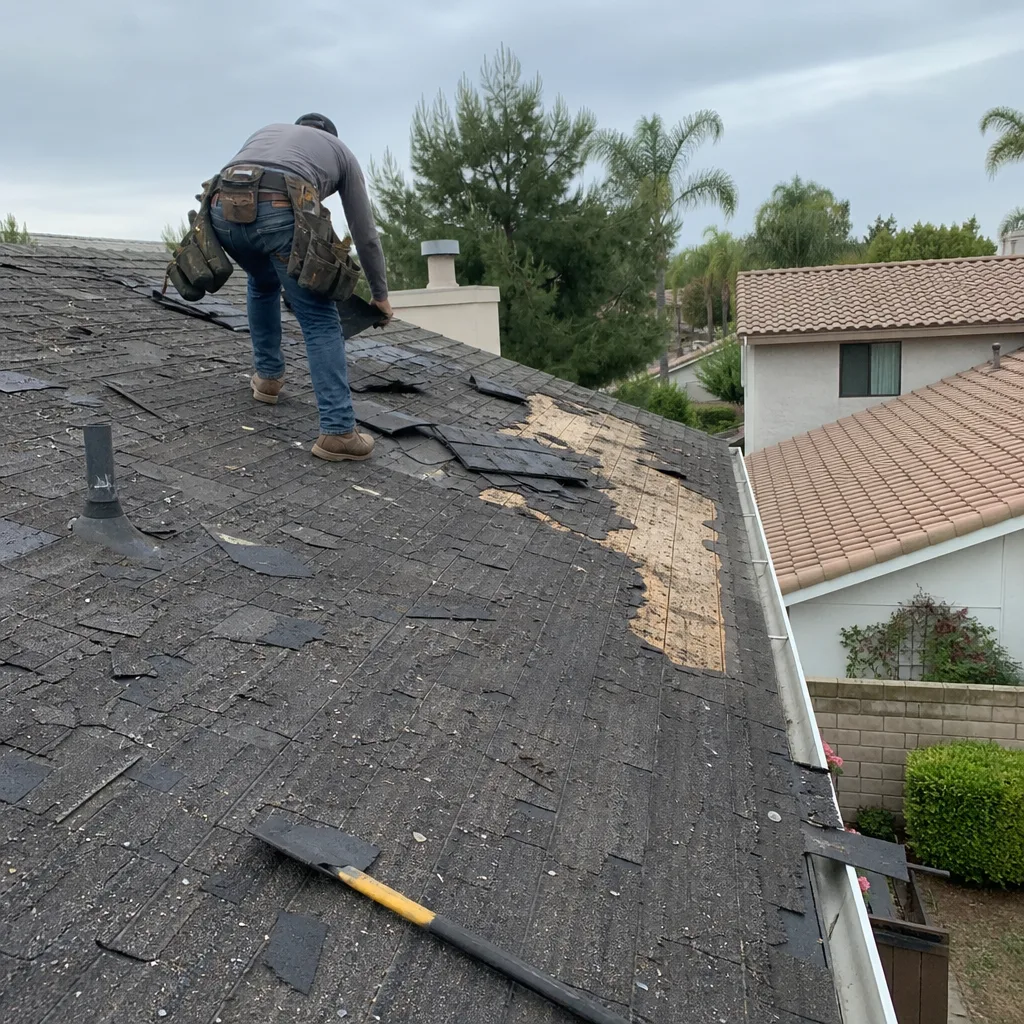 Before
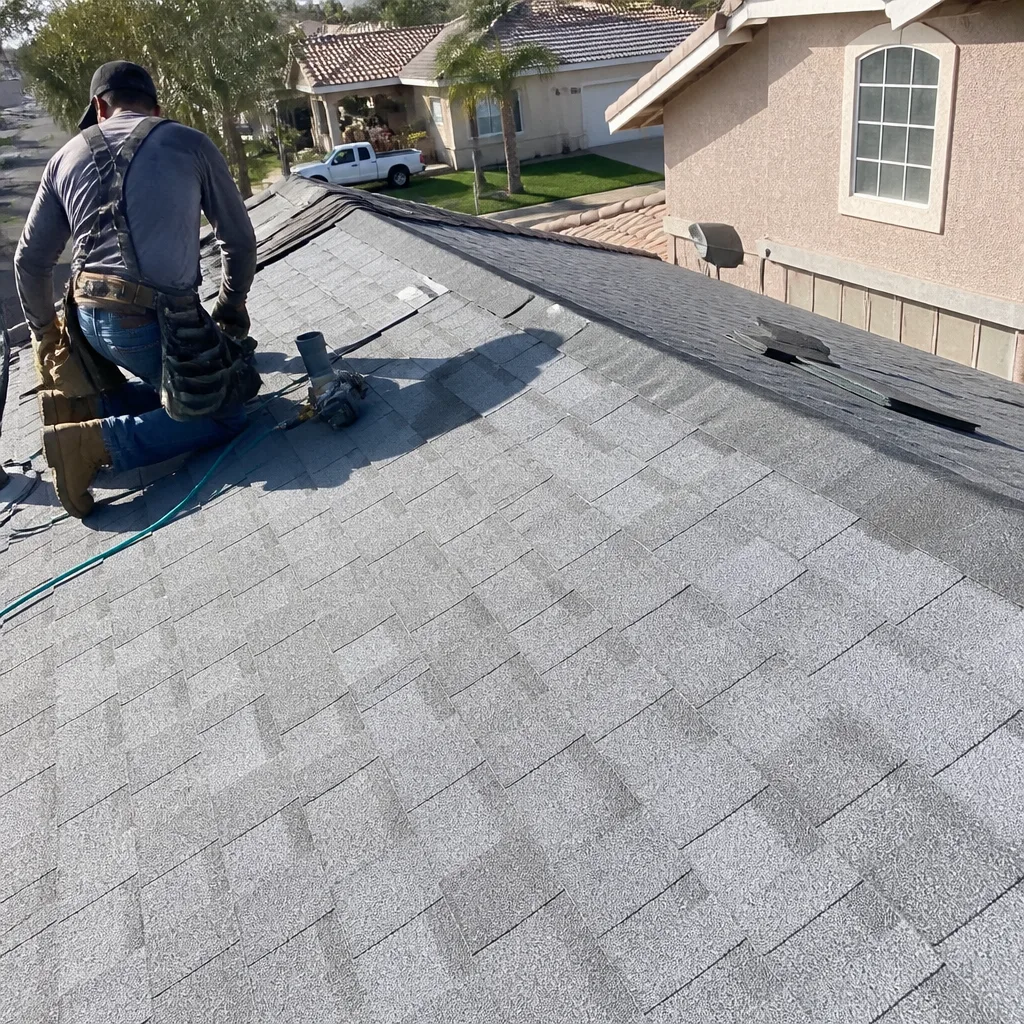 After
After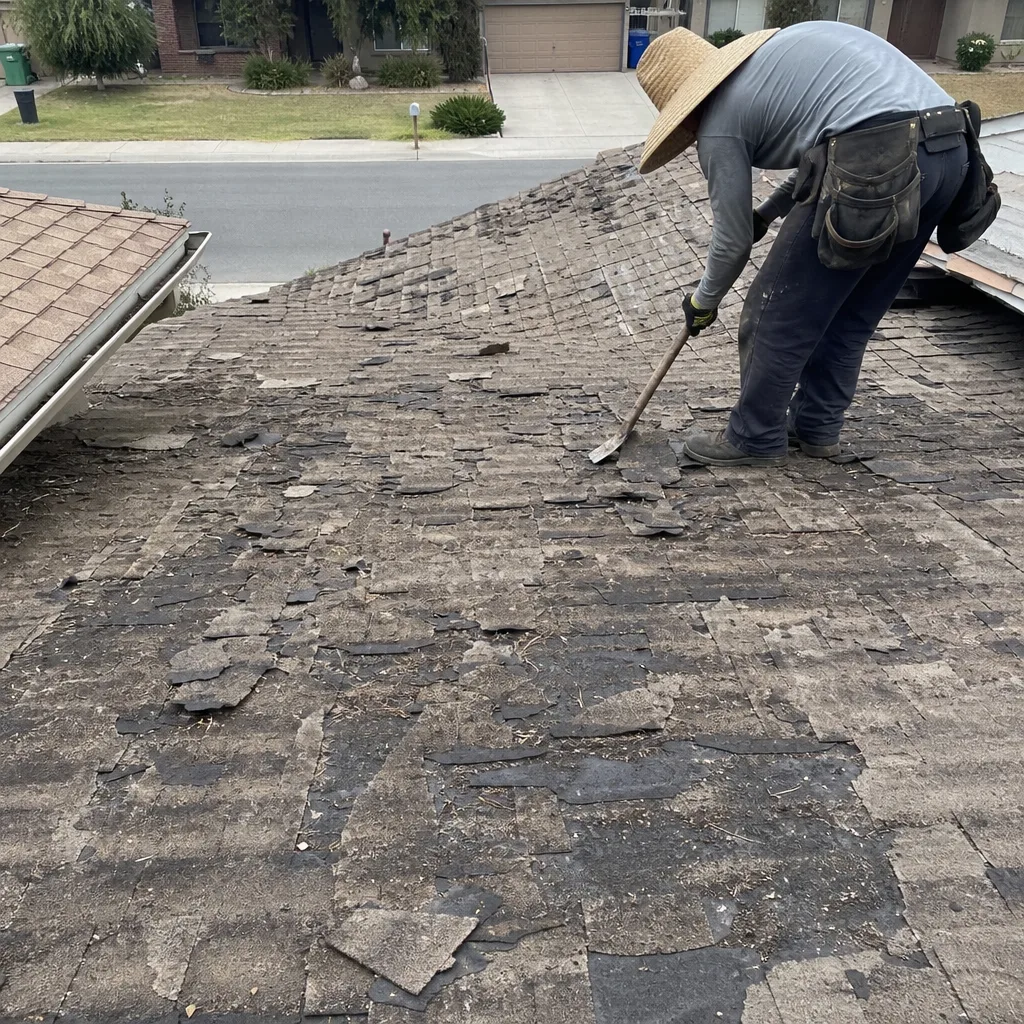 Before
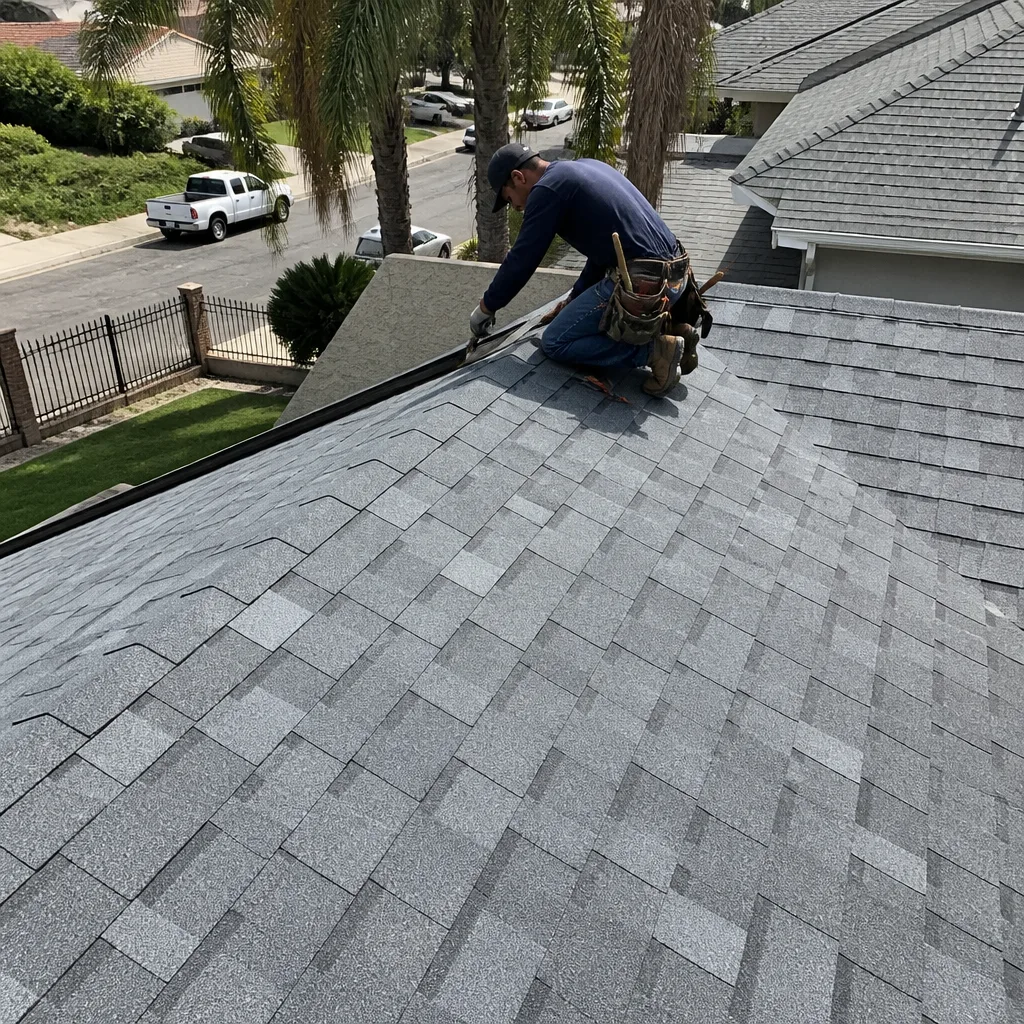 After
AfterWhen to Call a Professional
Call a professional the moment you see signs of water intrusion, widespread granule loss, lifting shingles, or daylight through the attic. These are not conditions that improve with time. You should also bring a professional in before any scheduled buyer’s inspection if you’re selling a Riverside home with a roof older than fifteen years, because the issues the inspector will find are cheaper to address on your schedule than during an escrow negotiation. Brennan Roofing Co offers roof repair in Riverside with written pricing and a one-year guarantee on every job. For a full assessment of your roof’s remaining life, schedule a roof inspection in Riverside and get the findings in writing. Brennan Roofing Co Riverside offers free estimates, call (341) 208-3988.
Frequently Asked Questions
A full roof replacement in Riverside typically runs between $12,600 and $46,800 installed, depending on material, home size, decking condition, and whether the project includes ventilation and Title 24 upgrades. Cool-roof asphalt runs $7 to $12 per square foot, concrete tile runs $16 to $26 per square foot, and TPO flat sections run $9 to $14 per square foot. Call (341) 208-3988 for a written estimate specific to your home.
The best material for most Riverside homes is cool-roof architectural asphalt for pitched roofs and white TPO for flat sections, with concrete tile as the premium option where weight and budget allow. All three handle Riverside’s UV intensity and thermal cycling well when installed with proper ventilation. The material matters less than the quality of the underlayment, flashing, and ventilation work around it.
Yes, the City of Riverside building department requires a permit for roof replacement, and Title 24 energy code compliance applies to most re-roof projects. A permitted job means the underlayment and final installation both get inspected, which protects your resale value and keeps unqualified work from hiding under new material.
Most single-family Riverside homes take one to three days for tear-off and installation, plus time for City inspection scheduling. Concrete tile projects typically run three to five days. The process includes permit filing, tear-off, decking inspection, underlayment and flashing, top material installation, final inspection, and cleanup.
A legitimate roofing guarantee covers labor, materials, and water intrusion, in writing, for one full year. If the repair or installation fails within that period, the contractor returns at no charge. Verbal guarantees are not enforceable, and a guarantee that covers only “workmanship” gives the contractor a way out when a flashing detail fails.
Riverside’s inland heat keeps attic temperatures above 150°F for months, which accelerates granule loss and adhesive degradation on asphalt shingles and stresses the underlayment beneath tile. Coastal cities have marine layer influence that moderates these temperatures. A roof in Riverside that is not properly ventilated can lose a third of its rated lifespan compared to the same material installed near the coast.
The Bottom Line
Riverside is its own roofing environment, with heat, UV intensity, and thermal cycling that punish poorly chosen materials and sloppy installation. Get a written price before any work starts, insist on ventilation as standard scope, choose cool-roof materials that pass Title 24, and accept nothing less than a written one-year guarantee that covers labor, materials, and water intrusion. The roof over your head is a system, not a surface. The discipline you apply to the bid is the discipline that ends up on the roof.
Written by Travis Oakley, Owner at Brennan Roofing Co Riverside, serving Riverside since 2000.