
Last updated October 17, 2026
 Metal roofing
 Architectural shingles
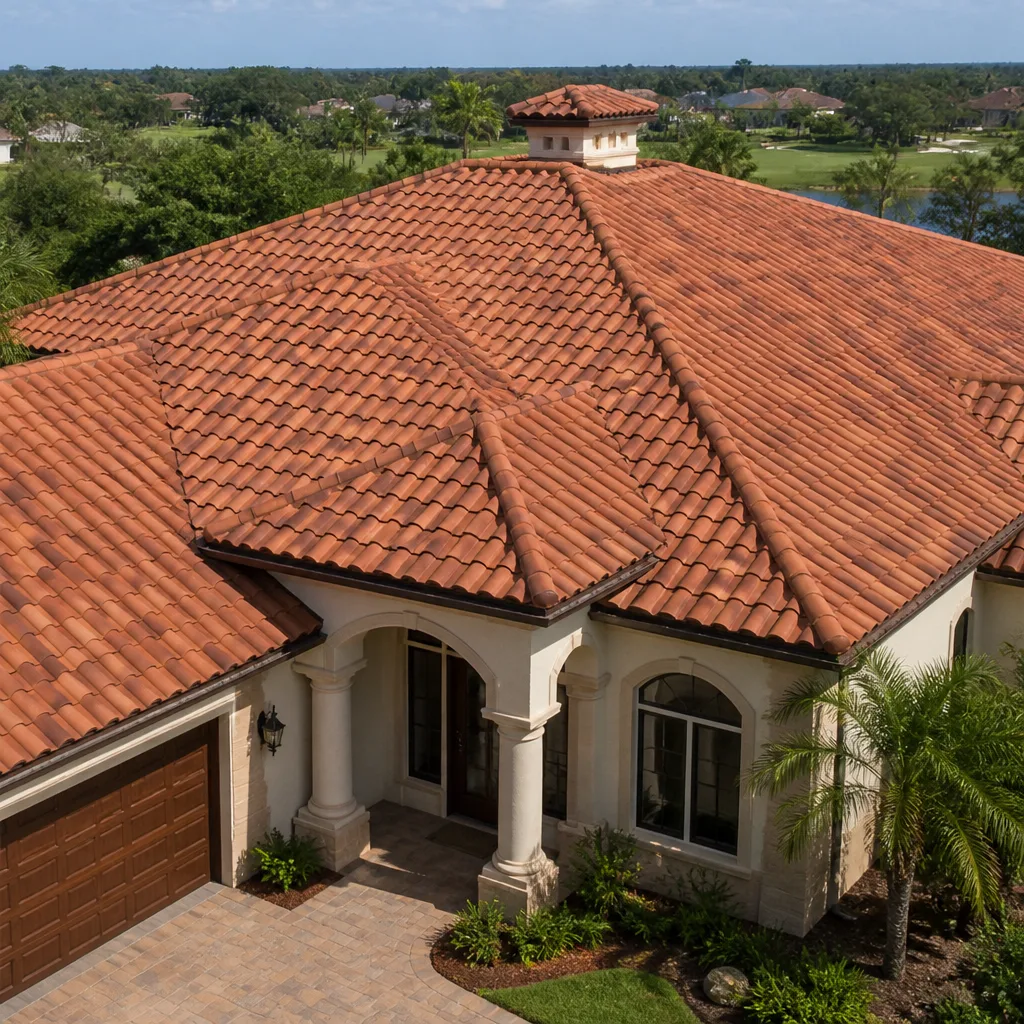 Tile roofing
 GAF
GAF Owens Corning
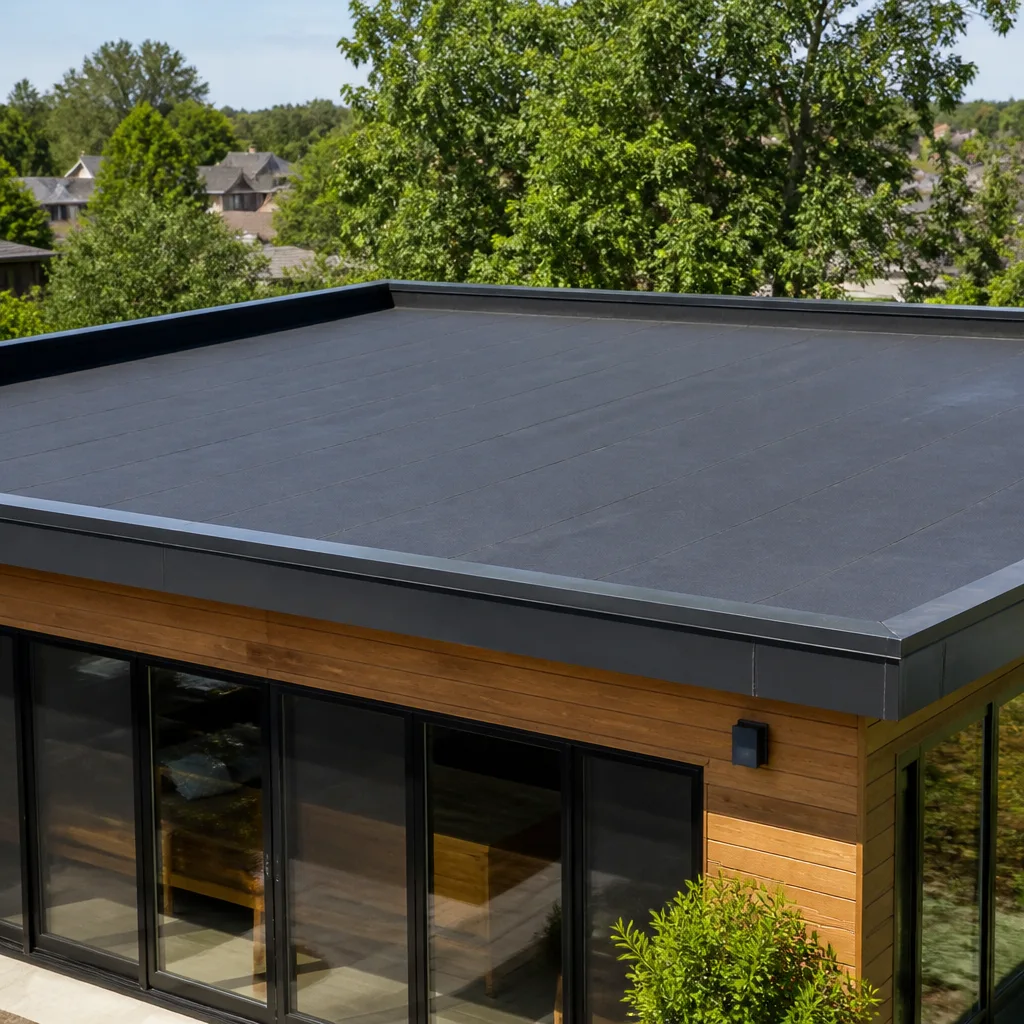 Flat & low-slope
Free roof inspection with deck photos before we talk money - GAF and Owens Corning certified installation
How to Hire a Roofing Contractor in Riverside: A Step-by-Step Guide
California’s CSLB database shows hundreds of licensed roofing contractors operating in Riverside County. A license tells you a contractor passed a test and carries a bond. It does not tell you they’ll show up on schedule, pull permits, honor a written price, or send a crew you’d feel comfortable having on your property. Riverside homeowners face a specific kind of risk: contractors who clear the basic filters and still operate without written scopes, proper permits, or accountable job-site crews. This guide walks through the full sequence, from first phone call to final payment, so you can hire with your eyes open.
Quick Answer
To hire a roofing contractor in Riverside, verify their CSLB license and workers’ compensation insurance in writing, require a written scope of work with itemized pricing before any work starts, confirm whether a permit will be pulled using our guide to Roofing Permits, Codes & Inspections in CA: What You Need to Know, and get the guarantee in writing with the contractor’s physical address on it. Then compare bids against the same written scope, not against each other. Skip any contractor who won’t put the price on paper before touching your roof.
Styles & brands we work with
Table of Contents
- Step 1: Verify the License Before You Call
- Step 2: Demand Proof of Insurance in Writing
- Step 3: Get a Written Scope of Work with Itemized Pricing
- Step 4: Compare Bids Against the Same Scope
- Step 5: Ask the Permit Question and Verify the Answer
- Step 6: Recognize Riverside Market Red Flags
- Step 7: Read the Guarantee Word for Word
Step 1: Verify the License Before You Call
The first move is not collecting three bids. It’s checking the license. California requires any contractor performing roofing work over $500 in labor and materials to hold a C-39 roofing license issued by the Contractors State License Board. Riverside has its own enforcement challenges because the county is large and includes unincorporated areas where code enforcement is stretched thinner than in central Riverside neighborhoods like Wood Streets or Canyon Crest.
Here’s the sequence that filters out the worst actors before they ever set foot on your property:
- Get the license number. Ask for it on the first call. A legitimate contractor says it without hesitating. A door-knocker who deflects is done.
- Check it on the CSLB website. Go to cslb.ca.gov and run the number. Confirm the license is active, not expired or suspended. Confirm the classification is C-39, not a general building license being stretched to cover roofing.
- Confirm the name matches. The name on the license must match the name on the contract and the name on the truck. A contractor using a relative’s license is a red flag that voids your protections under the CSLB complaint process.
- Look at the license history. CSLB records show complaints, disciplinary actions, and bond cancellations. You want a clean record, not an explanation.
We have watched Riverside homeowners discover, halfway through a tear-off, that the crew on their roof belongs to a subcontractor whose license belonged to someone else entirely. The paperwork looked fine. The license check takes five minutes. Do it before anything else.
Step 2: Demand Proof of Insurance in Writing
A verbal claim of insurance is worth nothing at the moment someone falls off your roof. In California, if an uninsured worker is injured on your property, the claim can land on your homeowner’s insurance. This is not hypothetical. It is the single most common way a “cheap” roof turns into a claim against your own policy.
Ask for two documents, both in writing, before any work begins:
- Certificate of workers’ compensation insurance. This must come directly from the insurance carrier or the contractor’s agent, not as a photocopy the contractor hands you. It must list you, or at minimum show that the policy is active for the work dates.
- Certificate of general liability insurance. This covers damage to your home if the crew makes a mistake. Check the effective dates. A policy that expired three months ago is not insurance.
In our experience in Riverside, the contractors who resist this request are the ones who carry no coverage and pay workers in cash. That is exactly the crew you do not want tearing off your roof in July, when Riverside temperatures hit triple digits and heat-related falls spike. Ask for the certificate. If they stall, end the conversation.
This is part of what we call the Brennan Roofing Co Riverside home standard, though the honest truth is it’s not some elevated ideal. It’s the floor. A real roofing company carries real insurance and can prove it in ten minutes.
Step 3: Get a Written Scope of Work with Itemized Pricing
A written scope of work is the difference between a roof and an argument. It lists exactly what will be done, in what order, with what materials, for what price. If it’s not on paper, it didn’t happen. Riverside homeowners who hire on a handshake discover this when the decking turns out to be rotted and the contractor says that’s “extra work” at three times the real cost.
A legitimate written scope includes, at minimum:
- Tear-off or overlay. Full tear-off down to the decking, or a second layer installed over the existing shingles. Full tear-off costs more but exposes rot.
- Underlayment. The water-resistant barrier installed between the decking and the shingles. Riverside’s dry climate still sees winter rain. Cheap underlayment fails early and leaks go unnoticed for years.
- Flashing. The metal pieces installed where the roof meets walls, chimneys, and valleys. Flashing failures cause more leaks than shingles do. The scope should name the gauge of metal, not just say “flashing.”
- Drip edge. The metal strip along the roof edges that directs water into the gutter, not behind it. Many Riverside contractors skip this line item because homeowners don’t ask.
- Decking repair contingency. The scope should state a per-sheet price for rotted decking replacement, so you’re not negotiating price after the roof is open.
- Ventilation. Ridge vents, soffit vents, or attic fans. Riverside attics cook in summer. Poor ventilation shortens shingle life by years.
We put the full price in writing before any work starts, always. The number does not move at the door. That’s been the discipline since 2000, through the Roofing Company in Riverside work we’ve done across this market, and the reason for it is simple: a contractor who won’t commit a price to paper is a contractor who intends to raise it.
Step 4: Compare Bids Against the Same Scope
The standard advice is “get three bids.” The problem is that three bids only mean something if all three contractors priced the same work, as explained in our Roofing Cost Breakdown: The Riverside Homeowner’s Reference for 2026. A $14,000 bid and an $18,000 bid on a Riverside home often represent two entirely different roofs: different underlayment grades, different flashing metals, one includes drip edge, one includes decking contingency, one assumes a re-roof without full tear-off.
Here’s how to make the comparison real:
- Write down the scope you want before any contractor gives you a number. Be specific: full tear-off, synthetic underlayment, 26-gauge flashing, drip edge, decking contingency at a stated per-sheet price, ridge vent.
- Give every contractor the same list. Do not let one contractor “recommend” triple-layer underlayment while another doesn’t mention it. You’re the one who set the scope.
- Ask each contractor to itemize. A lump-sum number with no breakdown cannot be compared to anything. You need line items: tear-off, underlayment, flashing, drip edge, haul-away, permits, decking contingency.
- Ask why the numbers differ. When one bid is $2,000 lower on a comparable scope, ask what specifically is different. If they can’t say, the difference is in what they’re leaving out, not what they’re saving you.
- Check material brand names. If one bid says “architectural shingles” and another says “GAF Timberline HDZ,” those are not the same thing. Ask for the brand and product line. We install materials from GAF, CertainTeed, and Owens Corning, and we tell you exactly which product goes on your roof and why.
The key is that you control the scope, not the contractors. When the scope is fixed, the price comparison becomes meaningful. When it’s not, you’re comparing guesses.
Step 5: Ask the Permit Question and Verify the Answer
Roofing work in Riverside requires a permit in most cases. A full tear-off and re-roof absolutely requires one. The permit triggers an inspection, and the inspection is the only thing that confirms the work meets California Building Code and Riverside’s local amendments. Contractors who say “you don’t need a permit for this” are rarely doing you a favor.
Here’s the exact conversation to have:
- Ask directly: “Will you pull a permit for this job?”
- Wait for a direct answer. “We can do it either way” is not an answer. The contractor either pulls the permit or they don’t.
- If they say you don’t need one, call the City of Riverside Building Department yourself. The number is public. Ask whether a full re-roof on your property requires a permit. It does. The city will tell you in thirty seconds.
- Confirm the permit was actually filed. A contractor can say “permit included” and never file it. Ask for the permit number. Then verify it with the city’s online permit lookup or by phone. If the permit number doesn’t exist, the permit wasn’t pulled.
Unpermitted work in Riverside has consequences that surface years later. When you sell the home, the buyer’s inspector flags the roof. The city may require you to permit it retroactively, at full cost, and if the work failed inspection on the back end, you’re redoing it. A contractor who refuses to pull permits is transferring risk to you and calling it convenience.
This is part of the process we run on every Roof Repair in Riverside job and every full replacement: the permit is in the written scope, the permit number is real, and the inspection gets scheduled before we call the job done.
Step 6: Recognize Riverside Market Red Flags
Riverside has a specific set of roofing risks because of its geography and weather. Santa Ana wind events in the fall strip shingles and send door-knockers into neighborhoods like Victoria and Arlington Heights within 48 hours. They carry ladders, hand out flyers, and offer “storm damage inspections” that turn into high-pressure sales pitches. A few specific patterns to recognize:
- Door-knockers after wind events. Legitimate Riverside roofing companies do not canvass neighborhoods with ladders after a Santa Ana. If someone shows up uninvited claiming they “happened to be in the area and noticed damage,” they’re running a storm-chasing playbook.
- No local physical address. Ask for the business address. A Riverside roofing contractor should have one. A P.O. box or an address in another county means when the guarantee fails, there’s no one to hold accountable within reach of the city.
- Verbal bids. “I’ll email it later” is not a bid. A contractor who cannot put a number on paper before leaving your driveway is a contractor who does not want a record of what they promised.
- Pressure to sign same-day. “This price is good if you sign today” is a pressure tactic. A real roof quote is good for weeks. Riverside’s roofing market is competitive enough that no honest contractor needs you to commit in the driveway.
- Large cash deposits. California limits contractor deposits to 10% of the total job or $1,000, whichever is less. Anyone asking for half up front is violating state law, full stop.
- The “no permit needed” line. Already covered. It’s a lie in almost every case. It appears here because it’s the single most common red flag we see in Riverside.
The unifying pattern: these contractors pass the basic filters. They have a license number, maybe even a few reviews. What they lack is a process that commits them to anything in writing. That’s the line between a roofer and a roofing contractor.
Step 7: Read the Guarantee Word for Word
Most roofing guarantees are worth less than the paper they’re printed on, not because the work is bad, but because the guarantee is unenforceable. A guarantee that says “workmanship warranty” with no duration, no address, and no named party is a sentence fragment, not a commitment.
A real written guarantee contains these elements:
- A duration. “One year” or “five years” or “lifetime.” If the duration isn’t stated, the guarantee is meaningless.
- What’s covered. Workmanship defects, material failures, installation errors. And what’s excluded. A guarantee that lists exclusions is more honest than one that doesn’t.
- The remedy. What happens when something fails. Who calls whom. Who pays for what. “Free return visit at no charge within the guarantee period” means something. “We’ll take a look” means nothing.
- The contractor’s physical business address. Not a P.O. box. Not an email. A street address in or near Riverside. If the contractor cannot be located, the guarantee cannot be enforced. This single line item filters out more bad actors than any other.
- A signature. The contractor signs it. If they won’t sign their own guarantee, they don’t intend to honor it.
We operate under a written standard called The Garrison Code. Every job gets a written guarantee for one full year, called the 365-Day Done Right Promise. If a repair or installation fails within that year, we come back and make it right at no charge. The guarantee is in writing, it names our business address, and it’s signed. The same standard applies to every Roof Inspection in Riverside we complete. If a contractor’s guarantee can’t meet those five tests, keep looking.
Common Mistakes to Avoid
- Skipping the CSLB check because the bid was cheap. The cheapest bid is often priced that way because the contractor carries no insurance and no overhead. Visit cslb.ca.gov before anything else. Five minutes protects you from a year of problems.
- Accepting a verbal quote. If the price isn’t on paper, the price doesn’t exist. Verbal quotes are how a $12,000 roof becomes $16,000 after the decking is exposed.
- Ignoring the permit question. Some Riverside homeowners assume the contractor handles it. Some contractors assume you don’t care. Neither assumption protects you. Ask, verify, confirm.
- Comparing bids on price alone. A bid that’s $3,000 lower is usually lower because it’s missing drip edge, uses thinner flashing, or skips the permit. Compare scopes first, prices second.
- Paying a large deposit. California caps deposits at 10% or $1,000. Anyone asking for more is either ignorant of state law or betting you are.
- Rushing the decision after a storm. Santa Ana wind damage feels urgent, and door-knockers exploit that urgency. Take three days. A legitimate contractor’s price will still be there.
- Accepting a guarantee without an address. A warranty is only as strong as your ability to find the contractor who signed it. No address, no guarantee.
See the difference
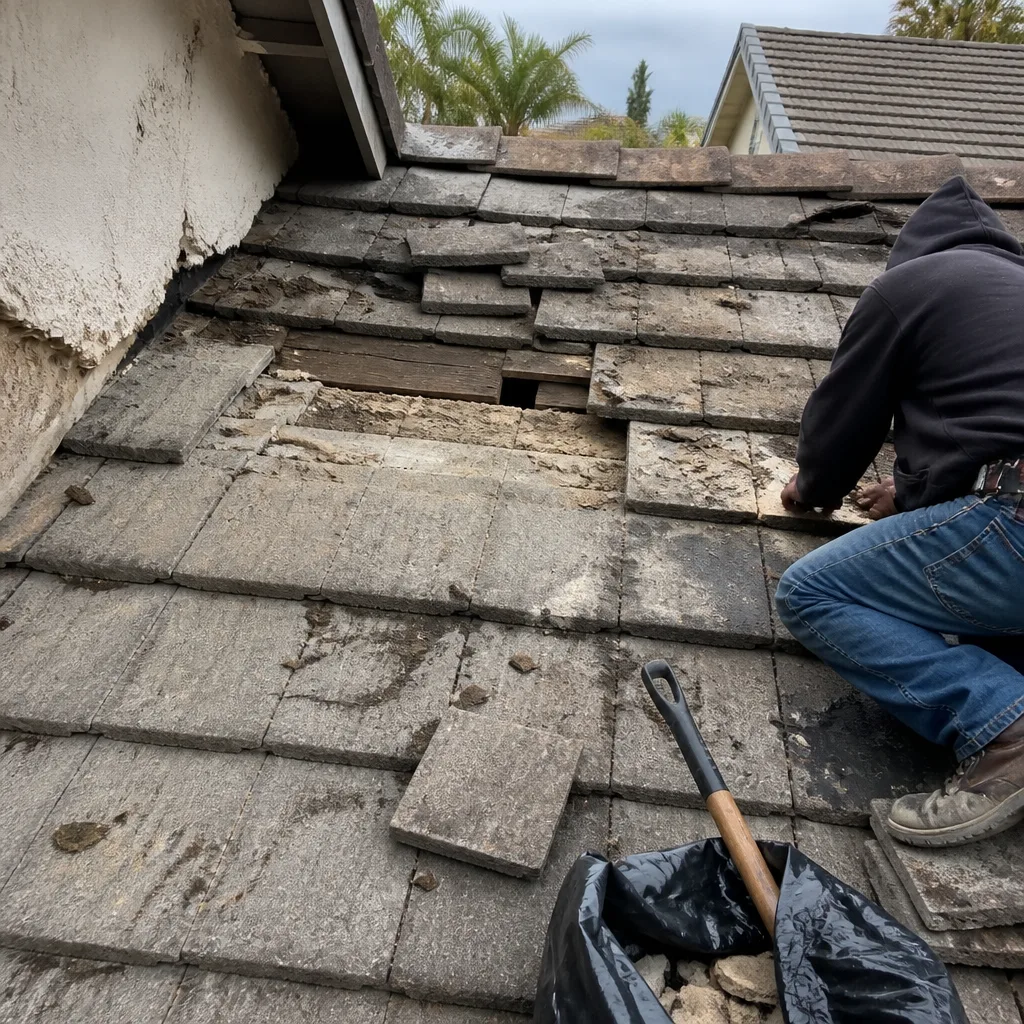 Before
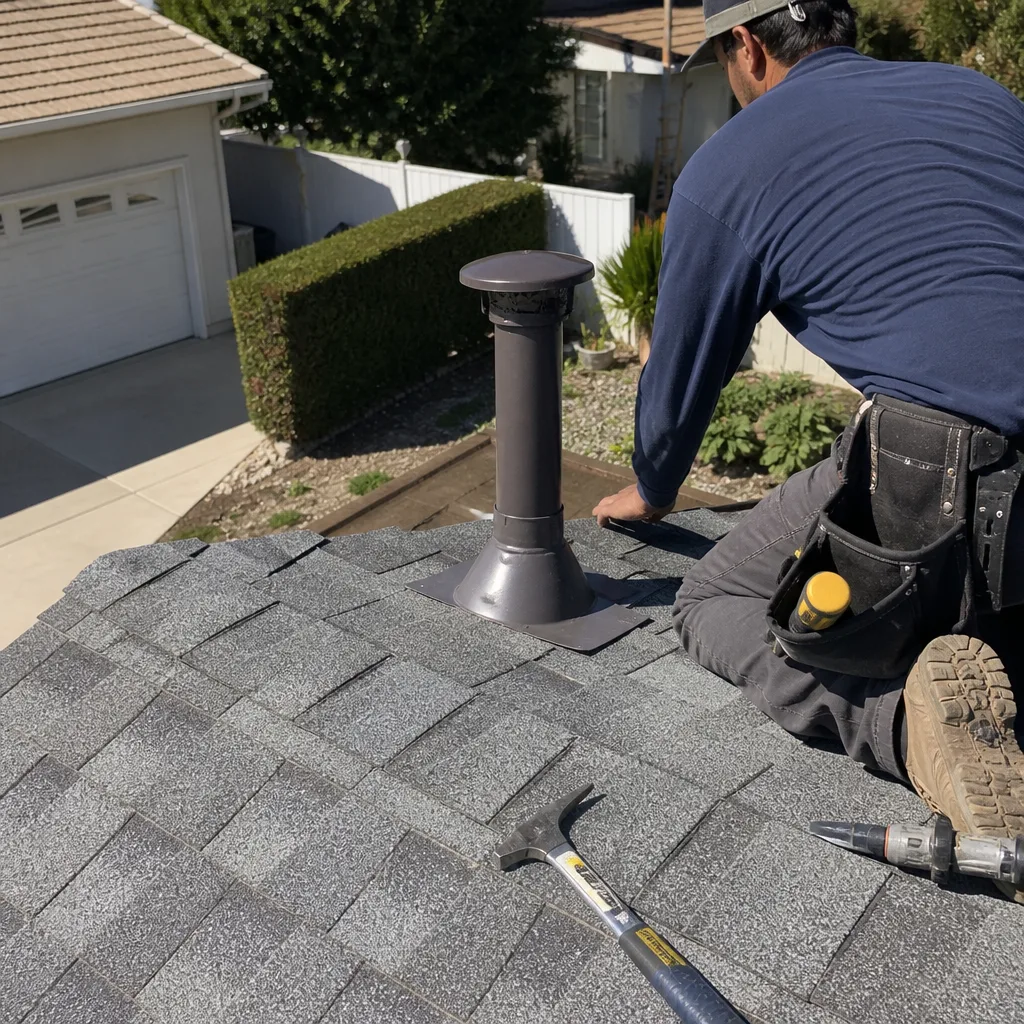 After
After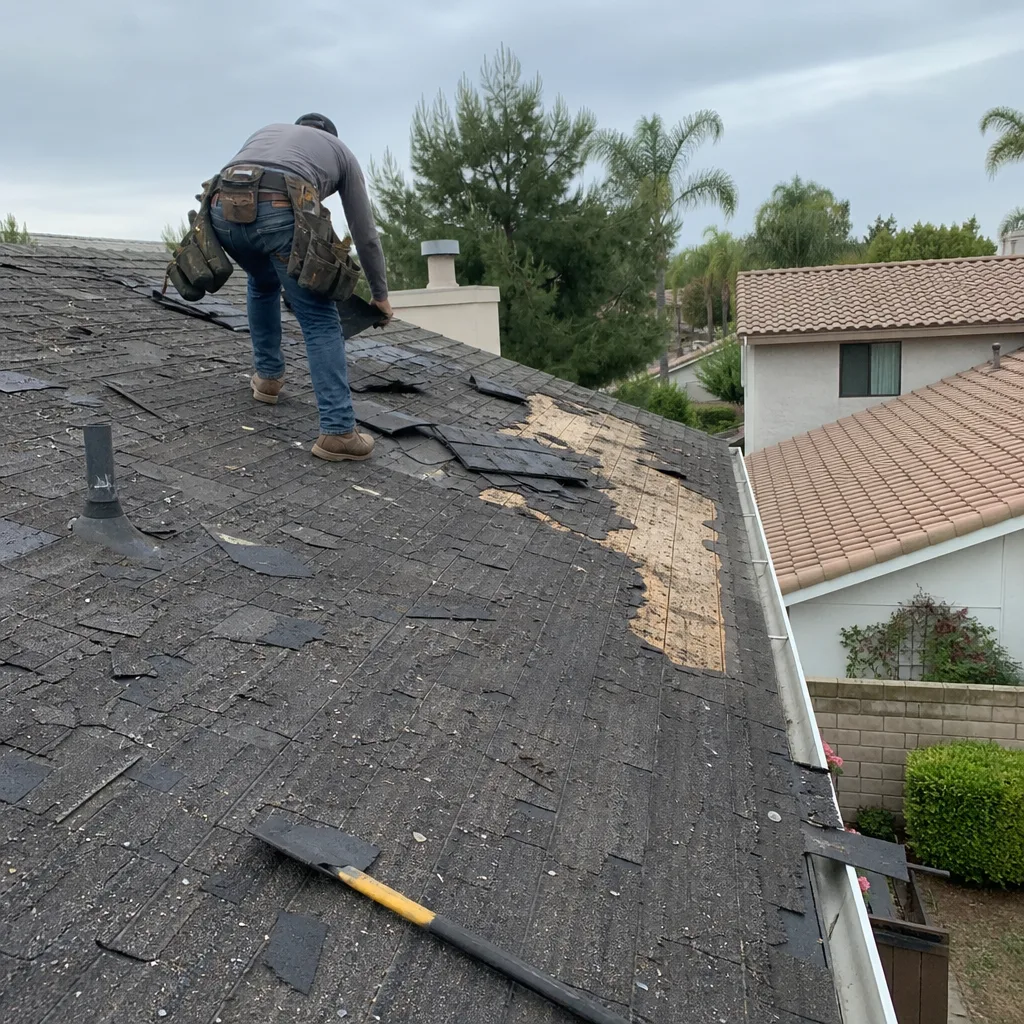 Before
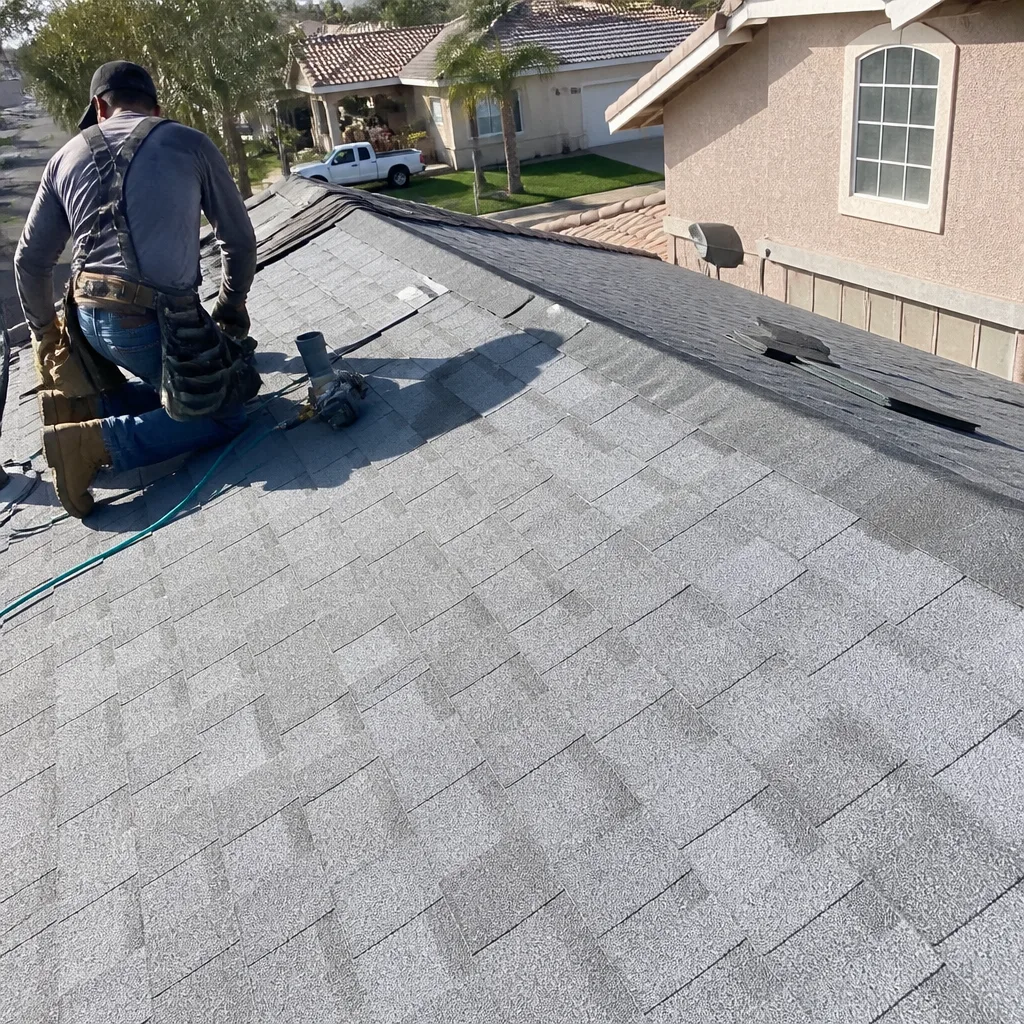 After
After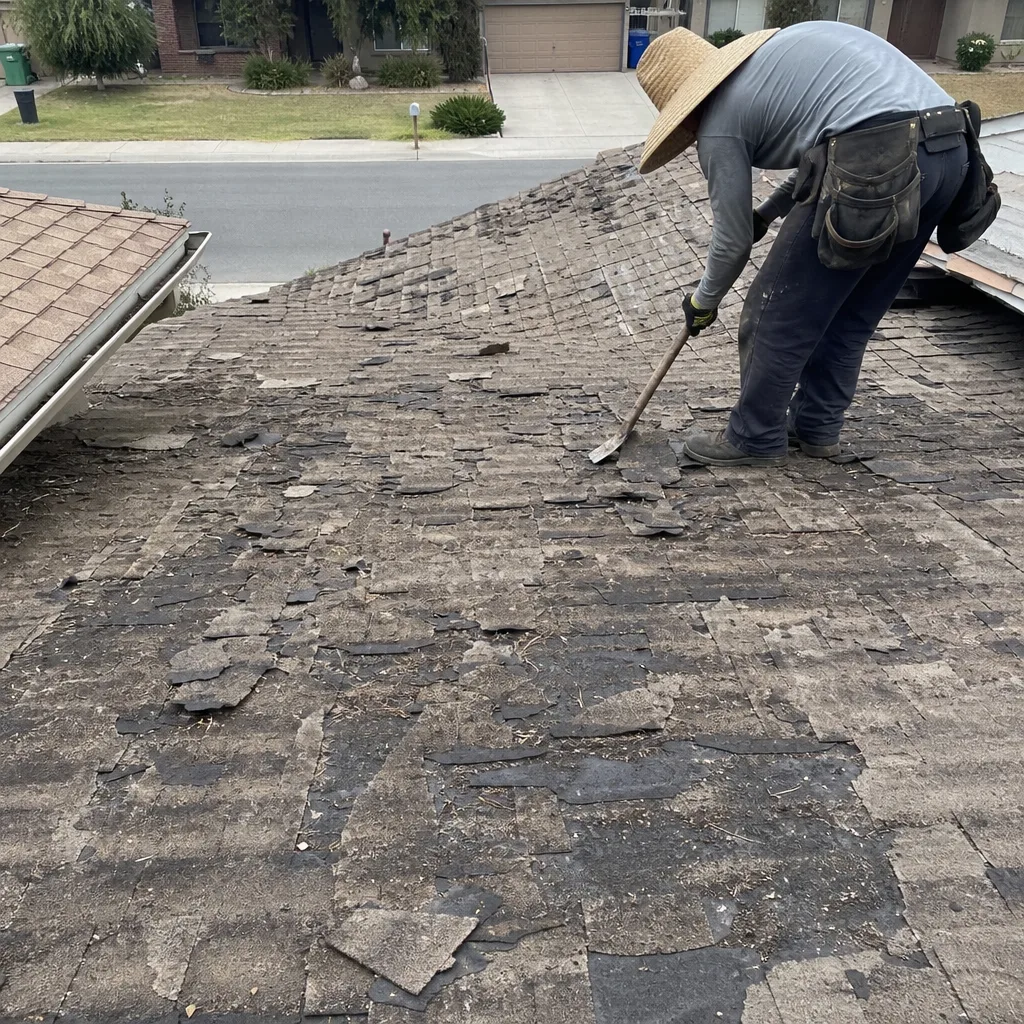 Before
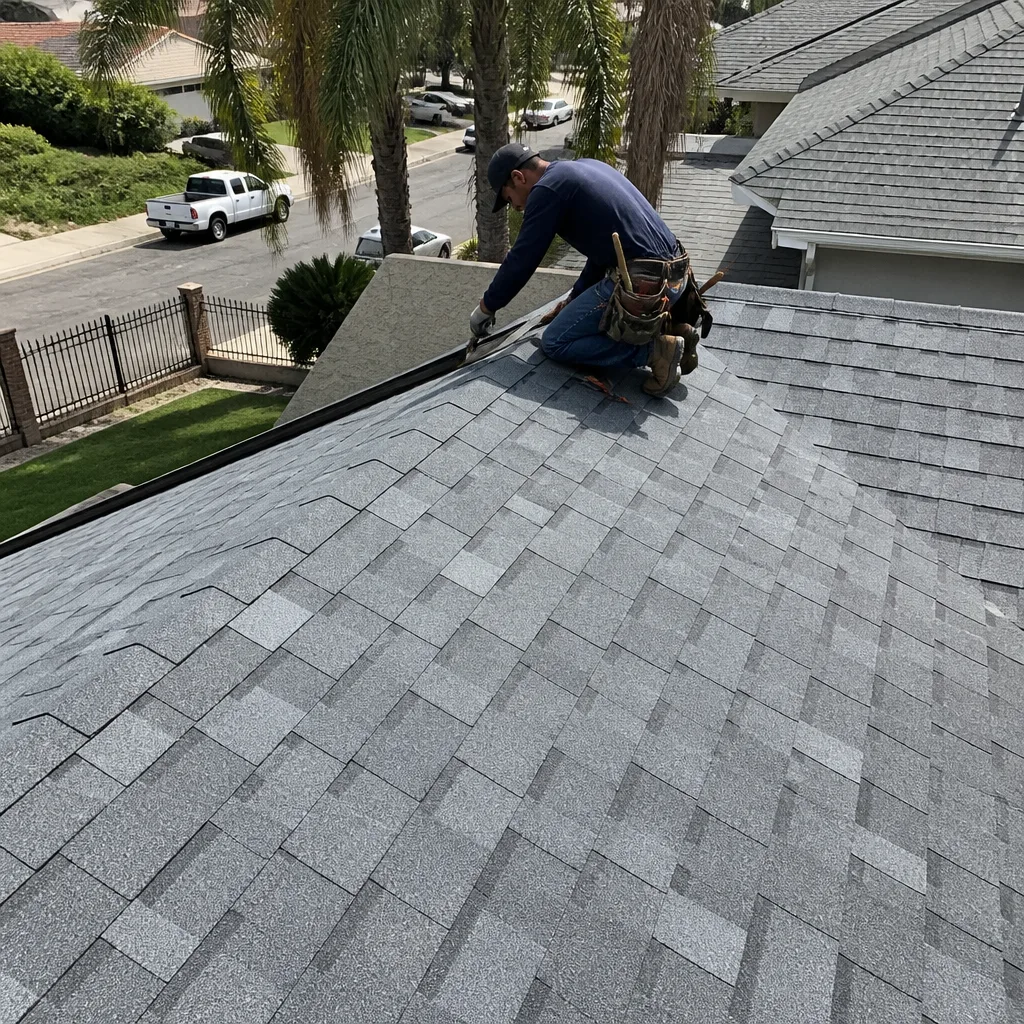 After
AfterWhen to Call a Professional
You need a licensed roofing contractor when you see missing or cracked shingles, granules collecting in the gutters, water stains on the ceiling, or flashing pulling away from chimneys and walls. You need one before you buy a home in Riverside, too: a roof inspection reveals what the sellers hope you won’t ask about. You need one after any Santa Ana wind event strong enough to leave branches in the yard. And you need one when the roof is over 20 years old, even if it looks fine from the ground. Asphalt shingles in Riverside’s heat age faster than their stated lifespan. Brennan Roofing Co Riverside offers free estimates in Riverside, and every estimate starts with the written price before any work begins. Call (341) 208-3988 to schedule yours.
Frequently Asked Questions
A full tear-off and re-roof on a typical Riverside single-family home runs between $12,000 and $22,000, depending on square footage, pitch, material choice, and the condition of the decking underneath. Architectural shingles from GAF or CertainTeed sit in the middle of that range. Tile roofs, common in Riverside neighborhoods like Canyon Crest, run higher. The only way to get an exact number for your roof is a written itemized estimate from a licensed contractor. Call (341) 208-3988 for a free estimate, and you’ll have the written price before any work starts.
Yes, a full roof replacement in Riverside requires a building permit, and the work must pass a city inspection, which should be part of any Roofing Company Maintenance Checklist for Riverside Homeowners. A roofing contractor who tells you no permit is needed is either mistaken or avoiding the inspection. You can verify the requirement directly with the City of Riverside Building Department. If a contractor refuses to pull a permit, walk away.
Go to cslb.ca.gov and enter the contractor’s license number. The CSLB database shows whether the license is active, the classification (look for C-39 Roofing), any disciplinary actions, and the bond status. Do this before you accept a bid, not after. A contractor who hesitates to give you the number is giving you an answer.
A real roofing guarantee states a duration in writing, names the workmanship defects covered, spells out the remedy (including whether return visits are free), lists the contractor’s physical business address, and carries a signature. Any guarantee missing those elements is difficult to enforce. At Brennan Roofing, the 365-Day Done Right Promise covers every repair and installation in writing for one full year, and includes a free return visit at no charge if something fails within that period.
Generally, no. Legitimate Riverside roofing contractors do not canvas neighborhoods door to door after wind events. Storm-chasing crews follow the weather, pick up local jobs, and leave town. If someone shows up uninvited claiming to have spotted damage on your roof, get their license number and check it before you let them near the property. Better yet, call a local contractor directly and ask for a roof inspection on your own schedule.
Look for visible signs from the ground: shingles in the yard, lifted shingle edges visible from the street, or granules collecting in the gutters. If you see any of those, call a licensed contractor for a roof inspection before the next rain. Riverside’s dry months make wind damage easy to ignore, but lifted shingles and broken flashing leak the moment winter rain arrives.
The Bottom Line
Hiring a roofing contractor in Riverside is a sequence of verifiable steps, not a matter of intuition. Verify the license. Demand insurance certificates in writing. Get a written itemized scope before any work starts. Compare bids against that same scope. Pull the permit and verify it’s real. Read the guarantee word for word, with the physical address on it. The process is longer than picking the cheapest bid, but it’s also the difference between a roof that protects your home for decades and one that leaks the first winter after the check clears. Brennan Roofing Co Riverside operates under The Garrison Standard: written price before work starts, background-checked uniformed technicians, and a full-year written guarantee. Call (341) 208-3988 to schedule your free estimate.
Written by Travis Oakley, Owner at Brennan Roofing Co Riverside, serving Riverside since 2000. Explore more guides & resources on our blog.