
Last updated October 17, 2026
 Metal roofing
 Architectural shingles
 Tile roofing
 GAF
GAF Owens Corning
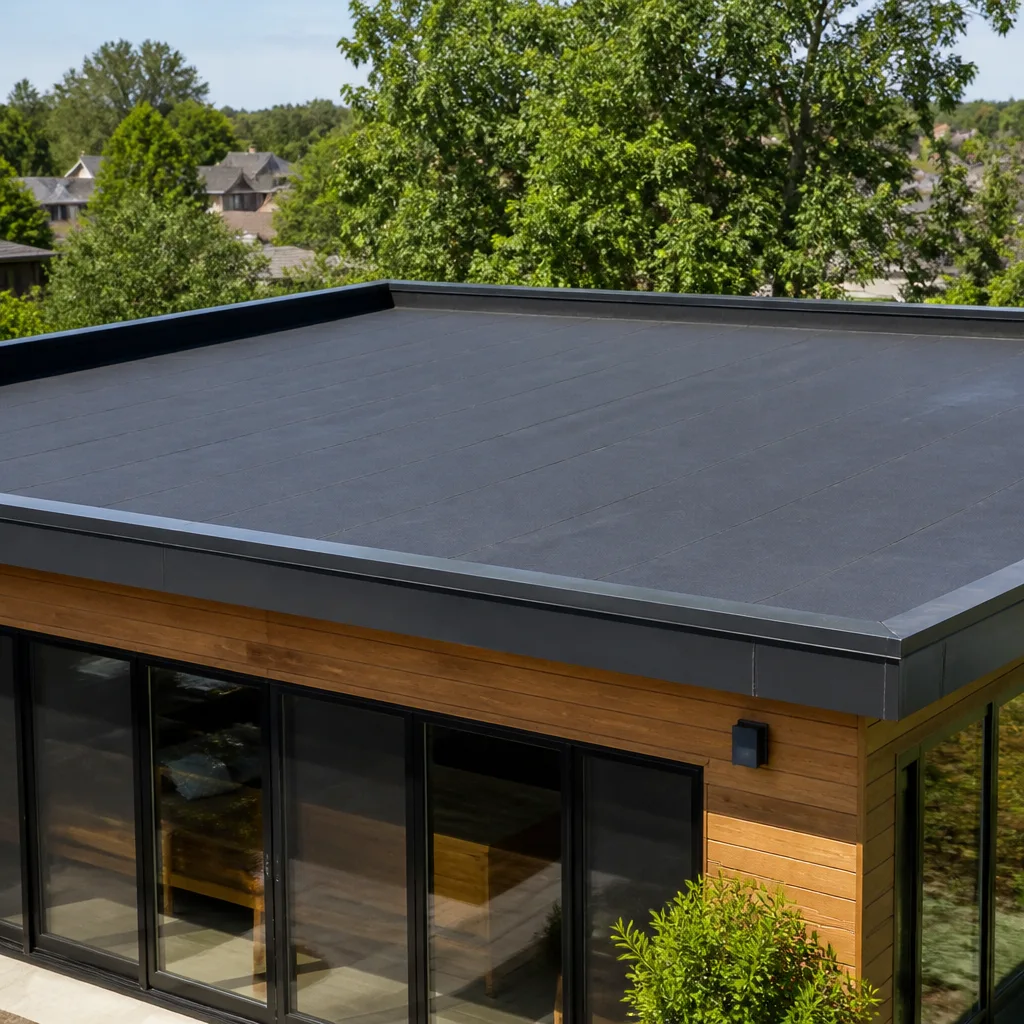 Flat & low-slope
Free roof inspection with deck photos before we talk money - GAF and Owens Corning certified installation
Seasonal Roofing Care for Riverside: Year-Round Homeowner’s Guide
Riverside averages only about 10 inches of rain per year, but the damage from those few storms is disproportionate because they arrive after months of dry, 100-degree heat that has been quietly degrading sealants, mortar, and flashing. Homeowners who follow a generic four-season roofing calendar miss what actually happens here: a punishing summer thermal cycle, a short and violent rain window, and fall Santa Ana winds that hit a roof already stressed. This guide lays out a month-by-month care plan built for Riverside’s actual weather, with dollar ranges for what maintenance costs versus what deferred repairs cost, and links to The Complete Guide to Roofing in Riverside for deeper context.
Styles & brands we work with
Quick Answer
Seasonal roof care in Riverside means scheduling a pre-summer inspection in April or May to catch heat-related wear before temperatures peak, checking attic ventilation in July or August, completing a full pre-rain inspection by mid-October (with special attention to tile valleys, flashing, and ridge caps), and doing a post-storm damage assessment after the first significant rain event. A disciplined homeowner spending $200 to $450 per year on inspections and minor maintenance typically avoids $4,000 to $12,000 in structural repairs within five years, as explained in our DIY vs Professional Roofing: The Riverside Homeowner’s Decision Guide.
Table of Contents
- Why Riverside’s Climate Demands a Different Roofing Calendar
- The Month-by-Month Roof Care Calendar
- What Thermal Cycling Does to Riverside Roofs
- Gutter and Valley Readiness for Inland Empire Rain Events
- Santa Ana Winds: The Fall Wildcard After a Long Hot Summer
- The Real Cost of Seasonal Maintenance vs. Deferred Repairs
- When Seasonal Care Isn’t Enough: Replacement Thresholds
- Common Mistakes to Avoid
- When to Call a Professional
- Frequently Asked Questions
- The Bottom Line
Why Riverside’s Climate Demands a Different Roofing Calendar
Most roofing guides are written for places with real winters: ice dams, snow load, freeze-thaw cycles. Riverside has none of that. What it has is a desert-adjacent heat profile that acts like a slow cooker on roofing materials from June through September, followed by a rain season that concentrates most of the year’s precipitation into a handful of intense events between November and March.
Here’s what that means in practical terms. Roofing sealants, the caulked joints around flashing, vents, and penetrations, begin to oxidize and crack at sustained temperatures above 95 degrees. Riverside routinely sees 30 to 45 days per year at or above that threshold. Concrete tile roofs, common throughout neighborhoods like Canyon Crest, Wood Streets, and Mission Grove, don’t melt or warp the way asphalt shingles do, but the mortar used at ridge caps and hip lines expands and contracts with each daily temperature swing. Over a single summer, that expansion and contraction can loosen mortar joints enough that the first real rain finds a path underneath the tiles.
The rain itself is another factor. When rain falls after eight months of dryness, it hits a roof covered in fine dust, pollen, and dry debris that has accumulated in valleys and around penetrations. That debris turns into a slurry that clogs drainage channels, backs water up under tiles, and finds every micro-crack the summer created. A roof that drained perfectly in March can leak in November simply because the dry-season debris load was never cleared.
Riverside homeowners need to flip the standard calendar. The critical inspection points are not “spring and fall” in the generic sense, they are April (before the heat), August (mid-heat ventilation check), October (before the rain), and December (after the first storm). Each of these is covered in detail below.
The Month-by-Month Roof Care Calendar
Here is a working calendar built around Riverside’s actual weather patterns, not a generic national template. Each step takes an hour or less for a homeowner, or can be folded into a professional Roof Inspection in Riverside visit.
- January-February: Post-Rain Monitoring. After December’s storms, check ceilings and attic spaces for water stains, especially in rooms under valleys or around chimneys. Look for damp insulation. If you see staining, mark the area with painter’s tape so a professional can trace it to the source.
- March: Flashing and Sealant Review. Winter rains have done their damage. Walk the roof perimeter (from the ground with binoculars if you prefer) and inspect the sealant around plumbing vents, chimneys, and skylights. Look for hairline cracks in the caulk or gaps where flashing meets the roof deck.
- April: Pre-Summer Inspection. This is the most important inspection of the year. A roof going into Riverside’s summer with cracked sealants or loose ridge mortar will be significantly worse by October. Fix problems now, before heat compounds them. Cost range for a professional inspection: $150 to $350. Minor repairs at this stage: $200 to $600.
- May: Clean Valleys and Drainage Paths. Dry-season debris starts accumulating now. Use a leaf blower or soft brush to clear tile valleys, the channels where two roof planes meet and concentrate water flow. Do not walk on concrete tile without knowing how to distribute your weight, cracking tiles is a real risk.
- June: Attic Ventilation Check. With outside temperatures climbing, confirm that attic vents (ridge vents, soffit vents, gable vents) are unobstructed. A poorly ventilated attic can reach 150 degrees, which bakes the underside of roofing materials and shortens their life. More on this in the thermal cycling section below.
- July-August: Mid-Summer Roof Surface Check. Look for curling on asphalt shingles, visible granule loss in gutters, and any tiles that have shifted. On flat-roof sections, check for blisters or bubbles in the membrane, which indicate trapped moisture expanding in the heat.
- September: Gutter Cleaning and Downspout Testing. Clear all gutters of summer debris and run water through downspouts to confirm they’re flowing freely. A downspout clogged with dried leaves and dust will back up during the first heavy rain.
- October: Pre-Rain Inspection. The non-negotiable inspection. By mid-October, every crack, every loose ridge cap, every compromised flashing joint should be identified and repaired. If you only schedule one professional inspection per year, make it this one. Cost: $150 to $350.
- November: Santa Ana Wind Assessment. After high-wind nights, check for displaced tiles, lifted shingles, and debris impact. Santa Ana winds routinely exceed 40 mph in Riverside’s foothill areas, and a single wind event can loosen materials that were marginally holding on after summer.
- December: Post-First-Rain Damage Assessment. After the first substantial rain, check the attic and ceilings again. The first storm is the test. Any leak that appears now tells you exactly where the summer’s damage was hiding.
What Thermal Cycling Does to Riverside Roofs
Thermal cycling is the repeated expansion and contraction of roofing materials as temperatures rise and fall. In Riverside, the daily swing during summer can be 30 to 40 degrees: from a 65-degree morning to a 105-degree afternoon. Multiply that by 100 to 120 hot days per year, and materials experience thousands of micro-movements annually.
Concrete tile roofs handle heat well on the surface, but the mortar used to secure ridge caps and hip tiles is the weak point. We’ve seen ridge mortar in neighborhoods like Victoria and Alessandro Heights crumble into powder after three or four summers because homeowners never checked it. Once the mortar fails, the ridge cap becomes a lever: wind catches it, lifts it, and exposes the underlayment underneath. The fix at the mortar stage is $300 to $800. The fix after a ridge cap lifts and water gets into the decking is $2,000 and up.
Flat-roof sections, common on patio covers, additions, and some mid-century homes around the Magnolia Center area, face a different problem. Built-up roofs and modified bitumen membranes absorb heat directly. Surface temperatures on a flat roof in Riverside can exceed 160 degrees in July. Over time, the membrane loses elasticity, and seams, the fused joints between membrane sheets, begin to separate. The visible sign is called “alligatoring,” where the surface develops a pattern of cracks resembling alligator skin. By the time alligatoring is visible, the membrane is in the late stages of its life and seam failures are likely within one to two rain seasons.
Asphalt shingle roofs in Riverside show thermal stress differently. Shingles lose granules as the asphalt binding them deteriorates under UV exposure and heat. Homeowners can check this by looking at gutters after a rain: if there’s a fine grit accumulation, that’s granule loss. More advanced heat damage shows as curling at shingle edges or blistering, small raised bumps where moisture in the shingle expanded in the heat and popped the surface. Curled or blistered shingles do not seal properly against wind and are the first to fail during Santa Ana events.
What to look for specifically in the fall:
- Ridge cap mortar: Crumbling, flaking, or hairline cracks running along the mortar line.
- Concrete tiles: Displaced or broken tiles, especially near the roof edges where thermal movement is greatest.
- Flat-roof seams: Visible separation at joints, surface wrinkling, or areas where the membrane feels spongy.
- Asphalt shingles: Curling edges, blistering, or patches where granules have worn through to the black asphalt beneath.
Gutter and Valley Readiness for Inland Empire Rain Events
Standard gutter advice, clean them in the fall, misses the specific problem Riverside roofs face. The issue isn’t just volume of debris, it’s where that debris accumulates and what it becomes after eight dry months.
Concrete tile valleys are the most common failure point we see in Riverside homes. A valley is the V-shaped channel where two roof planes intersect. Water funnels through valleys during rain, so they must stay clear to do their job. But during Riverside’s long dry season, wind deposits dust, pollen, small leaves, and insect debris into these channels. The debris compacts and hardens. When rain finally arrives, the first few minutes of runoff turn that packed debris into a dam. Water backs up behind the dam, rises above the valley flashing, and runs under the tiles on either side. The roof leaks not because the flashing failed, but because the drainage path was blocked by a summer’s worth of accumulation.
Downspouts are the second issue. In a wet climate, regular rain flushes downspouts naturally. In Riverside, downspouts can go eight months without seeing water. Spiders, wasps, and rodents build nests inside. By the time the first storm hits, the downspout is blocked internally, and gutters overflow at the corners, pouring water down the fascia and behind the gutter itself. Testing downspouts with a hose in October should be a mandatory step, not a nice-to-have.
A practical readiness checklist for October:
- Clear every valley: Use a soft-bristle broom, leaf blower, or compressed air. Never use a pressure washer on a valley, it drives water under the tiles.
- Flush every downspout: Run a hose at full pressure into each downspout from the top and confirm water exits at the bottom. If not, clear the blockage or call a professional.
- Check gutter hangers: After a dry summer, wooden fascia boards may have shrunk, loosening the screws holding gutter hangers. A gutter that sags or pulls away from the house will overflow exactly where water does the most damage, at the foundation line.
- Inspect drip edge: The metal strip along the roof edge that directs water into the gutter. If it’s bent, rusted, or separated from the fascia, water can wick back under the roof deck. Drip edge replacement on an average Riverside home runs $4 to $8 per linear foot installed.
Santa Ana Winds: The Fall Wildcard After a Long Hot Summer
Santa Ana winds in Riverside are predictable in their season, October through December, and unpredictable in their intensity. The National Weather Service regularly issues high-wind warnings for the Inland Empire with gusts exceeding 50 mph in foothill and canyon areas like Box Springs Canyon and the hills above La Sierra.
The danger of Santa Ana events isn’t just the wind speed, it’s the sequence. The winds arrive after a summer that has thermally stressed every sealant, every mortar joint, and every shingle adhesive strip on the roof. The roof is at its most vulnerable exactly when the wind arrives.
Here’s what actually fails during Santa Ana events, in order of frequency we see:
- Loose ridge caps: Mortar that crumbled over summer no longer holds the ridge cap. Wind catches the exposed edge and lifts the cap, often taking neighboring caps with it.
- Compromised shingle seals: The adhesive strip that bonds shingles together degrades in heat. Shingles that look flat and normal on a calm day lift like playing cards in sustained 40-plus mph winds.
- Flashing around penetrations: The metal flashing itself rarely fails, but the sealant holding it to the roof surface cracks over summer. Once wind works a gap open, it widens with every gust.
- Tile displacement: Individual concrete tiles, especially at roof edges and hips, can be physically displaced by wind once their fasteners have loosened through thermal cycling.
After any high-wind night in November, do a visual check from the ground. Look for tile gaps on the roof surface, shingles in the yard or on the ground, and any visible lifting at the roof edge. If you see displacement, the damage is rarely limited to what’s visible. A professional Roof Repair in Riverside visit is the right call, because the tiles or shingles that didn’t blow off may be the ones that were weakened but not yet displaced, and the next wind event will finish the job.
The Real Cost of Seasonal Maintenance vs. Deferred Repairs
Let’s put actual dollar ranges on the maintenance-versus-deferral decision, using prices common in the Riverside market as of 2025, with more guides & resources available on our blog.
What seasonal maintenance costs:
- Professional roof inspection (per visit): $150 to $350
- Two inspections per year (April and October): $300 to $700
- Minor sealant repair at flashing or penetrations: $200 to $500
- Ridge mortar repointing (limited section): $300 to $800
- Valley cleaning (standalone or during inspection): $100 to $250
- Gutter cleaning with downspout flush: $150 to $300
What deferred repairs cost after failure:
- Decking replacement caused by a leaked valley: $1,500 to $4,000
- Ridge cap reset after wind damage: $800 to $2,500
- Flat-roof seam repair after membrane separation: $1,200 to $3,000
- Interior ceiling and drywall repair after a leak: $500 to $2,000
- Full underlayment replacement after repeated tile leaks: $6,000 to $12,000
- Mold remediation if a leak goes undetected for months: $2,000 to $10,000
The math is straightforward. A homeowner who spends $500 per year on inspections and minor maintenance is spending $2,500 over five years. A homeowner who defers maintenance faces a single event, one Santa Ana night or one November storm, that costs more than that entire five-year budget, and that’s before counting interior damage.
We’re not saying every homeowner needs to spend money every year. Some years, an inspection finds nothing and the cost is just the inspection fee. The point is that the inspection happens. Problems caught at the sealant-crack stage cost hundreds. Problems caught at the water-in-the-decking stage cost thousands.
When Seasonal Care Isn’t Enough: Replacement Thresholds
Seasonal maintenance extends the life of a roof, but it doesn’t make an old roof new. Riverside homeowners should know the thresholds where maintenance stops making financial sense and replacement becomes the honest recommendation.
For asphalt shingle roofs, the typical lifespan in Riverside’s climate is 15 to 20 years, slightly shorter than coastal areas due to UV intensity and heat. If your shingle roof is over 18 years old and you’re seeing curling, granule loss, and failed seals in multiple locations, patching becomes a losing game. You’re paying for repairs that buy months, not years. Materials from manufacturers like GAF and CertainTeed carry warranties of 25 to 50 years, but those warranties assume proper installation and a climate that doesn’t accelerate degradation the way Riverside’s does.
For concrete tile roofs, the tiles themselves can last 50 years or more, but the underlayment beneath them, the waterproof layer that actually keeps water out, has a functional life of 20 to 30 years in Riverside. A tile roof that leaks despite intact tiles usually has failing underlayment. Replacing tile underlayment on an average Riverside home runs $8,000 to $15,000, depending on roof size and pitch. It’s a significant investment, but it’s the correct fix when the underlayment has reached the end of its life.
For flat-roof sections, built-up and modified bitumen roofs last 15 to 20 years in Riverside’s heat. If your flat roof is showing alligatoring across more than 10 to 15 percent of its surface, replacement is more cost-effective than continued patching. Owens Corning and GAF both manufacture commercial-grade flat roofing systems that perform well in high-UV environments when properly installed.
The best way to know where your roof stands is to get a professional evaluation that separates “monitor this” from “fix this now” from “this is done.” A Roofing Company in Riverside that gives you a written report with photos lets you plan replacement on your timeline instead of reacting to a leak.
Common Mistakes to Avoid
- Treating “no leaks” as “no problems.” In Riverside, the gap between a cracked sealant and a leaking roof can be six months. The absence of water inside the house doesn’t mean the roof is sound. By the time water shows up on a ceiling, the damage has been developing for months.
- Cleaning gutters only after leaves fall. In Riverside, most of the debris that clogs valleys and gutters accumulates during the dry season, not from fall leaves. Waiting until November means the first rain hits a drainage system that’s been clogged since July.
- Ignoring ridge cap mortar. Homeowners check tiles and shingles, but almost never look at the mortar line running along the ridge. That mortar is the most thermally stressed material on the roof, and it’s the most common point of failure on concrete tile roofs in Riverside.
- Walking on concrete tile without proper technique. Concrete tiles crack when weight is concentrated on their center. If you need to access the roof, step on the lower third of each tile, where the overlap provides support. Better yet, let a professional handle it, a cracked tile from a misstep is a $50 to $200 self-inflicted repair.
- Caulking over failed flashing instead of replacing it. Sealant over a lifted flashing joint is a temporary patch that lasts until the next thermal cycle. The metal needs to be re-secured or replaced for the fix to hold through a Riverside summer.
- Ignoring the attic on hot days. An overheated attic, one that hits 140 to 150 degrees, is actively reducing the life of your roofing materials from below. Ventilation problems are invisible from outside and are only caught by checking the attic during the heat of the day.
- Assuming a post-rain leak “fixed itself” once it stopped raining. The leak path remains. It just dried up. The next rain, especially if it’s heavier, will follow the same path, and it will do more damage than the first time because the materials are now water-weakened.
When to Call a Professional
Some things a homeowner can and should handle: clearing valleys, flushing downspouts, visual checks from the ground. Other situations call for a trained eye and the right equipment. Call a professional if you see multiple cracked or displaced tiles after a wind event, if your attic shows water staining after rain, if your flat roof has visible alligatoring or blisters across more than a small patch, or if your roof is over 15 years old and has never had a professional inspection. Working on a roof involves height, pitch, and materials that can fail underfoot, and a fall from even a single-story roof is a life-altering injury. Brennan Roofing Co Riverside offers free estimates in Riverside, call (341) 208-3988 and a background-checked, uniformed technician will assess what’s actually going on up there.
Frequently Asked Questions
A professional roof inspection in Riverside typically costs $150 to $350, with the price depending on roof size, pitch, and whether it’s a single-family home or a larger property. Some inspections are free when bundled with a repair estimate. Call (341) 208-3988 for exact pricing, estimates are always free.
The two best times to inspect a roof in Riverside are April, before summer heat compounds any existing damage, and October, before the winter rain season arrives. If you only schedule one inspection per year, make it the October one. That’s when you’ll catch the full accumulated effect of summer thermal cycling before rain turns those cracks into leaks.
Yes. Riverside’s climate, extreme summer heat, minimal rain, and fall wind, actively degrades roofing materials every single year. Missing one year of inspection means missing a full summer’s worth of thermal cycling damage. A roof that goes three or four years without inspection in Riverside is a roof that’s quietly accumulating the conditions for a major leak.
Minor leak repairs in Riverside, like sealant replacement or flashing touch-up, typically run $200 to $600. Leaks caused by failed valley flashing or compromised underlayment run $1,500 to $4,000. Leaks that have damaged decking or caused interior ceiling damage can exceed $5,000. The cost spread depends entirely on how long the leak has been developing. Call (341) 208-3988 for a written quote before any work starts.
Not with Brennan Roofing Co Riverside. The price goes on paper before any work begins, and that number does not move at the door. If we find additional damage once the roof is opened up, we show you what we found and we get your approval before anything extra is done. That’s part of The Garrison Standard, and it’s how we’ve operated since 2000.
The tiles themselves can last 50 years or more, but the underlayment beneath them has a functional life of 20 to 30 years in Riverside’s heat. Most concrete tile roofs that leak are not leaking because the tiles failed, they’re leaking because the underlayment has reached the end of its service life. Ridge cap mortar is the other wear item, typically needing repointing every 5 to 10 years depending on sun exposure.
Yes. Roof replacements and major repairs in Riverside require permits from the city, and we pull them as part of the job. The permit and inspection process protects the homeowner by ensuring the work meets current building code, including the roofing requirements in California’s Title 24 energy code. We don’t skip permits to save time or money, and we don’t ask homeowners to pull their own.
The Bottom Line
Riverside roofs fail on a schedule that has nothing to do with calendars and everything to do with heat, wind, and concentrated rain. A homeowner who inspects in April and October, keeps valleys and downspouts clear, and fixes small problems at the sealant-crack stage will spend a few hundred dollars a year and get the full life out of their roof. A homeowner who waits for a leak to announce itself will spend thousands fixing damage that was preventable six months earlier. The discipline isn’t complicated. The calendar is right here. The only step left is picking up the phone. Brennan Roofing Co Riverside home is your starting point for honest, written, no-surprise roofing work in Riverside.
Written by Travis Oakley, Owner at Brennan Roofing Co Riverside, serving Riverside since 2000.
See the difference
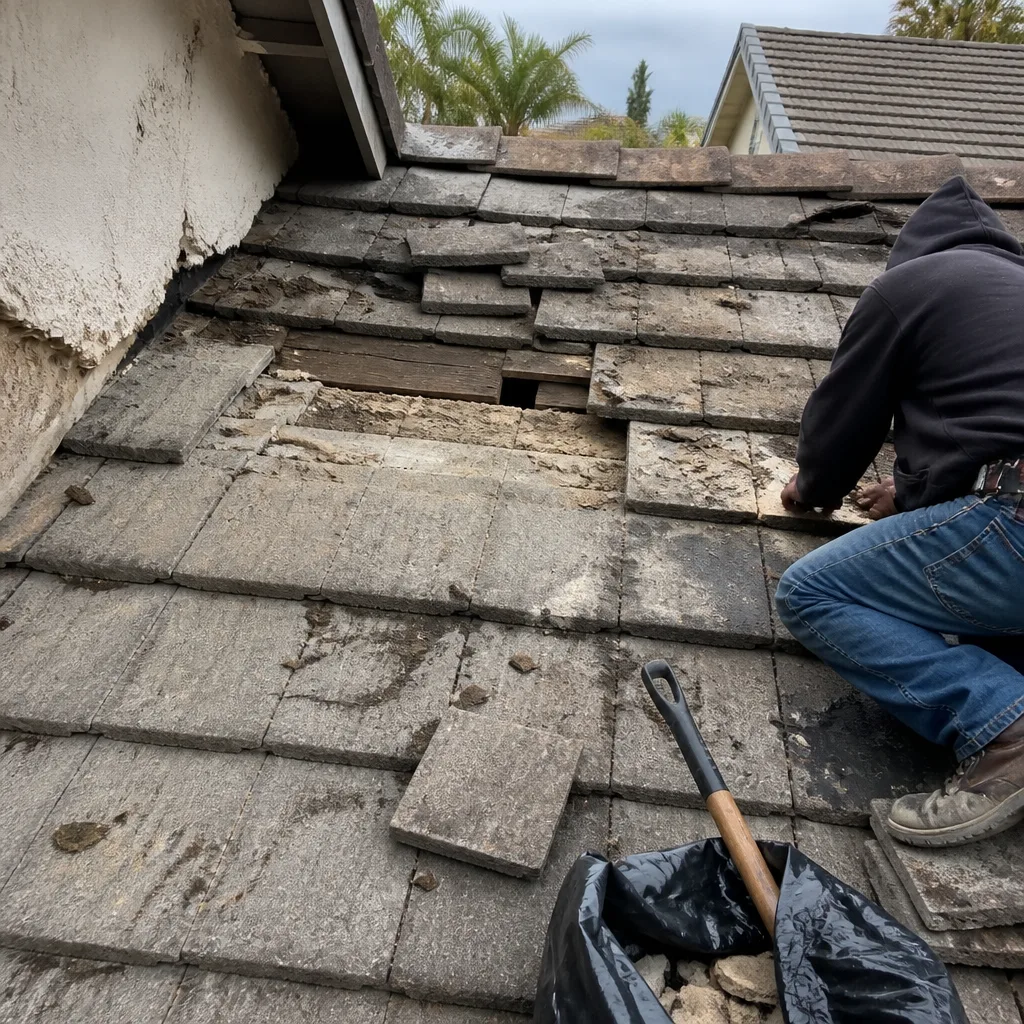 Before
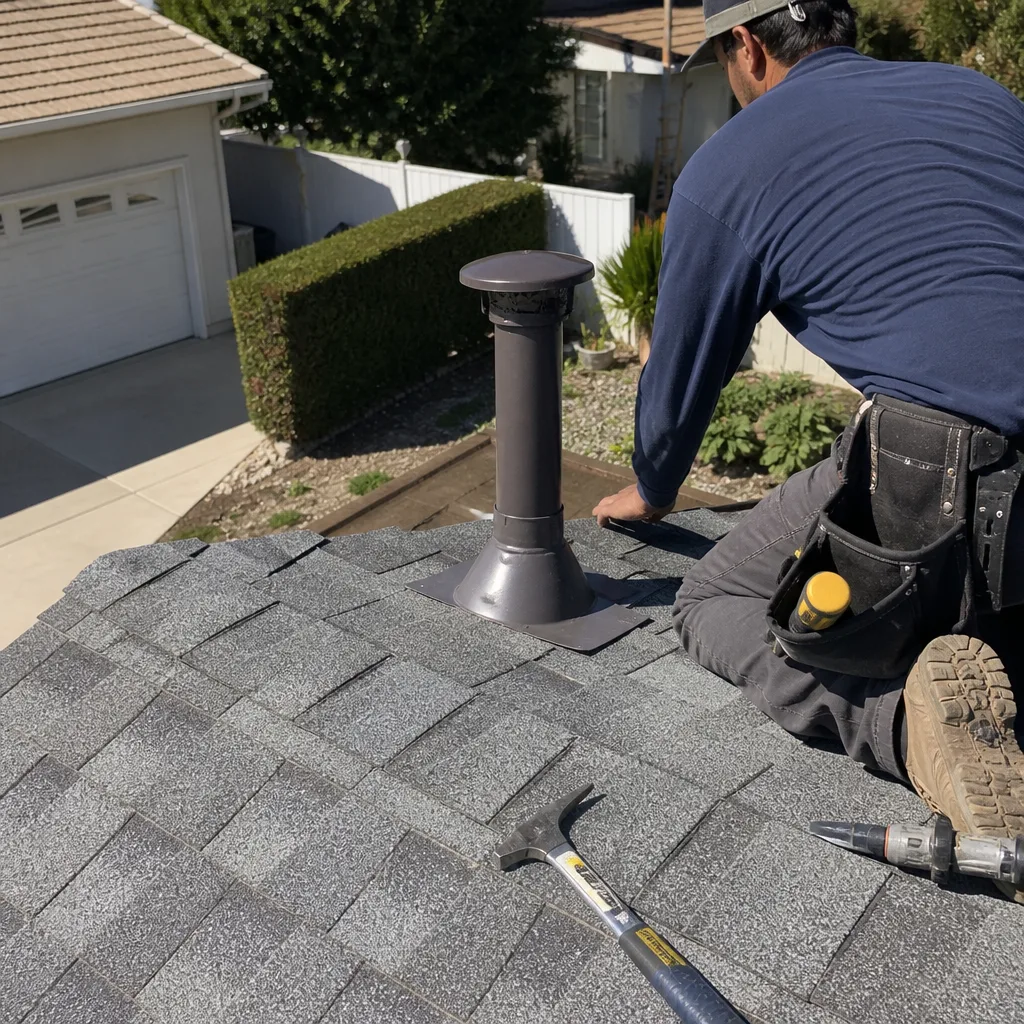 After
After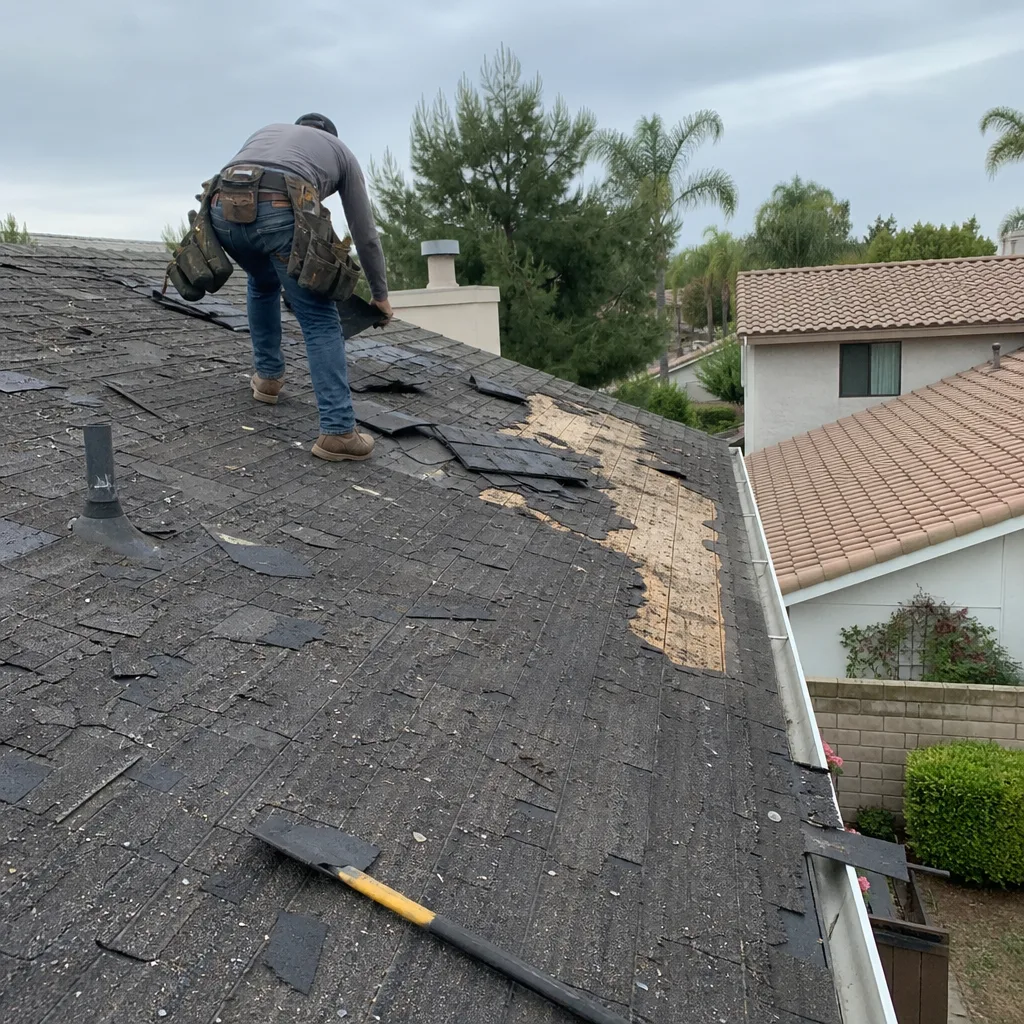 Before
 After
After Before
 After
After