
Last updated October 17, 2026
 Metal roofing
 Architectural shingles
 Tile roofing
 GAF
GAF Owens Corning
 Flat & low-slope
Free roof inspection with deck photos before we talk money - GAF and Owens Corning certified installation
Roofing Warning Signs: A Riverside Homeowner’s Reference Guide
A water stain on your ceiling isn’t the first warning sign of roof trouble. It’s the last one. By the time moisture reaches drywall, water has already been sitting in your roof system long enough to saturate insulation, wick through decking, and compromise whatever sits between the shingles and your living room. In Riverside, where we swing from triple-digit summers to sudden winter downpours, that progression happens faster than most homeowners expect. This guide and our Complete Guide to Roofing in Riverside walk you through the earlier, subtler signals: the ones you can catch before a $400 repair becomes a $4,000 one.
Quick Answer
The most common early roof warning signs in Riverside are granule accumulation in gutters during dry spells, slight bubbling on exterior fascia paint, and a musty attic smell with no visible staining. Any one of these on its own warrants a closer look within 30 days. Two or more together, or any sign paired with visible water entry inside the home, means you should call a roofer this week.
Styles & brands we work with
Table of Contents
- Exterior Warning Signs You Can See From the Ground
- What to Look For in the Attic
- Interior Warning Signs by Location
- Why Riverside’s Climate Accelerates Roof Wear
- Cosmetic Cracks vs. Structural Tile Failure
- The Granule Story: What Your Gutters Are Telling You
- The Riverside Triage Framework: Wait, Inspect, or Call Now
- What to Expect From a Roof Inspection
Exterior Warning Signs You Can See From the Ground
You don’t need a ladder to catch most early roofing problems. A slow walk around the perimeter of your home, looking up with intention, reveals more than most homeowners realize. The key is knowing what healthy looks like versus what’s starting to slip.
Start with the roof plane itself. From across the street or the far edge of your yard, look for any spot where the roof line sags or dips even slightly. A roof that’s doing its job should read as one clean, continuous plane. A subtle depression often means decking underneath has begun to soften from moisture intrusion, and that’s a structural problem masked as a cosmetic one.
Next, check the drip edge. That’s the metal flashing that runs along the roof’s perimeter, where the shingles or tiles meet the gutter line. In Riverside’s dry heat, drip edge can pull away from the fascia board over time. When it does, water running off the roof can wick backward underneath the shingles instead of dropping cleanly into the gutter. You’re looking for any gap between the metal and the wood, or any section where the metal appears warped or bent outward.
Fascia paint tells a story too. Walk close to the house and examine the boards that run just beneath the gutter line. Paint that’s bubbling or separating from the wood, even in a small area, is a signal that moisture is getting behind it. That moisture usually comes from above: a spot where water is sneaking past the roof edge instead of being carried away. In our experience, bubbling fascia paint is one of the most-referenced but least-investigated warning signs we see on homes across Riverside’s older neighborhoods like Wood Streets and Magnolia Center.
Finally, look at the flashing around anything that penetrates the roof: chimneys, vent pipes, skylights, and the joints where a garage roof meets the main house. Flashing is the metal or synthetic material that seals these transitions. When it’s failing, you’ll often see a dark line of oxidation, visible rust staining on the surrounding shingles, or caulking that’s pulling away from the joint. None of these are emergencies on their own, but they’re all indications that the roof’s first line of defense is worn and water will eventually find the opening.
What to Look For in the Attic
The attic is where roof problems announce themselves earliest, and it’s the place most Riverside homeowners visit least. That’s understandable. Attics in this city get brutally hot in summer, and there’s rarely a reason to go up. But a twice-a-year attic check, once in spring and once after the first winter rain, catches problems months before they show up on a ceiling. Our Seasonal Roofing Care for Riverside: Year-Round Homeowner’s Guide outlines what to look for each season.
Bring a flashlight and look for these specific signs:
- A musty or earthy smell with no visible staining. This is the earliest indoor warning sign of a slow leak. The water hasn’t pooled or run visibly; it’s been absorbed by insulation and framing, creating humidity that breeds that distinct smell. By the time you see a stain, the moisture has been present much longer.
- Discolored insulation. Fiberglass insulation that’s been wet dries differently than insulation that’s never been wet. It clumps, turns slightly gray or brown, and loses its loft. Compare sections of your attic insulation to each other. If one area looks flattened or darker, investigate the decking directly above it.
- Dark streaks on the underside of the roof decking. The plywood or OSB sheathing that forms the roof’s structural layer should be one consistent color. Dark streaks or water marks running along a seam mean water has penetrated and followed gravity. This is more advanced than a musty smell, but still often manageable if addressed soon.
- Rust on exposed nail heads. Nails that secure decking or shingles can rust when condensation builds inside the attic. If multiple nail heads show rust across a section, you’re dealing with a moisture problem, either from a roof leak or from inadequate attic ventilation. In Riverside, ventilation is critical: our temperature swings create condensation cycles that a poorly vented attic turns into a slow drip.
- Daylight visible through any gap. If you can see light from inside the attic, water can get in through the same opening. Check around vents, chimneys, and wherever plumbing or electrical penetrations exit the roof. The gap doesn’t need to be large. A pinhole lets in more water than most people imagine.
We’ve performed roof inspections in Riverside where the attic looked immaculate but the roof itself was two years past its useful life. And we’ve inspected attics that smelled faintly of damp and found a cracked vent boot leaking a tablespoon of water per rain event. The attic doesn’t lie. You just have to look.
One note on safety: attic access in many Riverside homes is through a small hatch in a closet ceiling. If you’re not comfortable navigating rafters, exposed nails, and uncertain footing, don’t push it. A roof inspection in Riverside includes a thorough attic assessment, and it’s a better option than risking a fall through a ceiling joist.
Interior Warning Signs by Location
Where a water stain shows up inside your home tells you a lot about where the leak originates. Understanding that relationship helps you explain the problem accurately when you call a roofer, and it helps you spot trouble earlier than someone who only reacts to the stain itself.
Top-Floor Ceilings
A stain on a top-floor ceiling, directly below the attic, is the classic roof leak indicator. But its position matters. A stain directly below a roof penetration, like a vent pipe or chimney, suggests flashing failure at that specific point. A stain that appears in the middle of a ceiling with no penetration above it often indicates a leak that’s traveling along a rafter or truss before dripping down. Water follows the path of least resistance, which means the point of roof entry may be several feet from where you see the stain. A stain near an exterior wall on a top floor can sometimes originate at the roof edge, where ice damming or failed drip edge pushes water inward. In Riverside’s climate, we don’t deal with ice dams, but wind-driven rain during our winter storms can push water under roof edges that face the Santa Ana wind patterns.
Exterior Walls, Upper Floors
Water stains on upper-floor exterior walls, particularly near windows or where the roofline meets the wall, often point to a different kind of failure. This is where step flashing comes into play. Step flashing is the L-shaped metal pieces woven into the shingles where a roof meets a vertical wall. When step flashing fails or was improperly installed, water runs down the wall behind the siding and shows up as staining or bubbling paint on the interior drywall. This pattern is common on homes with dormers, chimneys that run up an exterior wall, or any section where the roof ties into a second-story wall. It’s also one of the more expensive repairs if left unaddressed, because the damage extends into the wall cavity, not just the roof system.
Ceilings Below Bathrooms or Kitchens
Not every ceiling stain is a roof leak. Stains directly below a second-floor bathroom or kitchen often come from plumbing: a supply line, a drain, or a failed fixture seal. Before assuming the roof, check whether the stain corresponds with a plumbing fixture above it. If the stain grows after a shower or a dishwasher cycle and stays dry during rain, the problem is plumbing, not roofing. A good rule of thumb: if a stain persists or grows during Riverside’s dry months, it’s not your roof. If it only appears after rain, the roof is the likely culprit.
When homeowners call us about a ceiling stain, the first question we ask is whether the stain correlates with rain or with plumbing use. That single answer narrows the problem by half, and it’s the kind of diagnostic information anyone can gather before roof repair in Riverside even gets scheduled.
Why Riverside’s Climate Accelerates Roof Wear
Riverside sits in a climate zone that’s unusually hard on roofing materials, and it’s not for the reason most people assume. It’s not the rain that ages a roof here. It’s the sun and the temperature swings.
The Inland Empire sees some of the highest UV exposure in California. Day after day of intense sun breaks down the chemical bonds in asphalt shingles, causing them to become brittle and lose their flexibility. A shingle that’s lost its flexibility can’t seal properly against wind, and it’s far more likely to crack or tear when a technician walks on it during an inspection or repair. Riverside homes also experience dramatic temperature differentials. A roof surface can reach 160 degrees on an August afternoon, then drop to the 50s overnight. That daily expansion and contraction works on every seam, every nail, every piece of flashing. Over time, materials fatigue.
Then comes the rain. Riverside averages around 11 inches of rain annually, but it falls in concentrated bursts. A single winter storm can drop two or three inches in a day. Roofs that have spent months drying out and contracting suddenly face saturation. Any gap that opened during the dry season becomes an entry point.
This is why a five-year-old roof in Riverside can look different from a five-year-old roof in a milder coastal climate. The UV exposure, the thermal cycling, and the concentration of rainfall into short, intense events combine to age roofs faster. Homeowners who understand this are less likely to write off an aging roof as “still okay” just because it’s not leaking yet.
Cosmetic Cracks vs. Structural Tile Failure
Concrete and clay tile roofs are common throughout Riverside, and they present a unique diagnostic challenge. Tile cracks. That’s a normal part of how tile roofs age, and most cracks are cosmetic. But some cracks mean the tile is no longer doing its job, and knowing the difference matters.
A cosmetic crack is a hairline fracture that doesn’t penetrate the tile’s full thickness and doesn’t expose the underlayment beneath. You can identify one by looking at the crack’s depth. If the surface is fractured but the tile remains intact and locked in place, and if you can’t see daylight or the underlayment through the crack, it’s likely cosmetic. These cracks happen during installation, from minor impacts, or from the same thermal cycling that affects all roofing materials. They’re worth noting, but they don’t demand immediate action.
A structural tile failure is different. Here’s what that looks like:
- The tile is cracked through its full thickness. You can see a gap that penetrates completely, potentially exposing the underlayment or decking below.
- The tile has shifted out of position. It’s slid down, pulled away from its neighbors, or is sitting at an angle that breaks the water-shedding overlap.
- The tile’s surface is spalling or crumbling. This means the material itself is deteriorating, not just cracking. The tile is giving up.
- Multiple adjacent tiles have failed. One broken tile is a repair. A cluster of broken tiles across a section of roof suggests systemic breakdown.
Here’s a detail most guides skip: turn a tile over, if you’re able to safely access it, and look at the underside. A healthy tile has a consistent color and texture on the bottom. A tile that’s been compromised by moisture absorption shows dark staining, water marks, or efflorescence, which is a white mineral deposit left when water evaporates. If the underside looks saturated or stained, the tile is wicking water and it’s no longer protecting your roof. This is the kind of thing we check during every roofing company Riverside inspection we perform.
UV-bleached tiles are common in Riverside. After years of direct sun, clay and concrete tiles lose some of their original color, fading to a lighter tone. Fading alone is not structural failure. A bleached tile that’s still intact, still locked in place, and still shedding water is doing its job. Color is not the metric. The metric is integrity: is the tile whole, positioned correctly, and impermeable? If yes, it’s protecting your home regardless of how faded it looks. If no, it needs attention no matter how good it looks from the street.
The Granule Story: What Your Gutters Are Telling You
Asphalt shingle granules are the tiny ceramic-coated particles embedded in the shingle’s surface. They serve two critical functions: they protect the asphalt from UV degradation and they provide fire resistance. As shingles age, granules loosen and wash off. Finding them in your gutters is normal, but there’s a timing and volume component that every Riverside homeowner should understand.
If you find granules in your gutters after a dry spell, particularly during Riverside’s summer months when there’s been no rain to wash anything off the roof, that’s an early warning sign. Granules don’t just fall off on their own. During a dry period, granule loss indicates the shingle’s binder, the asphalt that holds the granules, is breaking down. The granules are letting go because the shingle is aging out, not because a storm knocked them loose.
The volume matters too. A thin dusting of granules along the gutter line is normal for a roof in its middle years. But if you’re scooping out handfuls, or if you notice a patch of bare asphalt showing through where granules used to be, the shingles are losing their protective layer and will begin to fail structurally. Look especially at the areas where water concentrates: the valleys, the roof’s lower edges, and any spot where two roof planes meet.
We recommend checking gutters quarterly in Riverside. This city’s long dry season makes granule loss easier to spot, because there’s no rain to wash the evidence away. A quarterly glance tells you whether granule loss is steady and gradual, which is expected, or accelerating, which is not.
Asphalt shingles installed on Riverside homes include product lines from manufacturers like IKO, Atlas, and Tamko. These manufacturers engineer granules differently, but the fundamental role is identical across brands. When granules go, the shingle’s clock is running faster. Catching the loss early gives you time to plan for replacement on your schedule rather than on the roof’s schedule.
The Riverside Triage Framework: Wait, Inspect, or Call Now
Not every warning sign requires immediate action. Some are worth monitoring. Some warrant a professional inspection within a set window. And a few mean you should pick up the phone this week. Here’s the triage framework we use, and it’s a framework any Riverside homeowner can apply.
Watchful Wait: Note It and Recheck Quarterly
- Light granule accumulation in gutters. A minor, consistent amount over time on a roof that’s less than ten years old.
- Minor cosmetic cracks in tile. Hairline fractures that don’t penetrate the full tile thickness and don’t expose underlayment.
- Faded or bleached shingles or tiles. Color change alone with no structural compromise.
- A single lifted shingle edge. If it re-seals in warm weather and doesn’t create a visible gap, monitor it.
Professional Inspection Within 30 Days
- Granule loss after a dry spell with visible bare spots. The shingles are actively deteriorating.
- Bubbling paint on fascia boards. Moisture is getting behind the paint from somewhere, and that somewhere is usually roof-related.
- A musty attic smell with no visible staining. Moisture is present. Finding the source now is cheaper than finding it later.
- Dark streaks on the underside of roof decking. Water penetration has occurred. The leak may be slow now, but leaks don’t heal.
- Multiple shifted or broken tiles in one area. A cluster of failures means the section is no longer shedding water reliably.
Call This Week
- Any visible interior water stain on a top-floor ceiling. Water has already saturated through the roof system and into the home.
- Water entry during or immediately after rain. Active leaks are progressive. Each storm makes the damage worse and more expensive.
- Sagging roof plane. This is a structural issue. It means the decking has been compromised and may not support weight safely.
- Daylight visible through the roof from inside the attic. The opening that lets light through lets water through.
- Flashing that’s visibly separated from a chimney, vent, or wall junction. The most common leak source on Riverside homes.
This triage framework exists to help you make calm, informed decisions. A roof that’s deteriorating but not leaking is a planning problem. A roof that’s actively leaking is an emergency in the making. The difference between a $500 repair and a $5,000 one is often the number of weeks between noticing a warning sign and acting on it.
What to Expect From a Roof Inspection
When you schedule a roof inspection in Riverside, you should know exactly what a thorough inspection covers. A legitimate roofing company will walk you through this process and give you a written report. Here’s the standard, and it’s the standard that applies at Brennan Roofing Co Riverside home.
- Exterior roof surface assessment. The inspector examines shingles or tiles for granule loss, cracks, cupping, lifting, and missing pieces. They check the condition of flashing around all penetrations and transitions.
- Gutter and downspout review. Granule accumulation, clogging, and drainage patterns are noted. Gutters that don’t drain properly concentrate water at the roof’s edge, accelerating deterioration.
- Attic inspection from below the decking. The inspector looks for staining, moisture, rust on nail heads, ventilation adequacy, and any visible light penetration.
- Interior ceiling and wall check for water marks. Rooms directly below the roof line get a visual pass for staining, bubbling paint, or other signs of moisture.
- Written findings report. You should receive a document listing what was inspected, what was found, and what the inspector recommends. Every item should include a priority level: immediate, monitor, or note-only.
The report is the thing. If a roofing company inspects your roof and gives you a verbal summary without a written document, you’re not getting a professional inspection. You’re getting an opinion. Written documentation is what allows you to track changes over time and make decisions with a clear record in hand.
Common Mistakes to Avoid
- Ignoring granule loss because the roof “isn’t that old.” Shingle lifespan varies by manufacturer and climate. In Riverside’s UV-intensive environment, shingles can begin granule shedding earlier than national averages suggest. Let the evidence in your gutters tell you what’s happening, not the calendar.
- Painting over water stains without finding the source. A new coat of paint hides the evidence for a few months, then the stain reappears, often larger. You haven’t fixed anything. You’ve just delayed the repair and increased the damage.
- Assuming a tile roof doesn’t need maintenance. Tile roofs are durable, but they’re not maintenance-free. Underlayment beneath the tiles degrades over time, and broken tiles expose it. Every five years is a reasonable inspection interval for a Riverside tile roof.
- Recaulking around flashing without repairing the flashing itself. Caulk is a temporary patch. If the flashing is rusted, lifted, or improperly lapped, caulk buys you one season at best. The water will find its way through.
- Waiting for a leak before investigating warning signs. This is the most expensive mistake we see. By the time water reaches a ceiling, it’s already passed through decking and insulation. The repair includes roof work plus interior remediation.
- Choosing a roofer based on the lowest bid without understanding what’s included. Riverside homeowners who’ve been burned by no-show contractors know this lesson. A low bid that excludes underlayment replacement, proper flashing, or permits ends up costing more when the work fails. The price should be on paper before work starts, with every line item visible.
- Skipping attic checks because access is inconvenient. The attic is where early warning signs live. A twice-a-year look costs you twenty minutes and saves you thousands.
See the difference
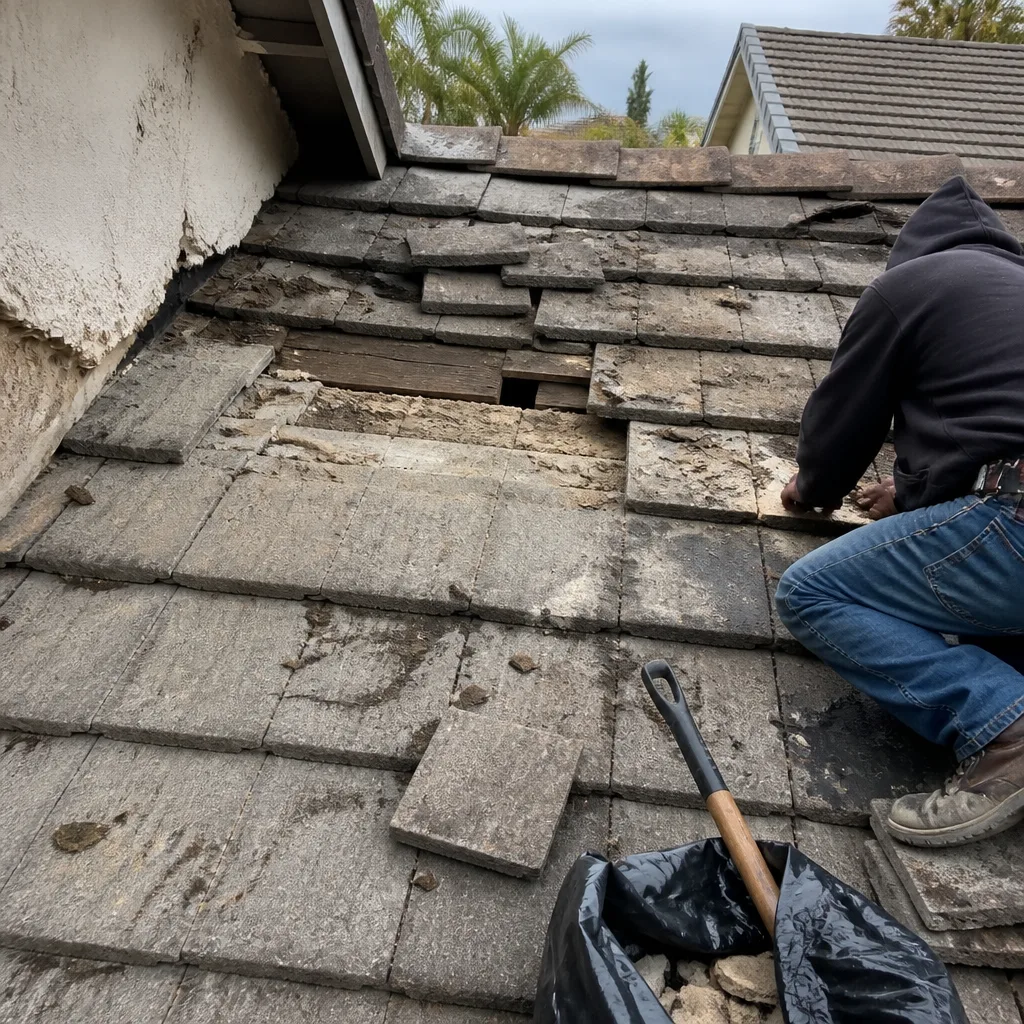 Before
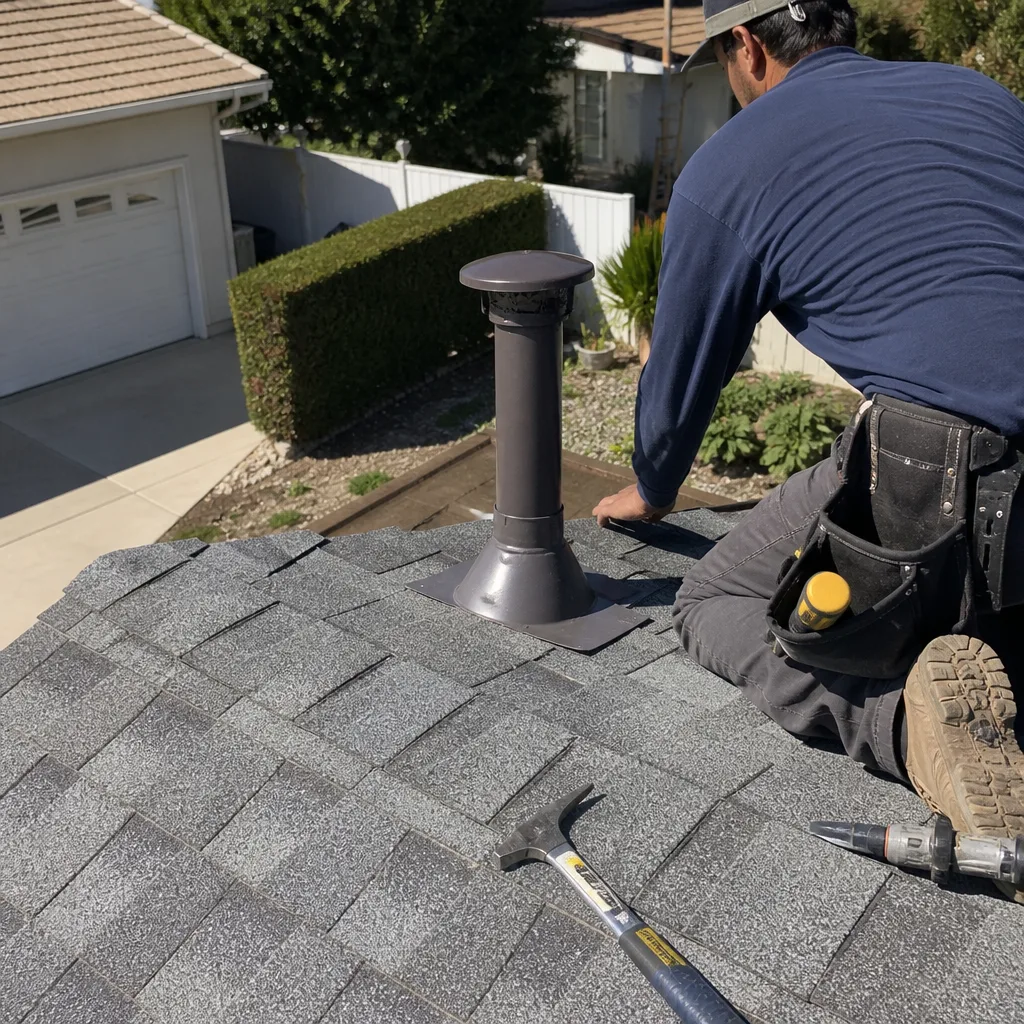 After
After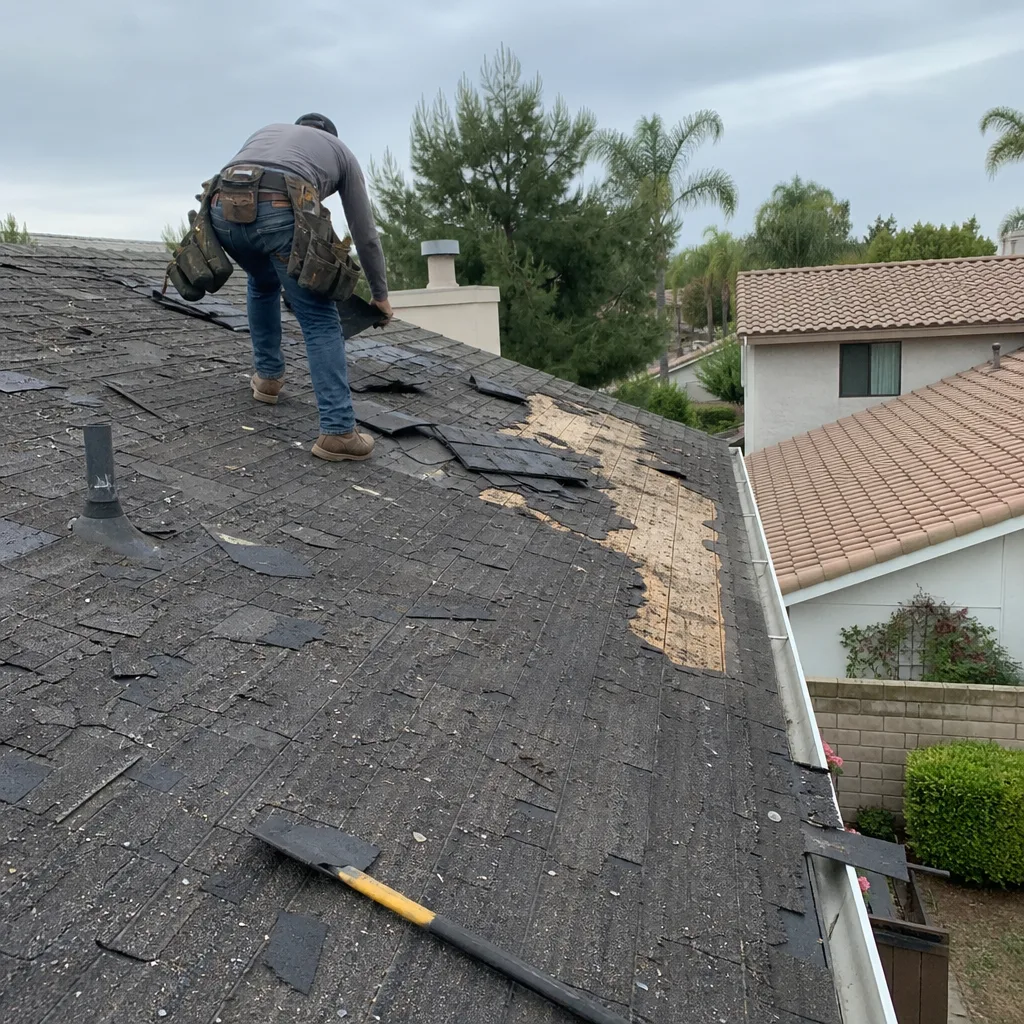 Before
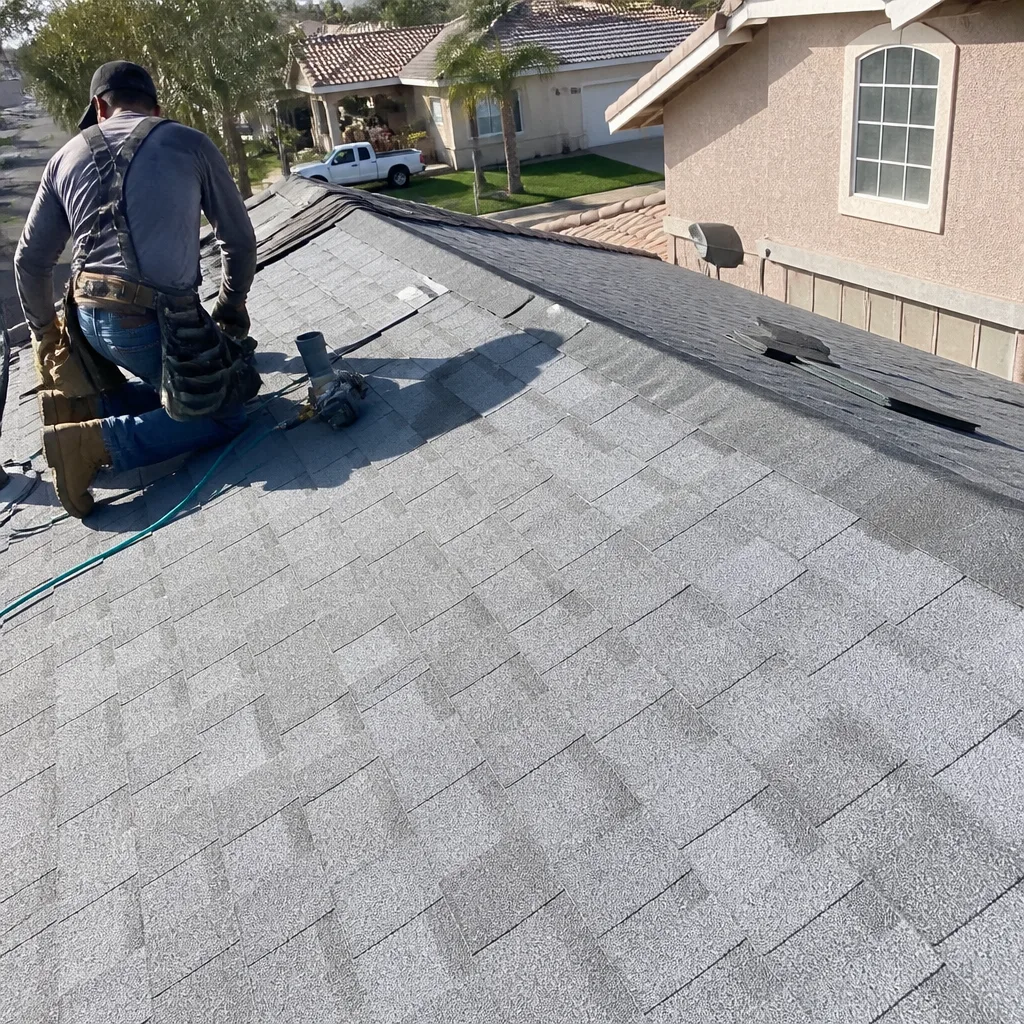 After
After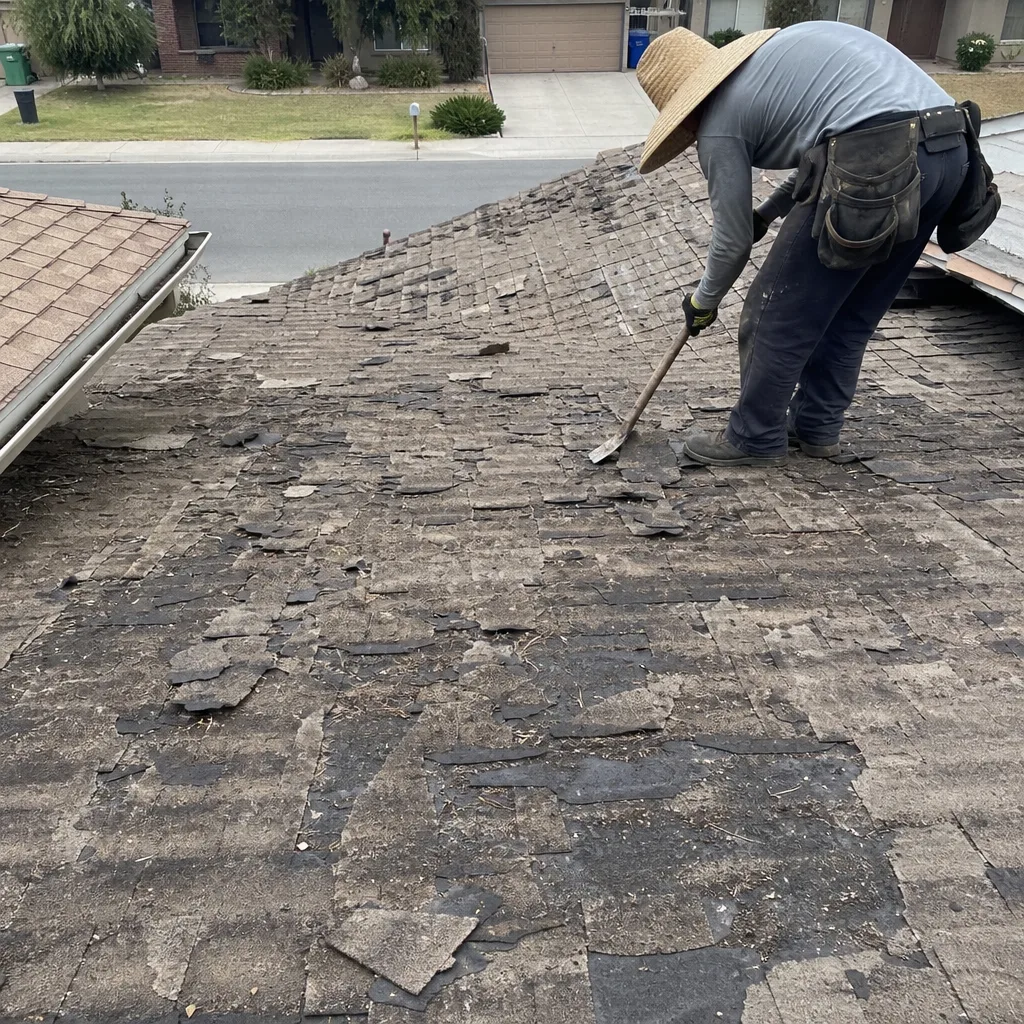 Before
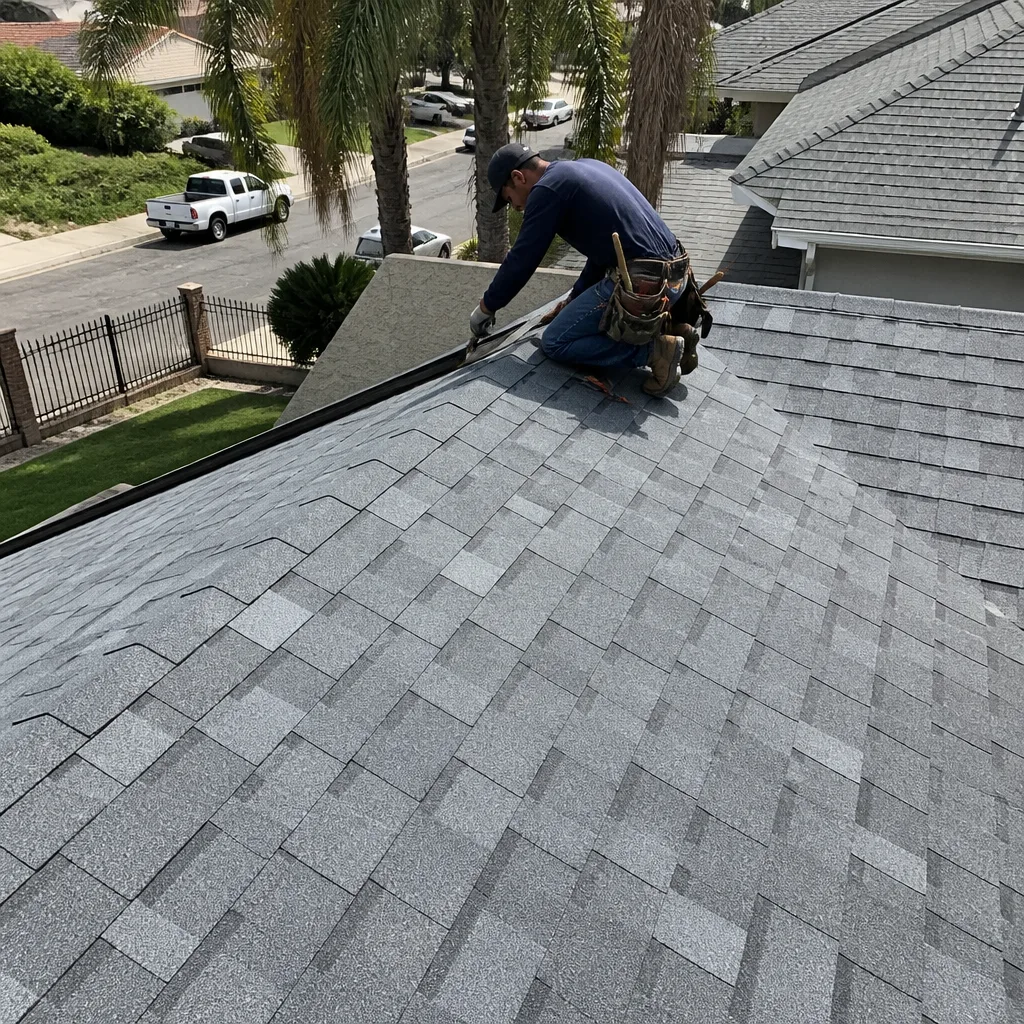 After
AfterWhen to Call a Professional
Call a professional roofer when you’ve identified two or more warning signs from the triage framework above, when you’ve spotted any interior water staining, or when your roof is over fifteen years old and hasn’t been inspected in the last three years. Riverside’s climate is aggressive, and roofs here don’t age gracefully without attention. You should also call if you’re selling a home, buying a home, or if your insurance company has flagged anything in a renewal notice. Brennan Roofing Co Riverside offers free estimates in Riverside, and we work under The Garrison Standard: every job gets a written price before any work starts, and every repair and installation is backed by our 365-Day Done Right Promise in writing. Call (341) 208-3988 and you’ll speak to a live person, any time.
Frequently Asked Questions
Minor roof repairs in Riverside typically run $350 to $800 for isolated issues like a single cracked tile, a small flashing repair, or a few missing shingles. Moderate repairs involving multiple roof penetrations or section-level flashing replacement range from $800 to $2,500. Full roof replacement in Riverside generally falls between $12,000 and $25,000 depending on roof size, pitch, material choice, and the condition of the underlying decking. Every Brennan Roofing Co Riverside job gets a written line-item price before any work starts, so you know exactly what you’re paying for. Call (341) 208-3988 for a free estimate based on your actual roof.
Not with Brennan Roofing Co Riverside. The price goes on paper before any work begins, and we don’t change it at the door. If we discover hidden damage during the job, we document it, show it to you, and discuss options before proceeding. No surprise charges, no changes without your approval.
We recommend a professional roof inspection every two to three years for asphalt shingle roofs, and every five years for tile roofs in Riverside. This cadence accounts for the UV exposure and thermal cycling that accelerate wear in the Inland Empire. Homes over fifteen years old benefit from annual inspections, especially before the winter rain season.
The 365-Day Done Right Promise covers every repair and installation we perform, in writing, for one full year. If the work fails within that period, we return at no charge and make it right. It’s the same standard on every job, from a $400 tile replacement to a full roof installation. That’s The Garrison Standard, and it’s not optional.
Most roof replacements and substantial repairs in Riverside require a permit through the city’s building department. A legitimate roofing company handles permitting as part of the job and won’t ask you to work around it. Roofing work performed without required permits can create problems when you sell the home or file an insurance claim.
Waiting through Riverside’s rain season with a known roof problem is a gamble. Each storm can push more water through the same gap, expanding the damage and the eventual repair cost. If you’ve spotted a warning sign during the wet months, schedule an inspection now. Identifying the problem early is always cheaper than paying for the progression, and an inspection is free. Call (341) 208-3988 to set one up.
The Bottom Line
Roofing warning signs in Riverside follow a predictable pattern. They start subtle: granules in the gutter, a faint smell in the attic, paint that’s starting to bubble on the fascia. They progress through visible deterioration and interior staining. They finish with structural damage that costs five times more to repair than it would have at the first sign. The homeowners who catch problems early share one habit: they look at their roof regularly and take what they see seriously. You don’t need to be an expert. You need to pay attention, act on what you observe, and work with a roofing company that puts its price in writing and stands behind its work. For more guides & resources, visit our blog. That’s the whole game. Everything else is just waiting for the stain to show up.
Written by Travis Oakley, Owner at Brennan Roofing Co Riverside, serving Riverside since 2000.