
Last updated October 17, 2026
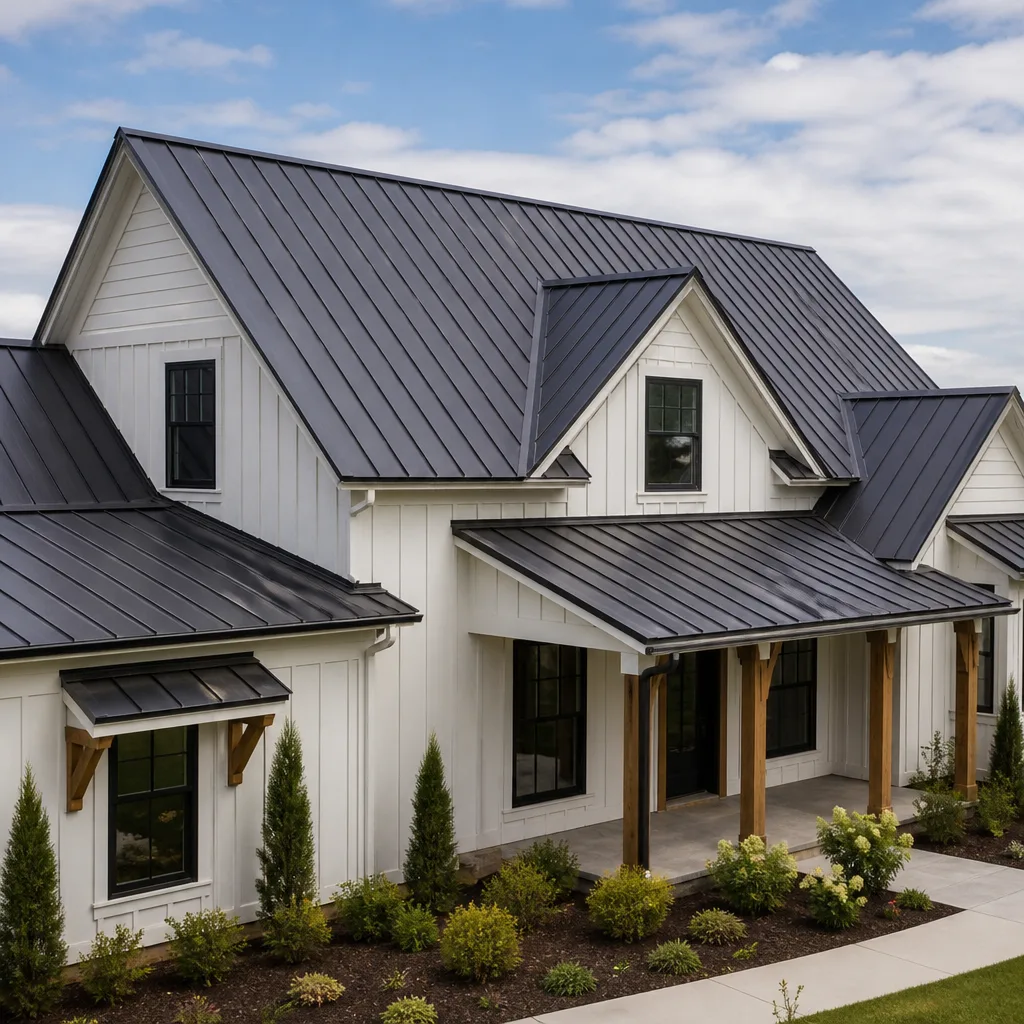 Metal roofing
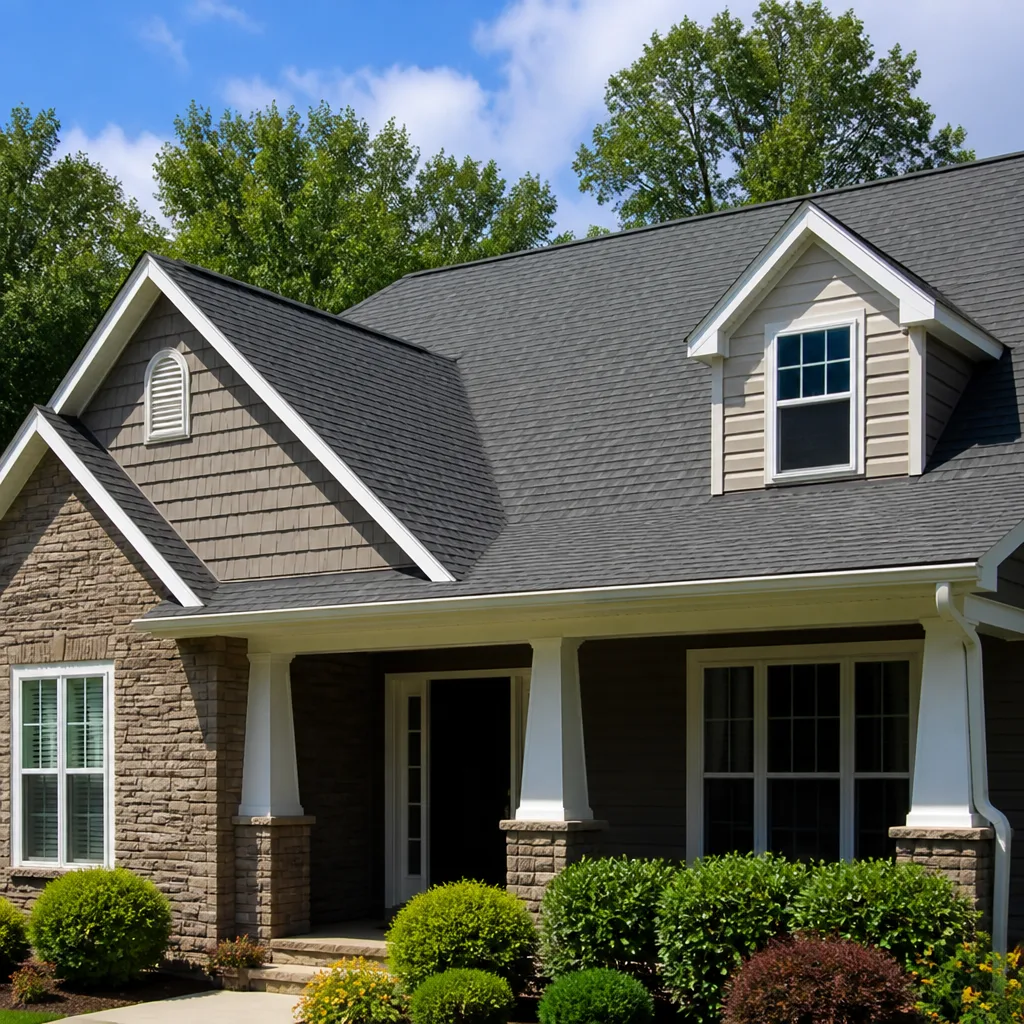 Architectural shingles
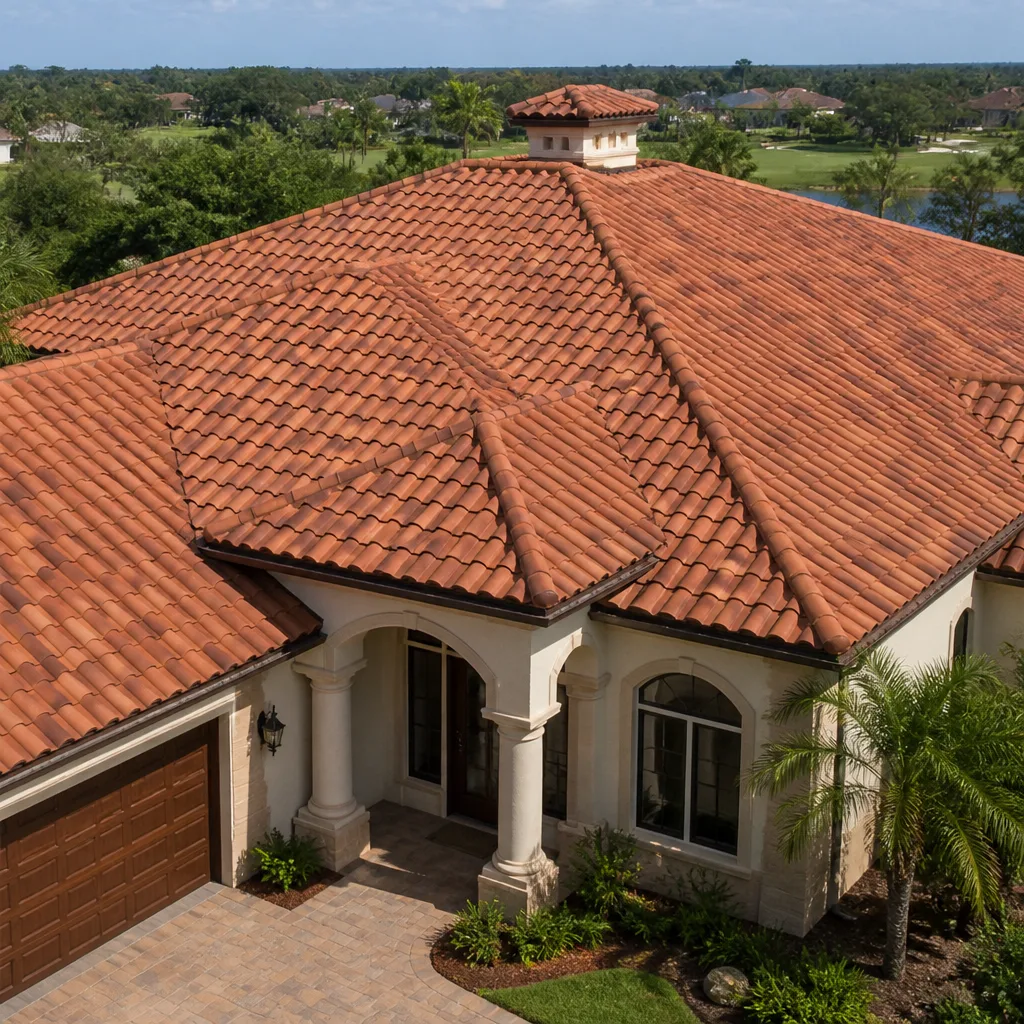 Tile roofing
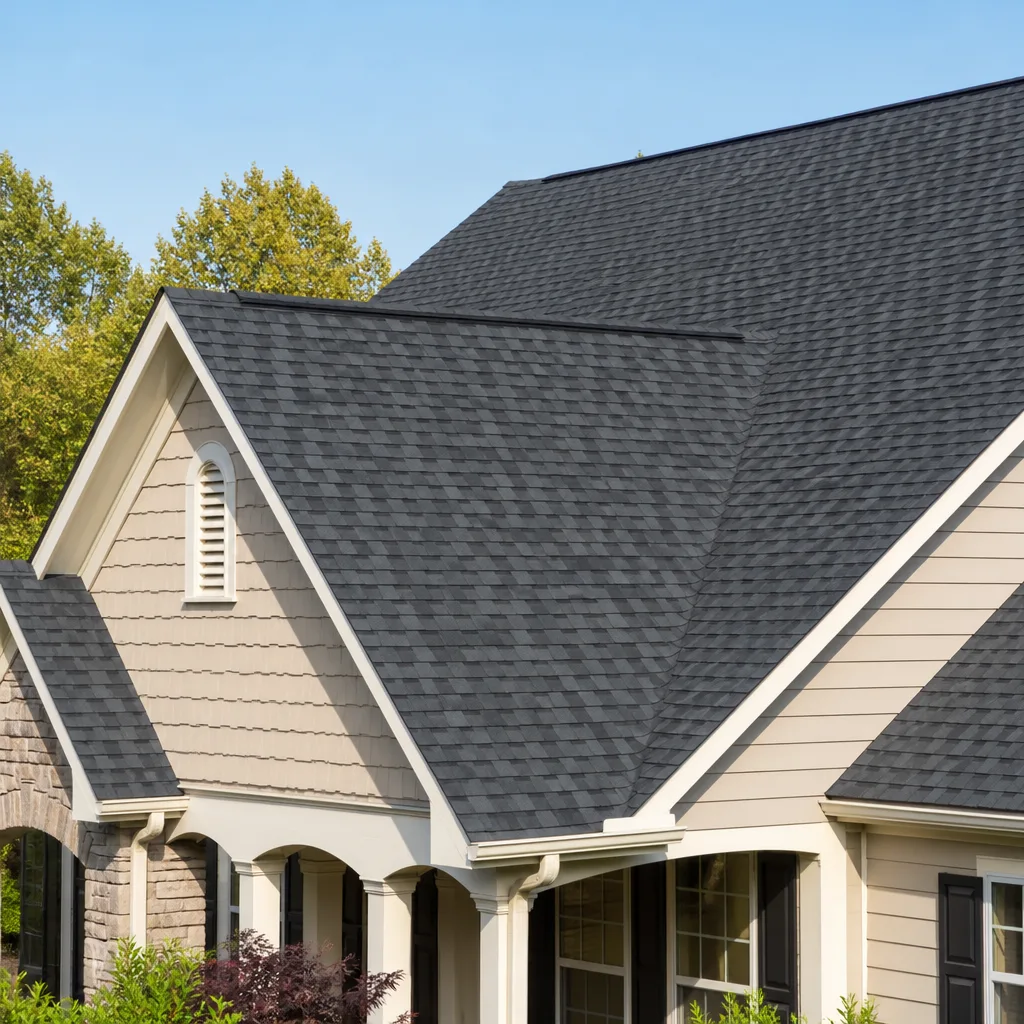 GAF
GAF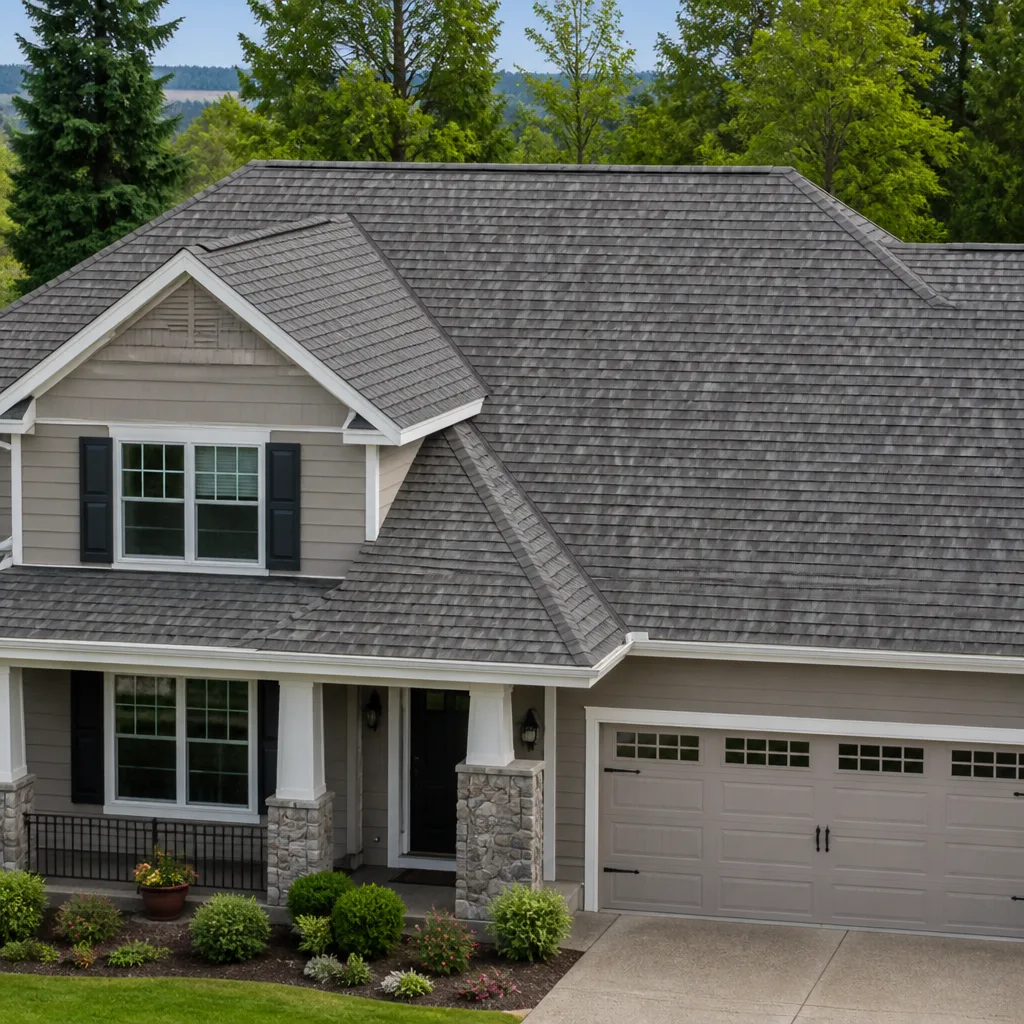 Owens Corning
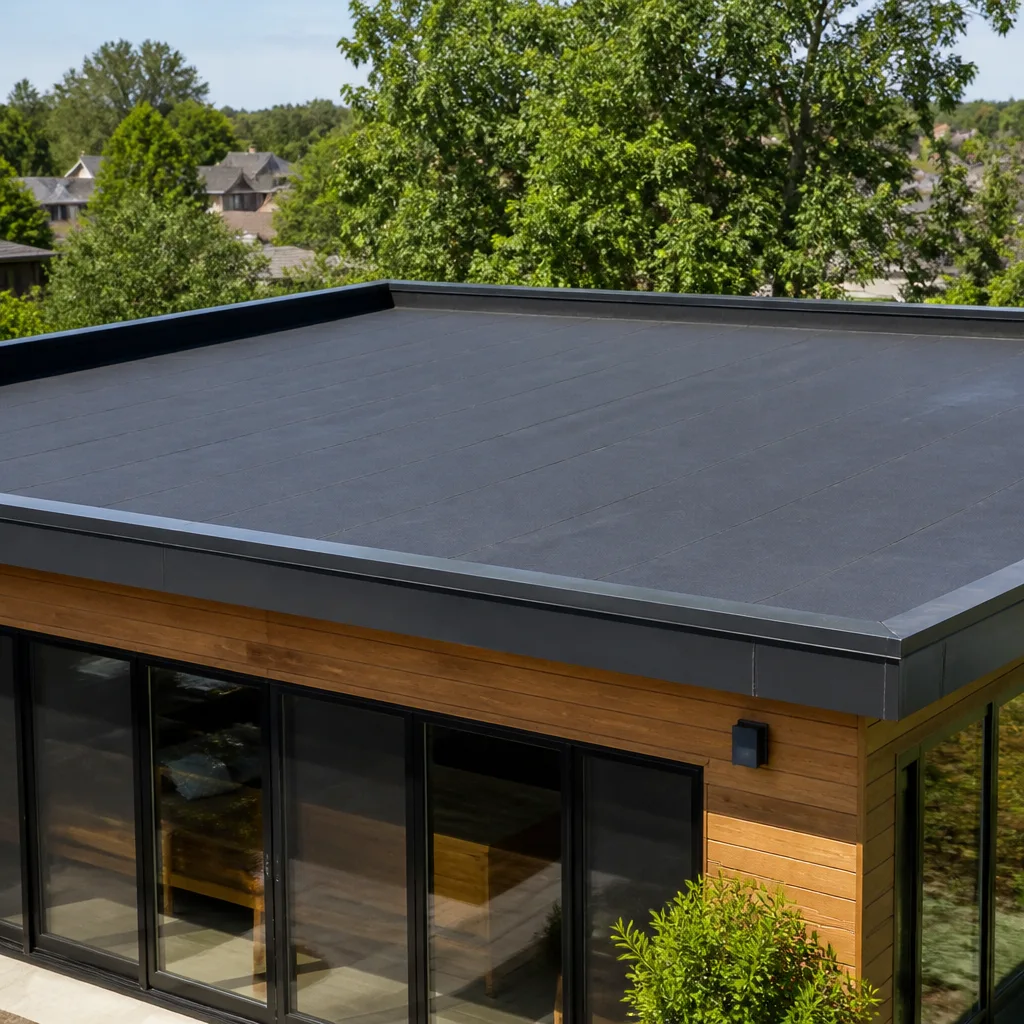 Flat & low-slope
Free roof inspection with deck photos before we talk money - GAF and Owens Corning certified installation
Roofing Cost Breakdown: The Riverside Homeowner’s Reference for 2026
A Riverside homeowner who collects three roofing bids and picks the middle one is not necessarily getting a fair price. If the low bid excludes decking repair and haul-away while the other two include them, the middle bid may actually be the highest real price in the room. This guide puts real 2026 dollar ranges on the page, line by line, so you can evaluate a Riverside roofing quote the way a contractor does: by what’s included, what’s missing, and what the job actually requires. For Roofing Warning Signs: A Riverside Homeowner’s Reference Guide, see our earlier resource. By the end, you’ll know what drives cost in this market, what a complete bid looks like, and where quotes go wrong.
Quick Answer
Roofing costs in Riverside, CA in 2026 typically run between $5.50 and $12.00 per square foot for a full replacement, depending on material and roof complexity. A 2,000 sq ft single-story home lands between $11,000 and $24,000 for most architectural shingle or tile re-roof jobs. The biggest cost drivers are material choice, roof pitch, decking condition, and whether the bid includes haul-away, flashing, and permits.
Styles & brands we work with
Table of Contents
- Material Costs by Roofing Type in Riverside
- The Line Items That Separate a Complete Bid from an Incomplete One
- How Pitch, Access, and Valley Complexity Affect Labor Cost
- What Insurance Actually Pays vs. What You Owe
- Repair vs. Partial Re-Roof vs. Full Replacement: A Riverside Scenario
- Riverside Code and Climate Factors That Affect Cost
- How to Read a Riverside Roofing Bid in 2026
- Common Mistakes to Avoid
- When to Call a Professional
- Frequently Asked Questions
Material Costs by Roofing Type in Riverside
Material choice is the single largest lever on a Riverside roofing quote. In 2026, supply chain conditions have stabilized for most manufacturer lines, but asphalt shingle prices remain tied to petroleum costs, and concrete tile lead times in Southern California can run four to eight weeks during the spring re-roof season. Here are the per-square (100 sq ft) installed ranges we’re seeing in Riverside, including labor for a single-story home with a walkable pitch:
- 30-year architectural shingle: $380 to $520 per square. This is the workhorse material for Riverside homes built from the 1980s onward. Architectural shingles hold up well to Riverside’s intense UV exposure and typically carry a 30-year manufacturer warranty. GAF, CertainTeed, and Owens Corning all make competitive architectural lines in this range.
- Concrete tile (re-lay): $450 to $700 per square. When the underlayment has failed but the tiles themselves are still sound, a re-lay means removing the existing tile, replacing the underlayment, and resetting the original tile back on top. This is common in Riverside neighborhoods like Canyon Crest, Mission Grove, and Orangecrest, where concrete tile roofs from the 1990s are now hitting their 25- to 30-year underlayment limit.
- Concrete tile (new): $850 to $1,200 per square. Full tile replacement means new tile, new underlayment, new battens, and heavier labor. Boral and Eagle tile dominate this segment. The weight means the existing framing must be checked before installation, which adds a structural inspection line item some bids omit.
- TPO flat membrane: $400 to $580 per square. TPO is the standard for low-slope and flat roof sections on Riverside homes, particularly on mid-century builds in Wood Streets and parts of the Alessandro Heights foothill area. White TPO reflects heat and meets California Title 24 cool-roof requirements without additional coating.
- Cool-roof compliant modified bitumen: $450 to $650 per square. Modified bitumen with a reflective granule surface is common on low-slope sections and detached structures. It holds up well against Riverside’s summer heat when properly installed, but it is less forgiving of installation errors than TPO.
These ranges are installed prices. A roof that quotes materially below the bottom of range is almost always excluding something: haul-away, permit, flashing, or decking. A roof that quotes materially above it should be explained in writing, line by line.
For a full look at how material, labor, and job scope come together in Riverside, see our Roofing Company in Riverside breakdown and our Brennan Roofing Co Riverside home guide to how we scope jobs under The Garrison Standard.
The Line Items That Separate a Complete Bid from an Incomplete One
Two Riverside roofing quotes for the same house can differ by $6,000 without either contractor being dishonest. One bid is complete; the other is leaving things out. Here are the line items that matter, written the way a real bid reads:
Decking Inspection and Replacement
Decking is the plywood or OSB layer under the roofing material. California building code requires decking be inspected once the old material comes off. If sections show rot, delamination, or fastener pull-through, they must be replaced. In 2026, Riverside contractors charge between $85 and $130 per sheet (4×8) for decking replacement, including labor and disposal. A complete bid will state a per-sheet price up front, applied only if damaged decking is found. A bid that says “decking included” without naming a per-sheet price is not complete. We typically see 3 to 8 sheets need replacement on a 2,000 sq ft Riverside re-roof.
Old Material Haul-Away
Removing and disposing of old roofing can cost $1,500 to $3,500 depending on material weight, dump fees, and whether the home is in a Riverside neighborhood with tight street access. Concrete tile is heavy and costs more to haul than shingle. This line item should appear on every bid. When it’s missing, it gets added at the door, or the old material ends up in the homeowner’s driveway.
Flashing Replacement vs. Reuse
Flashing is the metal that seals roof penetrations: chimneys, vents, skylights, and the places where roof planes meet walls. Reusing old flashing is a common cost-cutting move, but in Riverside’s dry heat and occasional heavy winter rain cycles, old galvanized flashing is often corroded at the nail line. A complete bid specifies new flashing at all penetrations, using galvanized or powder-coated metal matched to the roof material. Expect $400 to $1,200 for flashing on a typical home, depending on penetration count.
Permit Fee
Riverside requires a building permit for roof replacement and most structural repairs. The permit fee itself runs $250 to $600 depending on job valuation, but the real cost of an unpermitted roof is larger: insurance claims can be denied, and resale disclosures become complicated. A complete bid includes the permit fee as a line item, with the contractor pulling it. We do not do unpermitted work in Riverside.
Underlayment and Drip Edge
Underlayment is the water-shedding layer under the visible roof material. For tile, Riverside code and manufacturer requirements typically call for two layers of a high-temperature synthetic or a self-adhered product at the eaves. Drip edge is the metal strip that directs water from the roof edge into the gutter. Both should be listed explicitly. If the bid says “underlayment included” but doesn’t say what kind or how many layers, ask.
The difference between a $14,000 and a $20,000 bid for the same Riverside home is almost never profit margin. It is usually one bid excluding haul-away, flashing, permit, and per-sheet decking while the other one names them. Before any work starts in Riverside, get the number on paper. That’s the standard we operate under at Roof Repair in Riverside and it’s the only way to compare bids honestly.
How Pitch, Access, and Valley Complexity Affect Labor Cost
Two houses on the same Riverside street, both with 2,000 sq ft of roof area, can quote $3,000 apart based on the shape of the roof alone. Labor is the reason.
Roof Pitch: The Steeper, The Slower
Roof pitch is expressed as a ratio: a 4:12 roof rises 4 inches for every 12 inches of run. Most Riverside homes range from 3:12 (walkable, fairly safe) to 8:12 (steep enough to require roof jacks and safety harnesses). Labor multipliers in the 2026 Riverside market look like this:
- 2:12 to 4:12 pitch: Baseline labor. Crews can move efficiently, and material staging is simpler.
- 5:12 to 7:12 pitch: 1.15x to 1.3x labor. Crews need safety equipment, and tear-off speed drops.
- 8:12 and steeper: 1.4x to 1.6x labor. This is now a technical job. In foothill neighborhoods like Alessandro Heights, some tracts have steep-pitch design elements that push labor toward the top of range.
Single-Story vs. Two-Story Access
A two-story Riverside home adds cost in staging, tear-off, and safety. Roof loading is slower when materials must go up a ladder hoist or crane. Valley sections on a two-story also require extra fall protection. In 2026, we price two-story access at about 1.1x to 1.25x the labor of a comparable single-story, and that multiplier shows up in walkabout bids and formal quotes alike.
Valley Complexity
Valleys are where two roof planes meet. Cut valleys and closed valleys require precise flashing and shingle or tile cutting. Every valley adds labor. A simple two-plane gable roof has no valleys. A Riverside home with four to six valleys – common on 1980s and 1990s tracts with hip-and-valley rooflines – can add 10 to 20 percent to labor versus a gable of the same area. More valleys mean more flashing, more cutting, more waste, and more time.
When you compare quotes from different Riverside roofers, look at the roof’s shape first. The same material cost on a complex roofline will produce a higher bid for legitimate reasons.
What Insurance Actually Pays vs. What You Owe
Insurance is the line item most Riverside homeowners only understand after the claim. Here’s how it actually works on a 2026 roof claim in California:
The Depreciation Holdback
Most homeowner policies in California write roof coverage as actual cash value (ACV) or replacement cost value (RCV) with depreciation. ACV pays the depreciated value of the roof at the time of loss, not what it costs to replace it. RCV pays replacement, but many policies issue the first check for the depreciated amount and hold back the depreciation until the work is done and the claim is closed. Homeowners are often surprised when the first check arrives at $8,000 and the bid is $14,000. The holdback comes later – after the contractor submits proof of completion. A roofer who completes the work before the holdback clears is carrying the gap. Homeowners should understand this structure before signing anything.
Deductibles
California roof deductibles commonly run 1 to 2 percent of the dwelling coverage, not a flat $1,000. That means a home insured for $600,000 may have a $6,000 to $12,000 roof deductible. On a partial-loss claim for wind or storm damage, the deductible can exceed the repair cost, which means the claim is not worth filing at all. We tell Riverside homeowners to run the numbers before opening a claim in the first place.
Code-Upgrade Riders
When Riverside building code or manufacturer requirements exceed the standard of the original roof – additional underlayment layers, improved fastening, cool-roof compliance – the base policy may not pay for them. Code-upgrade coverage (ordinance or law coverage) is a rider that pays the extra cost of bringing the roof up to current code. Not every policy carries it. Homes in wildfire-adjacent areas of Riverside have additional material requirements under California Building Code Chapter 7A, and those upgrades are not automatic in a claim. This is a question to ask an agent before the storm season, not after.
Repair vs. Partial Re-Roof vs. Full Replacement: A Riverside Scenario
Every roofer should be able to give you this comparison for your specific roof. Here’s a concrete anchor: a 2,000 sq ft single-story Riverside home with a concrete tile roof showing roughly 15 percent damage – broken tiles, failed flashing at one valley, and a visible underlayment breach at one penetration.
Option 1: Targeted Repair
$900 to $2,800. Broken tiles replaced, valley flashing repaired or replaced, underlayment patched at the penetration, and the roof washed and inspected. This is the right call when the underlayment elsewhere is still sound and the tile stock is in good shape. Repairs of this type typically buy 3 to 8 years before a larger decision is necessary. See our Roof Repair in Riverside scope for how we define the line between a repair and a replacement and what the 365-Day Done Right Promise means in writing.
Option 2: Partial Re-Roof
$3,500 to $6,000. A section of the roof – typically one plane or one exposure – is stripped to decking, the decking is inspected and replaced as needed, new underlayment is installed, and the original tile is re-laid. Partial re-roofs are appropriate when damage is concentrated on one elevation and the rest of the roof is in verifiably good condition. The risk is blending: old tile and new underlayment at the transition point needs careful flashing.
Option 3: Full Replacement (Re-Lay)
$9,000 to $14,000. The entire roof is stripped, decking is inspected and replaced at a per-sheet price, new underlayment is installed to current code, flashing is replaced throughout, and the existing tile is re-laid. For a 25- to 30-year-old tile roof with failing underlayment, this is almost always the correct economic decision in Riverside. It resets the roof’s life for another 20 to 30 years at roughly half the cost of a full new tile roof.
A roofer who quotes a repair without telling you the replacement timeline is doing half the job. We put the repair and replacement numbers on paper together so the choice is informed, not hopeful.
Riverside Code and Climate Factors That Affect Cost
Riverside sits in a climate zone that punishes mistakes slowly and then all at once. The Inland Empire sees 90-plus degree days from May through October, low humidity that bakes asphalt and accelerates underlayment breakdown, and short-duration winter rain events that expose any flaw in flashing or drainage. A roof that is marginal in a coastal climate fails faster here. That reality shapes material selection and code requirements.
Title 24 and Cool-Roof Compliance
California’s Title 24 energy code requires that roofing materials on most residential re-roofs meet minimum solar reflectance and thermal emittance ratings. In practice, this means lighter-colored architectural shingles, reflective cool-roof surfaces on low-slope sections, or clay and concrete tile in light tones. A complete Riverside bid will state the selected material’s CRRC (Cool Roof Rating Council) ratings and note Title 24 compliance. Cheap dark shingles on a Riverside re-roof are now a code issue, not just an aesthetic one.
Wildland Interface Requirements in Riverside Foothill Areas
Portions of Riverside – particularly parts of the foothills and areas adjacent to the Sycamore Canyon and Box Springs Mountain open spaces – fall into designated Wildland-Urban Interface (WUI) zones. Under California Building Code Chapter 7A, re-roofs in these areas must use Class A fire-rated assemblies, and certain underlayment and eave-edge details apply. Boral tile and Class A shingle lines from GAF, CertainTeed, and Owens Corning meet these requirements, but not every installed assembly does. A roofer working in these zones has to know the difference. We bid Riverside WUI jobs with the Chapter 7A detail sheets attached to the scope.
Ventilation and Attic Heat
Riverside attics routinely reach 130 degrees in summer. A complete re-roof includes a ventilation check: intake at the eaves and exhaust at or near the ridge. If the existing attic has inadequate ventilation, adding intake or balancing the ridge vent is part of the job. Some bids omit ventilation and the homeowner doesn’t find out until the energy bill arrives. We include a ventilation assessment in every Riverside replacement scope we write.
For a thorough walk-through of what goes into a Riverside re-roof, read our Roof Inspection in Riverside page – the inspection is what reveals code and climate issues before they become line items on a surprise change order.
How to Read a Riverside Roofing Bid in 2026
Most Riverside roofing bids are three lines long: tear off, re-roof, haul-away. Some are eight pages. Neither format tells you what you need. Here’s how to read one in five minutes:
- Check for the line items. Haul-away, permit, flashing, underlayment, drip edge, and per-sheet decking. If any of the six is missing, the bid is incomplete. Ask for it in writing.
- Verify the material specification. The bid should name the manufacturer, the product line, the color, and the warranty. “Architectural shingle” is not a spec. “GAF Timberline HDZ in Charcoal” is a spec. Tile should state whether it is re-lay or new, and if new, the manufacturer (Boral is the dominant Riverside tile line in our jobs).
- Look at the decking language. Does the bid state a per-sheet replacement price with a cap, or does it say “decking included”? A roofer who has replaced decking on Riverside homes knows roughly how much to expect and is willing to name the number before the old roof comes off. If they won’t, the risk is on you.
- Confirm the warranty in writing. Manufacturer warranties cover materials. Workmanship warranties cover the installation. Ask for the workmanship warranty in writing, with a specific term and a specific remedy. Under The Garrison Standard, that is the 365-Day Done Right Promise: if it’s not done right, we make it right, in writing, at no charge, for one full year.
- Make the contractor state their change-order policy. The price on the bid should be the price on the invoice unless the scope changes and the homeowner approves the change in writing first. If a roofer won’t commit to that in writing, the bid is just an estimate with a lot of escape hatches.
The written number before any work starts is the whole ballgame. Every job we do in Riverside – repair, replacement, or inspection – has the price on paper before our crew puts a ladder on the house, and that number does not move at the door. No surprise add-ons. No “we found more damage” without a written, approved change order.
Common Mistakes to Avoid
- Choosing the low bid without comparing line items. The low bid in Riverside is often low because it excludes haul-away, permit, or flashing. Ask the low bidder what they’re leaving out, in writing. If they won’t say, walk.
- Assuming insurance covers the full replacement. Depreciation holdbacks and WUI code upgrades can leave Riverside homeowners with $5,000 to $12,000 out of pocket on a full claim. Know your policy’s structure before you need it.
- Replacing decking without checking the per-sheet price. Surprise decking charges at tear-off are the single most common change-order line item in this market. The per-sheet price goes on the bid before the roof comes off.
- Reusing flashing on a re-roof. Old flashing on a Riverside roof that has been through a decade of summer heat and winter rain looks better from the ground than it is at the nail line. New flashing is cheap relative to the cost of a leak.
- Skipping the permit for a “cash discount.” An unpermitted roof in Riverside exposes the homeowner to insurance, resale, and code-enforcement problems. The permit fee is the cheapest line item on the bid. Pay it.
- Picking a roof material without checking Title 24 compliance. Some older shingle lines don’t meet current cool-roof requirements. A roofer who doesn’t ask about your lot’s WUI status or confirm the material’s CRRC rating is not doing the job Riverside code demands.
When to Call a Professional
Roofing work is not a weekend project. The dangerous components – accessing a steep or two-story roof, working around power lines, handling tile or heavy material, and walking on surfaces that may have hidden decking rot – are not worth a fall. A trained roofer knows what a failing roof feels like underfoot and how to work safely with harnesses and proper staging. If you’re seeing water stains on ceilings, granules collecting in gutters, cracked or slipped tile, or daylight through attic boards, call a roofer before the problem becomes a decking and drywall problem. Brennan Roofing Co Riverside offers free estimates in Riverside – call (341) 208-3988 and we’ll put the number on paper before any work starts.
Frequently Asked Questions
A full roof replacement in Riverside runs $5.50 to $12.00 per square foot depending on material, pitch, and decking condition, with most 2,000 sq ft homes landing between $11,000 and $24,000. The spread is driven by material choice – architectural shingle at the low end, new concrete tile at the top. Call (341) 208-3988 for an exact quote; the estimate is free and the price goes on paper before any work starts.
Not if the roofer’s process is built correctly. Under The Garrison Standard, the price is written before any work begins, and it does not move at the door. The only exception is a written, approved change order – for example, decking replacement that was not visible until the old roof came off – and even that is priced per sheet up front. If a Riverside roofer won’t put that commitment in writing, the price will change.
Yes. Riverside requires a building permit for roof replacement, and the contractor pulls it as part of the job. The permit fee is a line item on the bid. We do not do unpermitted work.
Most architectural shingle replacements on a single-story Riverside home take 2 to 3 working days once the permit clears and materials are staged. Tile re-lay jobs run 3 to 5 days. New tile can add a day or two for tile set and fastening. The permit review in Riverside typically adds 5 to 15 business days before tear-off begins.
If the tile itself is sound – no widespread cracking, no spalling, no significant impact damage – re-laying is almost always the better Riverside decision. Re-lay replaces the failed underlayment, re-beds and re-fastens the existing tile, and runs roughly half the cost of new tile. Most 1990s-era tile roofs in Riverside have underlayment that fails years before the tile does. New tile is appropriate when the tile is failing or a color change is a dealbreaker.
Every repair and installation from Brennan Roofing Co Riverside is guaranteed in writing for one full year. If it’s not done right, we make it right at no charge. If a repair fails within the guarantee period, we return for a second visit at no charge. The promise is in writing on every job.
The Bottom Line
Riverside roofing costs in 2026 run from about $5.50 to $12.00 per square foot, and the difference between a fair price and a bad deal is almost always in the line items, not the headline number. A complete bid includes haul-away, permit, flashing, underlayment, drip edge, and a per-sheet decking price. Material choice, roof pitch, access, and valley complexity are the legitimate cost drivers. Insurance is more complicated than most homeowners expect, and Riverside’s climate and code – Title 24, WUI zones, and heat-driven underlayment breakdown – make a competent scope more important than a low number. Get the price in writing before any work starts. That is the only way to know what you are actually buying. For more guides & resources, visit our blog.
Written by Travis Oakley, Owner at Brennan Roofing Co Riverside, serving Riverside since 2000.
See the difference
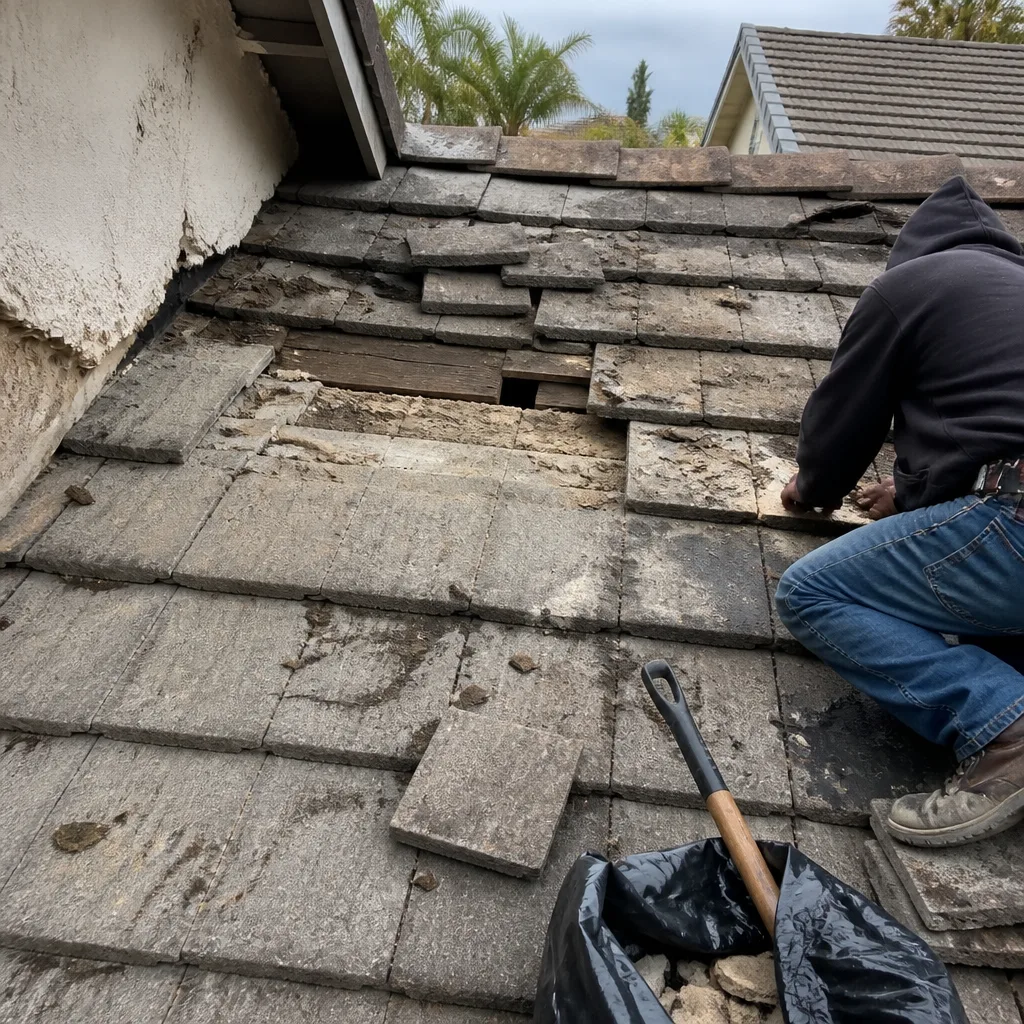 Before
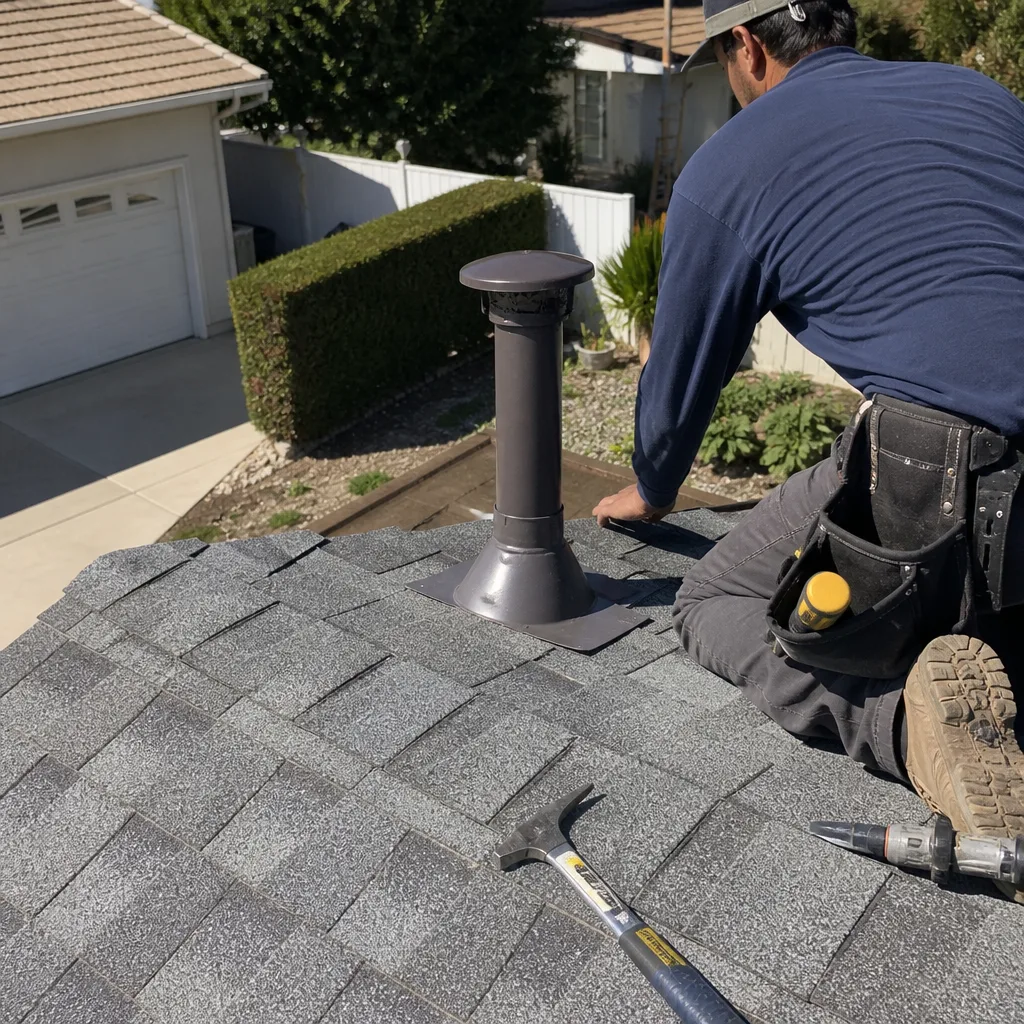 After
After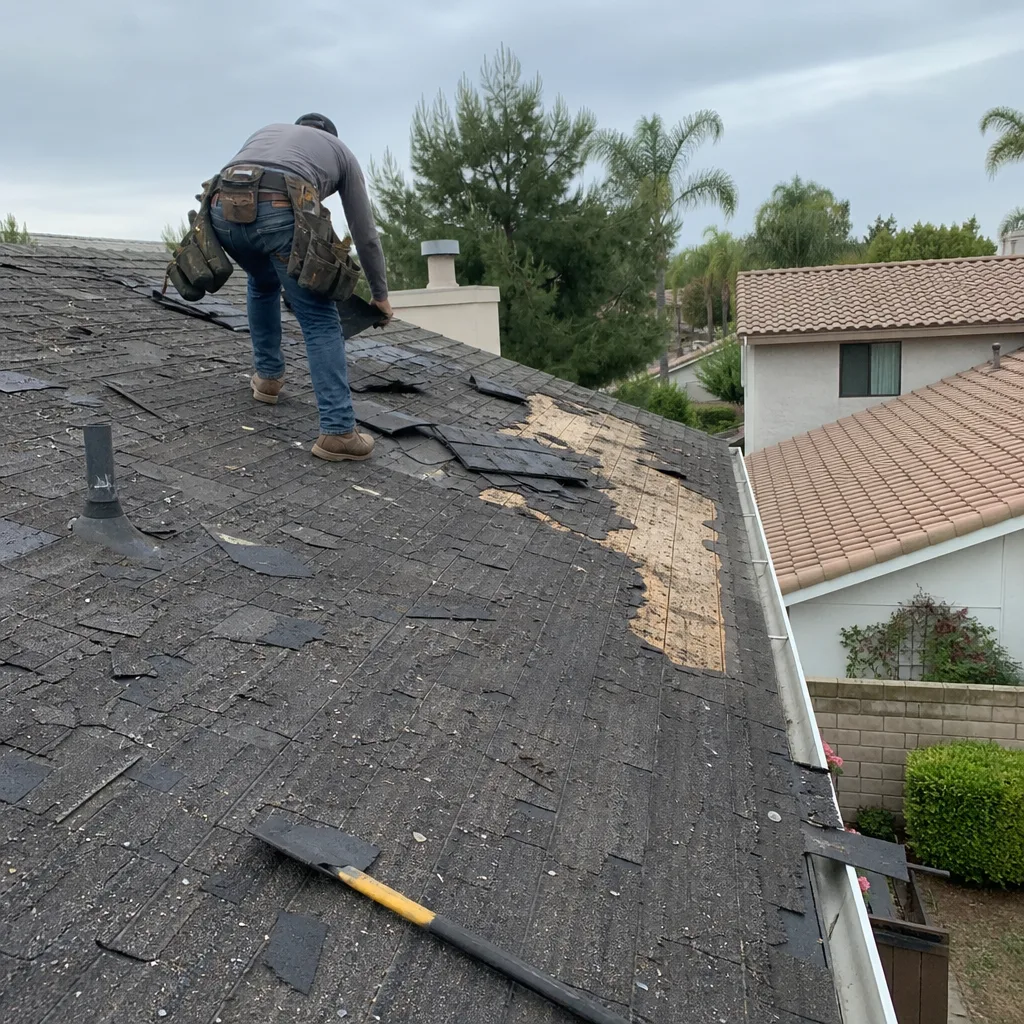 Before
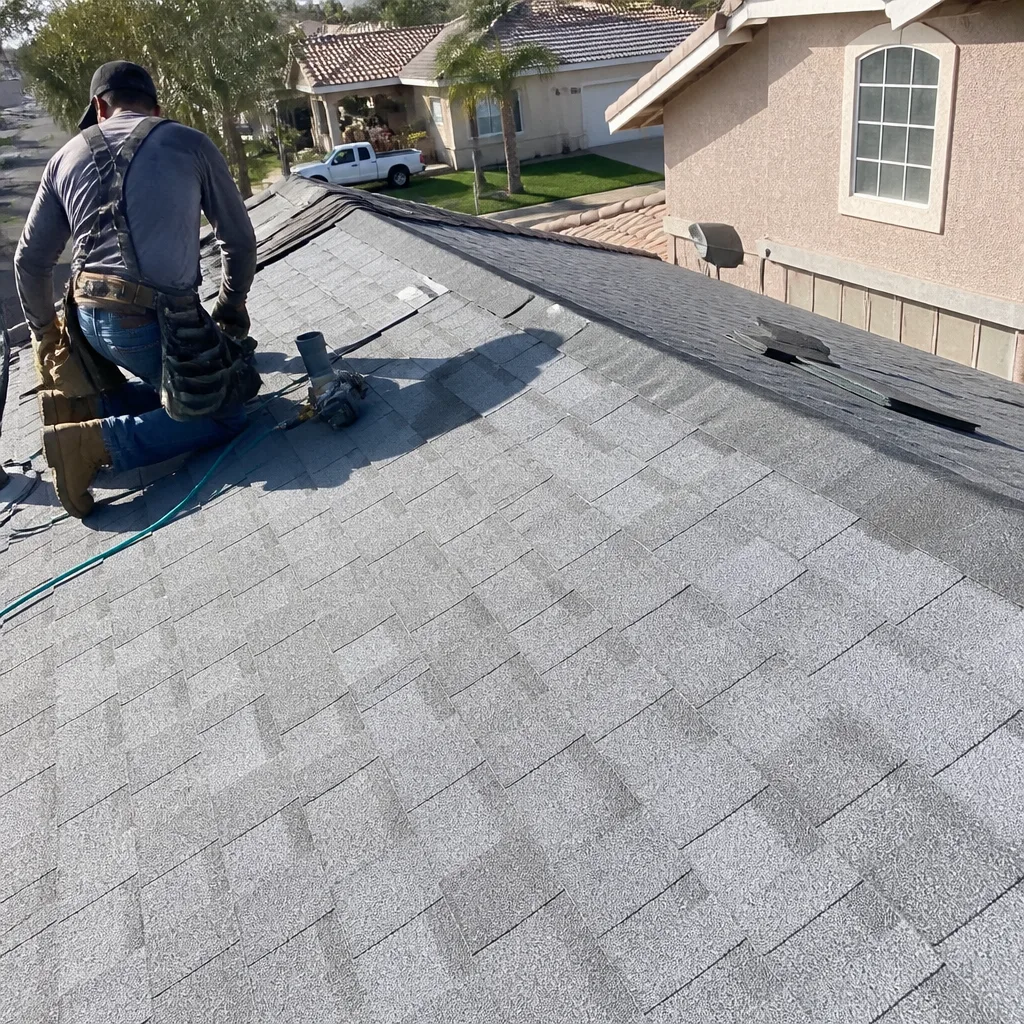 After
After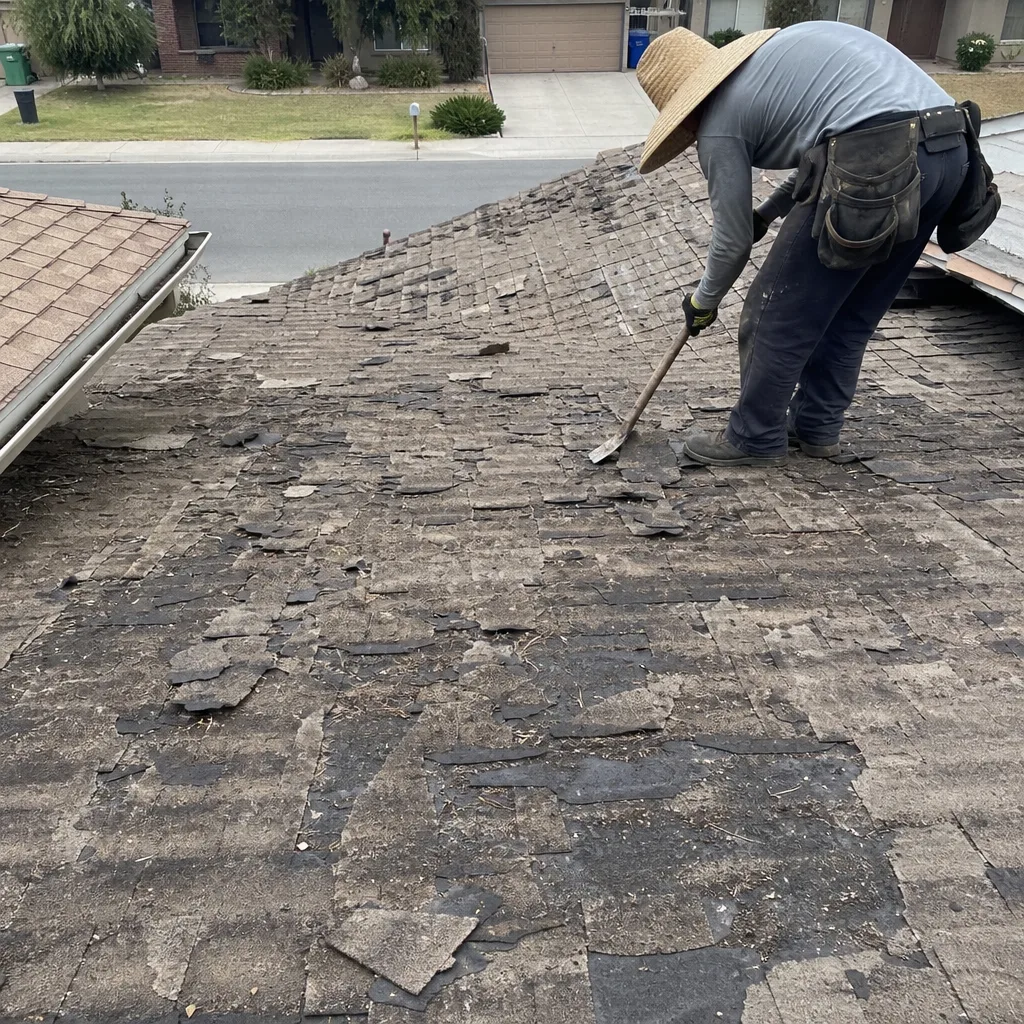 Before
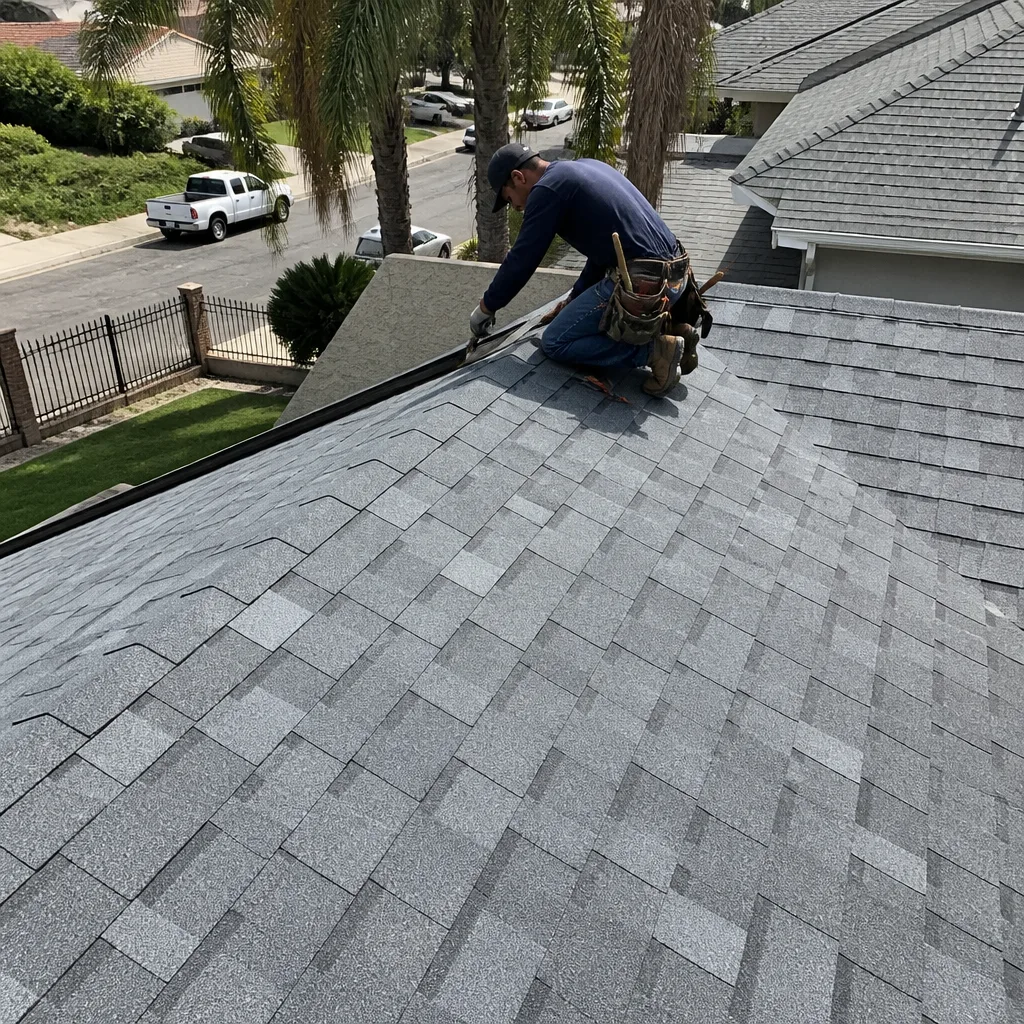 After
After