
Last updated October 17, 2026
 Metal roofing
 Architectural shingles
 Tile roofing
 GAF
GAF Owens Corning
 Flat & low-slope
Free roof inspection with deck photos before we talk money - GAF and Owens Corning certified installation
Roofing Permits, Codes & Inspections in CA: What You Need to Know
Most Riverside homeowners don’t discover their roof was never permitted until they’re sitting at a title company desk, watching a sale fall apart. An unpermitted re-roof can surface on a title search, trigger a retroactive inspection, and in some cases require tearing off finished work to expose what’s underneath. This guide walks through exactly when California and the City of Riverside require permits for roofing work, what Title 24 energy rules mean for material choices, how inspections actually work, and how to protect yourself as the homeowner. We’ll cover the tools you need to verify a permit yourself, and the insurance language that can quietly leave you holding the bill.
Quick Answer
In California, roofing permits are required when the work exceeds a repair threshold that varies by city. In Riverside, any roofing job that involves replacing structural decking, altering the roof structure, or re-covering an entire roof assembly generally requires a permit. Minor repairs limited to small sections of shingles or flashing may fall under the maintenance exception. Title 24 cool-roof standards apply to re-roofing in Riverside when the work triggers a permit, and the homeowner, not the contractor, is legally responsible if work is done without the required permit.
Styles & brands we work with
Table of Contents
- Do I Need a Roofing Permit in Riverside? The Real Thresholds
- What Happens If You Skip a Permit: Liability Falls on the Homeowner
- California Title 24 Cool-Roof Rules and How They Affect Riverside Re-Roofs
- What a City of Riverside Roofing Inspection Actually Covers
- How to Confirm a Permit Was Filed and Closed on Riverside’s Portal
- How Insurance Companies Treat Unpermitted Roofing Work
- What Roofing Permits Cost in Riverside
- Common Mistakes to Avoid
Do I Need a Roofing Permit in Riverside? The Real Thresholds
The short version: yes, for most full re-roofs. The longer version depends on square footage, scope, and whether structural components get touched. California’s building codes set a statewide floor, but local jurisdictions can tighten requirements. The City of Riverside uses its own municipal code on top of the California Residential Code, and the difference between a repair and a re-roof is not always intuitive.
Here’s what requires a permit in Riverside as of this writing:
- Full roof replacement or re-cover: Any complete removal and replacement of the roof covering, or installation of a new roof over an existing one, requires a building permit. This is not a gray area.
- Structural decking replacement: If more than a small percentage of plywood or OSB sheathing gets replaced because of rot or water damage, that’s structural work. Permit required, no exceptions.
- Changes to the roof structure: Adding skylights, dormers, changing the roof pitch, or moving load-bearing elements triggers plan review and a permit.
- Roof framing repairs: Replacing rafters, trusses, or ridge beams is structural work that requires a permit and an engineer’s sign-off in many cases.
- Large repair sections: Replacing shingles on a section larger than a modest repair area typically crosses from maintenance into permit territory. The City looks at total scope, not just material.
What usually does NOT require a permit:
- Replacing a handful of individual shingles blown off in a windstorm, as long as the underlayment and decking underneath remain intact.
- Re-sealing or re-caulking flashing around vents, pipes, and chimneys, as long as you’re not replacing the flashing itself with a different material or configuration.
- Repairing a roof leak by patching a small section of underlayment, as long as structural decking is not replaced.
Here’s the part most homeowners miss: the contractor doesn’t decide whether a permit is required. The City does. A roofer who says “we don’t need a permit for this” is making a judgment call that can cost you thousands down the line. At Brennan Roofing Co Riverside home, the policy is simple: if the scope of work meets the City’s permit threshold, we pull the permit, period. The price is on paper before work starts, and the permit fee is a line item, not a surprise.
What Happens If You Skip a Permit: Liability Falls on the Homeowner
This is the section most Riverside homeowners need to read twice. Under California law, the property owner is legally responsible for ensuring required permits are obtained, regardless of what a contractor says or does. When you sign a contract that says the contractor will pull permits and they don’t, you still carry the liability with the City and the State.
Here’s the sequence that plays out in Riverside more often than anyone likes to admit:
- You sign with a roofing contractor who quotes a low price, says “no permit needed for this one,” and gets the job done in three days.
- Two years later, you decide to sell. The buyer’s title company runs a permit search on the property.
- The search comes back showing roof work done during your ownership window with no open or closed permit on record.
- The buyer’s lender asks for proof of permit. You don’t have it.
- The City requires a retroactive permit and inspection. The inspector needs to see the decking and underlayment, which means tearing off sections of the finished roof.
- The sale stalls, the buyer walks, or the retrofit costs you a second roof installation.
We’ve seen this exact scenario in neighborhoods across Riverside, from the Historic Wood Streets area to Orangecrest. The common thread is always the same: a contractor who avoided the permit to save a few hundred dollars, and a homeowner who didn’t know the risk until it was already attached to their property title.
The takeaway: a roofing permit is not a bureaucratic nuisance. It’s the document that proves your roof was installed to code, inspected by the City, and is legal to sell with the house. If a contractor suggests skipping it, that’s not a favor. That’s a liability being transferred to you.
California Title 24 Cool-Roof Rules and How They Affect Riverside Re-Roofs
California’s Title 24 energy code is not just for new construction. It applies to re-roofing jobs too, and in Riverside’s climate zone, that means cool-roof standards come into play. The requirement kicks in whenever a roofing project triggers a building permit and involves replacing the roof covering on a residential building.
A “cool roof” is a roof surface with high solar reflectance and thermal emittance. In plain English: it reflects more sunlight and releases absorbed heat faster than a standard roof, which keeps the attic cooler and reduces air-conditioning load. In Riverside, where summer temperatures routinely sit past 100 degrees, this is not theoretical compliance. It’s the difference between an attic that stays at 120 degrees and one that hits 160.
What Title 24 requires for most Riverside residential re-roofs:
- Minimum aged solar reflectance of 0.20 and thermal emittance of 0.75, or a minimum Solar Reflectance Index (SRI) of 16, depending on the roof slope and material type.
- Steep-slope roofs (more than 2:12 pitch): Asphalt shingles that meet the SRI requirement are pre-approved if they’re listed on the California Energy Commission’s certified products directory. No energy calculation needed for qualifying shingles.
- Low-slope roofs (2:12 pitch or less): Different, stricter requirements apply, and most Riverside residential low-slope applications will need a membrane product with higher reflectivity ratings.
- Exemptions exist: Repairs that don’t trigger a permit, roof decks under roof-top decks, and certain roof area percentages may be exempt. Don’t assume your job is exempt without checking.
Here’s the practical part for a Riverside homeowner choosing shingles: not every color of shingle meets the Title 24 threshold. Dark browns, deep grays, and traditional black shingles often miss the reflectance requirement unless specifically engineered as cool-roof products. Brands like Owens Corning and CertainTeed make shingle lines that are engineered with reflective granules to meet California’s standards in darker color options. The warranty and the aesthetics don’t have to suffer, but you do need to select the right product line, not just the right color.
When you’re comparing re-roof quotes in Riverside, ask the contractor to tell you the Solar Reflectance Index of the exact shingle they’re proposing. If they can’t answer that question, that’s a red flag. Any roofer doing permitted work in California should be able to hand you the SRI rating from the manufacturer’s spec sheet before you sign anything.
What a City of Riverside Roofing Inspection Actually Covers
Imagine an inspector arriving at your house after the roof is on. That’s a problem, and it happens more often than it should. A proper roofing inspection happens at specific points during the project, which is why sequencing matters. When Roofing Company in Riverside work is done correctly, the inspection process looks like this:
- Plan review and permit issuance: Before work begins, the City reviews the scope, the materials, and the Title 24 compliance documentation. The permit is issued with a specific inspection sequence.
- Rough inspection (decking/underlayment): At this point, the old roof is off and the decking is exposed. The inspector checks for dry rot, damaged sheathing, proper fastening, and the condition of the structural deck. This is the inspection that can only happen while the roof is open.
- Underlayment inspection: The inspector verifies that the underlayment is the right type for the application, properly overlapped, and secured to code. In cooler weather, some Riverside jobs need two layers of underlayment or self-sealing membrane at eaves.
- Final inspection (covering, flashing, edge details): After the shingles or tile are on, the inspector checks drip edge, flashing installation at chimneys, walls, and valleys, attic ventilation, and the overall quality of the installation.
What the inspector can see at the final inspection: the finished roof surface, flashing details that are visible from the roof surface, drip edge placement, vent flashings, and attic ventilation if there’s accessible attic space.
What the inspector cannot see at final inspection: what’s underneath the shingles. The nails, the underlayment overlaps, the decking condition, and the fastening pattern are hidden. This is why the rough and underlayment inspections are non-negotiable. A contractor who “forgets” to schedule mid-project inspections and then asks for a single final inspection is trying to make unverifiable work look complete.
Here’s the step-by-step if your contractor doesn’t schedule the inspections:
- Call the City of Riverside Building and Safety Division. You don’t need a contractor to request an inspection. You need the permit number, which is filed under your property address.
- Verify the permit is active and find out which inspections have been scheduled and which have been completed.
- If the decking inspection was missed and the roof is already covered, you will need to remove sections of the roof to expose the deck for inspection. This is expensive and avoidable.
- Do not make final payment until the permit has been signed off as complete by the inspector. In Riverside, final inspection approval means the permit can be closed, and that’s the record that protects you at resale.
At Brennan Roofing, every permitted job follows the City’s inspection sequence without exception. We don’t start the next phase until the previous inspection passes, and our customers get the inspection results in writing. That’s what we mean by The Garrison Standard: no shortcuts that put the homeowner’s property title at risk.
How to Confirm a Permit Was Filed and Closed on Riverside’s Portal
A contractor’s word is not verification. Riverside maintains an online permit search tool where any property owner can check permit status by address. Here’s how to protect yourself step by step:
- Go to the City of Riverside’s building permit online portal. You can search by property address or parcel number. You don’t need to create an account to search.
- Search your address after the contractor says the permit was pulled. If the permit isn’t in the system, it doesn’t exist. No exceptions.
- Track permit status from “issued” to “finaled.” An issued permit means the city approved the plans. A finaled permit means all inspections passed and the job is closed. These are two different things, and only the finaled status protects you.
- Check the inspection history on the permit. The portal shows each inspection type, the date, and whether it passed. If the decking and underlayment inspections are missing, the contractor skipped them, and hidden work is unverified.
- Pull a copy of the final permit record and keep it with your closing documents. This is the document that answers a title company’s questions years from now.
We’ve walked Riverside homeowners through this exact process. The portal is the same tool a title company uses when they run a permit search for a buyer. If the record isn’t there, the sale gets complicated. If it is there and properly finaled, the sale proceeds without an issue.
How Insurance Companies Treat Unpermitted Roofing Work
Insurance companies don’t necessarily deny a claim because the roof was unpermitted, but they will use unpermitted work as a reason to investigate, reduce payment, or exclude specific damage. The language that matters is buried in your policy under exclusions and conditions.
Watch for these phrases in your policy documents:
- “Work performed without required permits” – Some policies specifically exclude damage caused by or related to unpermitted construction or repair.
- “Unlawful construction or repair” – If the City considers the unpermitted roof a code violation, the insurer may categorize resulting damage as excluded.
- “Faulty, inadequate, or defective workmanship” – This is a standard exclusion in most homeowner policies. If a roof leak traces back to improper installation and the work was unpermitted, the insurer has a stronger argument that it doesn’t owe coverage.
- “Increased risk of loss” – If the insurer can show the unpermitted roof increased the likelihood of damage (e.g., improper decking attachment led to wind damage), they may deny or limit the claim.
The practical reality in Riverside: a permitted, inspected roof gives you documentation that the work met code at the time it was done. An unpermitted roof puts you in a position of proving the work was done correctly without any independent verification. That’s a much weaker position in a claim dispute.
If you’re buying a home in Riverside, run the permit search before you close. If you’re selling, be ready to answer questions about roof history. And if you’re replacing a roof now, the permit is the cheapest insurance premium you’ll ever pay.
What Roofing Permits Cost in Riverside
Permit fees in Riverside for residential re-roofs typically fall in the $300 to $700 range, depending on the valuation of the job and whether structural work is included. Plan check fees, if required, may add $100 to $300. Here’s the breakdown most homeowners can expect:
- Residential re-roof permit fee: $250 to $450 for most single-family re-roofs in Riverside.
- Plan check fee: $100 to $250 if structural changes, skylights, or a change in roofing material type triggers review.
- Inspection fees: Usually included in the permit fee, but a reinspection fee of $100 to $150 may apply if an inspection fails and the contractor needs a second visit.
- Total out-of-pocket: $300 to $700 for a typical full re-roof, all in.
This is not the place to save money. A contractor who includes the permit fee in the quote and pulls the permit before work starts is operating transparently. A contractor who says they can save you the permit fee is transferring risk to you and keeping the money. Every bid from Brennan Roofing includes the permit fee as a line item, because the price on paper includes everything, not just the parts that are convenient to disclose.
For a Roof Repair in Riverside job that falls below the permit threshold, the math is different, and a permit may not be required. We’ll tell you which side of the line your project sits on, and we’ll show you why. That’s the honest answer, not the convenient one.
Common Mistakes to Avoid
- Taking the contractor’s word that “no permit is needed” without checking. Riverside’s threshold is not your roofer’s call. Spend fifteen minutes on the city portal and get the real answer.
- Skipping the mid-project inspections. The decking and underlayment inspections can only happen while the roof is open. Miss them and you have no verification of the work you can’t see.
- Paying in full before the permit is finaled. Once the contractor has your money, you lose leverage to get the permit closed. Hold final payment until the inspector signs off.
- Choosing a roof color or material without checking Title 24 compliance. The shingle that looks good in the brochure may not meet Riverside’s cool-roof reflectance requirement. Get the SRI rating before you buy.
- Assuming the old contractor’s permit transfers to you. Permits are tied to the property, but the inspection record and final sign-off belong to the job. If the contractor never closed the permit, it’s an open code issue on your house.
- Not verifying the contractor’s license and insurance before work starts. California requires a C-39 roofing contractor license. If the contractor isn’t licensed, the permit is the least of your problems.
- Believing that a “cheap cash deal” without a permit saves you anything. The money you save today becomes the tear-off cost, the retroattic inspection, and the lost sale in five years.
When to Call a Professional
Read this guide and you’re now more informed than most. But knowing the code and executing a compliant roofing project are different skills. Call a licensed Riverside roofing contractor when the job touches any of these: full roof replacement, structural decking repair, any change to roof pitch or framing, skylight installation, a roof that’s leaking into the attic, or any roof that’s more than 20 years old and showing granule loss, curling shingles, or flashing failure. These are not the jobs to figure out on a weekend. Roof Inspection in Riverside can identify exactly what needs to happen before you commit, and a free second visit comes standard with every service at Brennan Roofing Co Riverside. We offer free estimates in Riverside, and every job starts with a written price in hand before any work starts. Call (341) 208-3988 to schedule yours.
See the difference
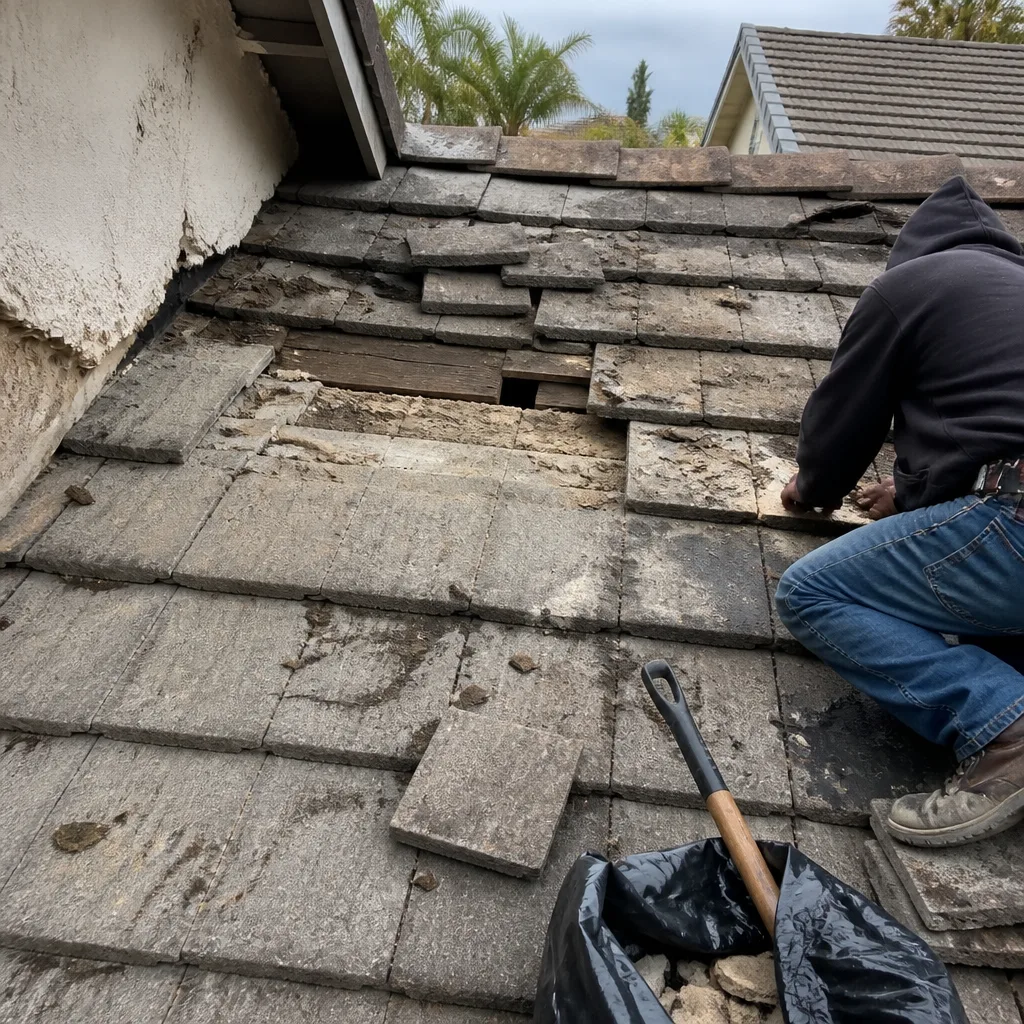 Before
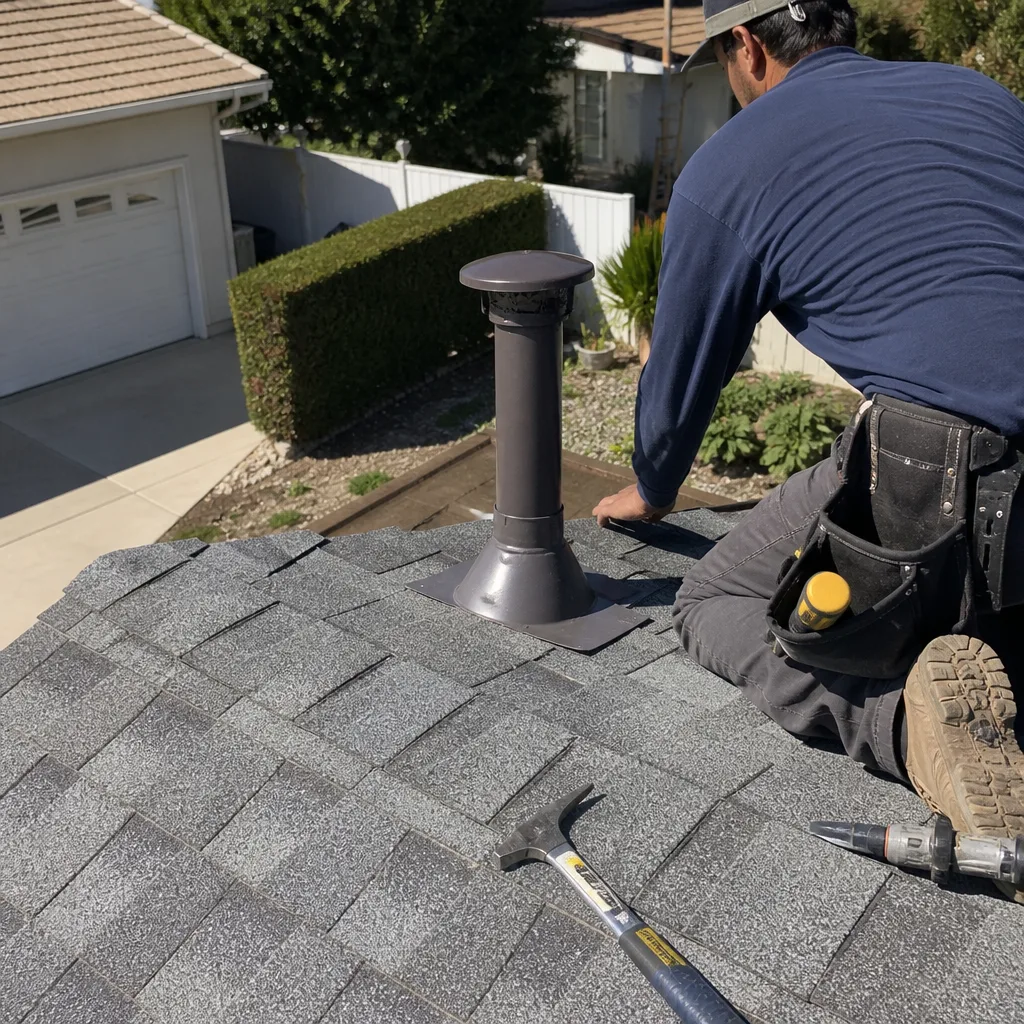 After
After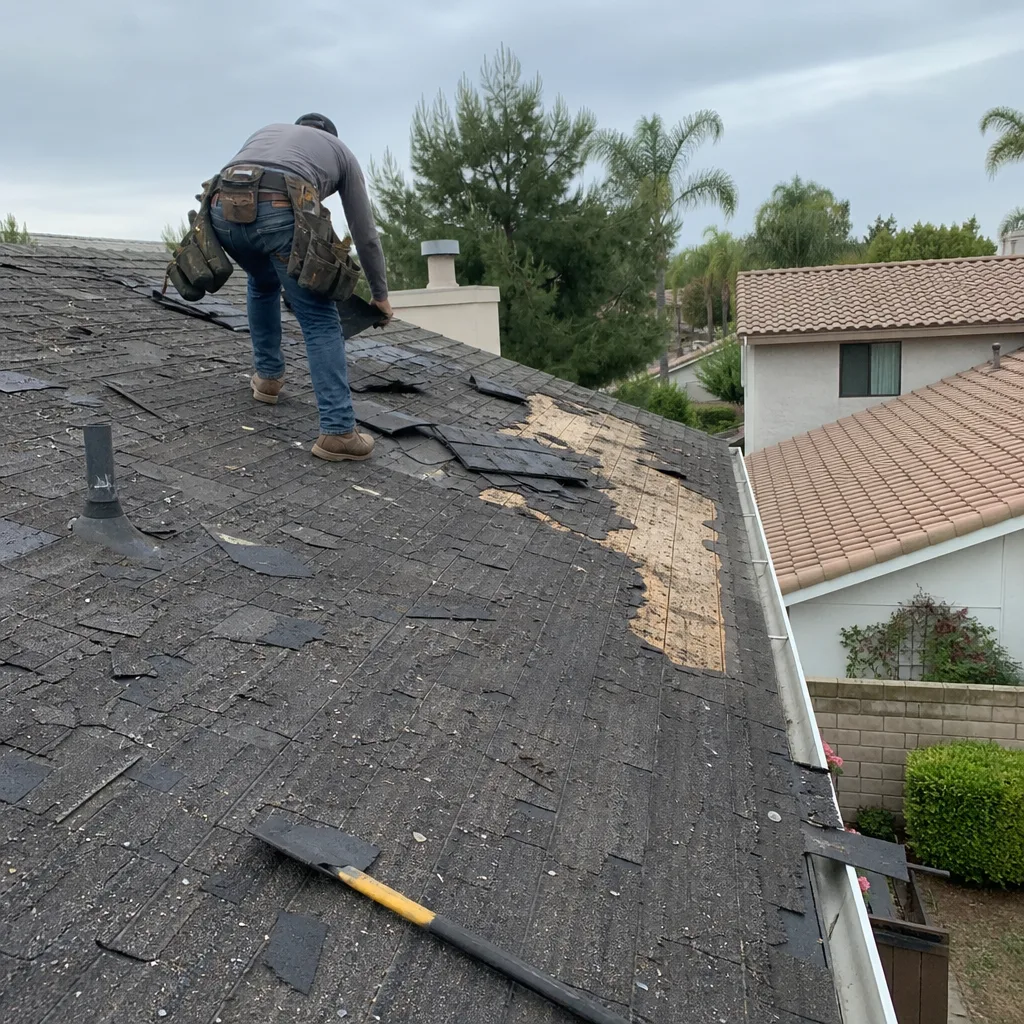 Before
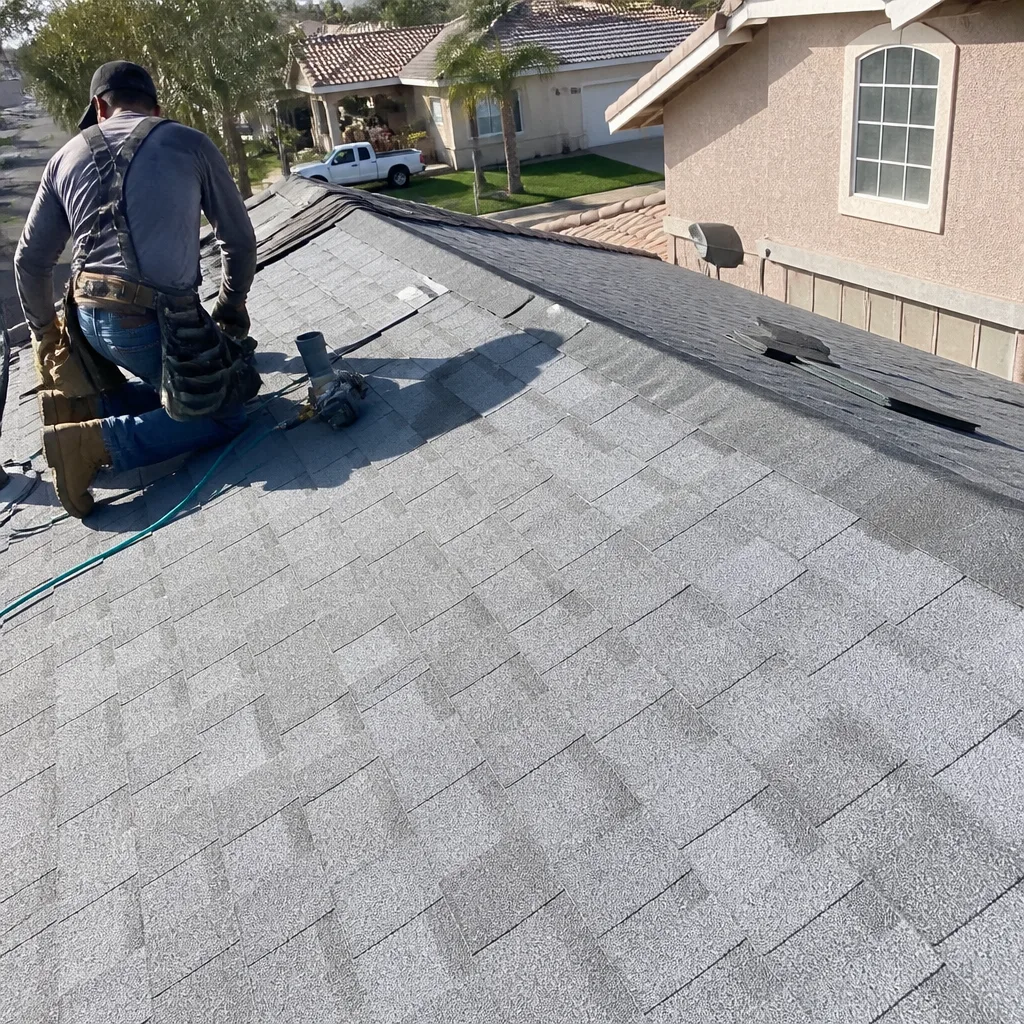 After
After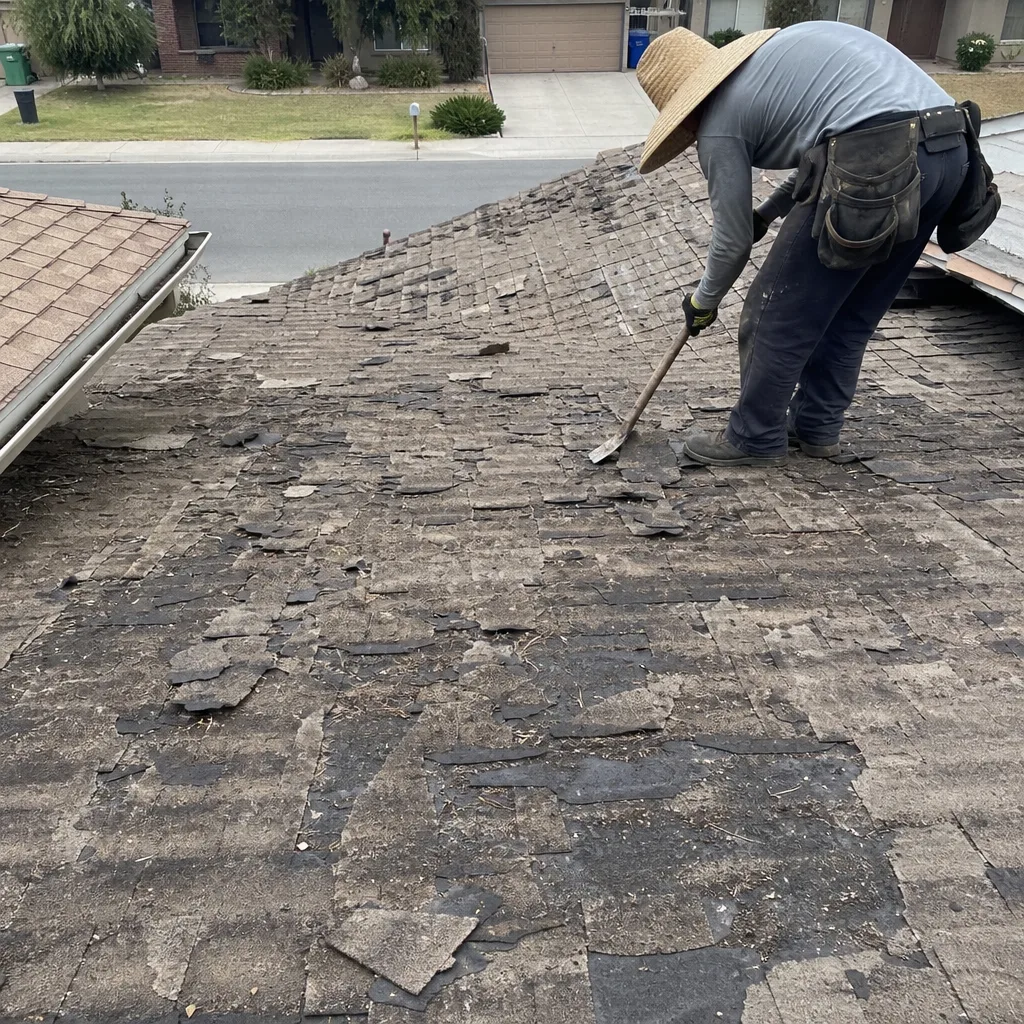 Before
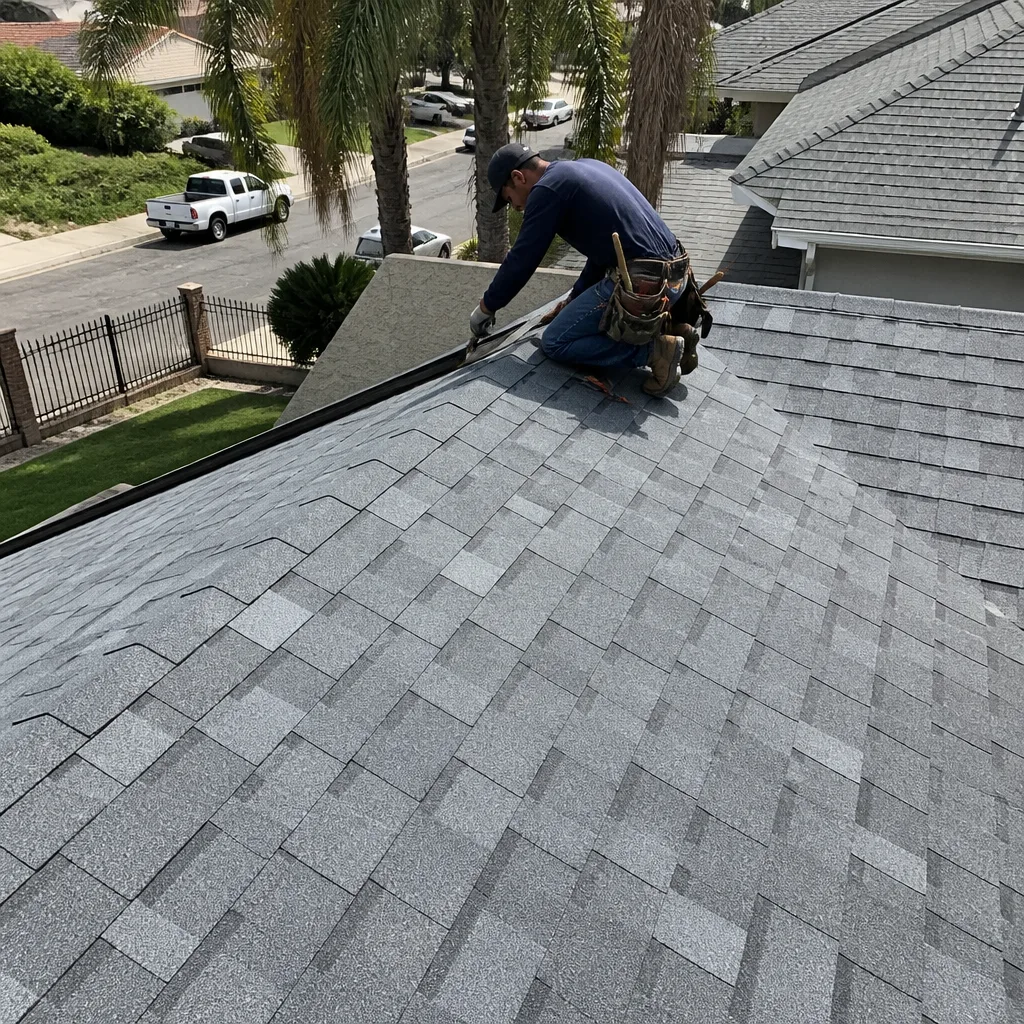 After
AfterFrequently Asked Questions
Yes, for any full roof replacement, any job that touches structural decking, and any change to the roof structure. Minor repairs below the City’s threshold may not require one. Brennan Roofing Co Riverside verifies permit requirements for every job before work starts and includes the permit fee in the written price. Call (341) 208-3988 with your address and we’ll tell you exactly where your project falls.
The City can require a retroactive permit, which means exposing the decking and underlayment for inspection, and the cost of bringing the work up to code falls on you, not the original contractor. The unpermitted work also surfaces on title searches during a sale and can delay or kill the transaction. If you’re in this situation, the first step is a professional roof inspection to document what’s actually there. Call (341) 208-3988 to schedule one.
Most residential re-roof permits in Riverside cost between $300 and $700, including inspection fees. The exact amount depends on the valuation of the job and whether structural work triggers plan check. At Brennan Roofing, the permit fee is a line item on the written estimate; there’s no surprise charge at the end. Call (341) 208-3988 for a detailed, all-in quote on your re-roof.
Title 24 cool-roof requirements apply to re-roofing projects that trigger a permit and involve replacing the roof covering on a residential building, not just new construction. Small repairs below the permit threshold are generally exempt. For permitted re-roofs in Riverside, the shingles you choose need to meet the required solar reflectance and thermal emittance ratings. We verify compliance before you sign anything, and we carry compliant product lines from brands like Owens Corning and IKO. Call (341) 208-3988 to compare your options.
Use the City of Riverside’s online building permit portal and search by your property address or parcel number. The permit record shows current status, inspection history, and whether the permit has been finaled. “Issued” means the permit was created; “Finaled” means all inspections passed and the permit is closed. Only a finaled permit protects you.
Possibly not. Insurance policies commonly exclude damage caused by faulty workmanship or unlawful construction, and unpermitted work gives the insurer a strong argument that the installation itself was the problem. A permitted, inspected roof gives you documentation that the work met code, which is a much stronger position in a claim. If you’re not sure whether your current roof was properly permitted, start with a Roof Inspection in Riverside to assess what you have.
The Bottom Line
Roofing permits are not paperwork theater. They are the document that protects your property title, your resale value, and your insurance position. Riverside has specific thresholds for when a permit is required, and California’s Title 24 cool-roof rules affect what materials qualify for a compliant re-roof. Verify permits yourself on the City portal, demand mid-project inspections, and don’t make final payment until the permit is finaled. The homeowner carries the liability for unpermitted work, which means you have every right to demand paperwork before payment. That standard is the one we hold ourselves to on every job at Brennan Roofing Co Riverside.
Written by Travis Oakley, Owner at Brennan Roofing Co Riverside, serving Riverside since 2000.